
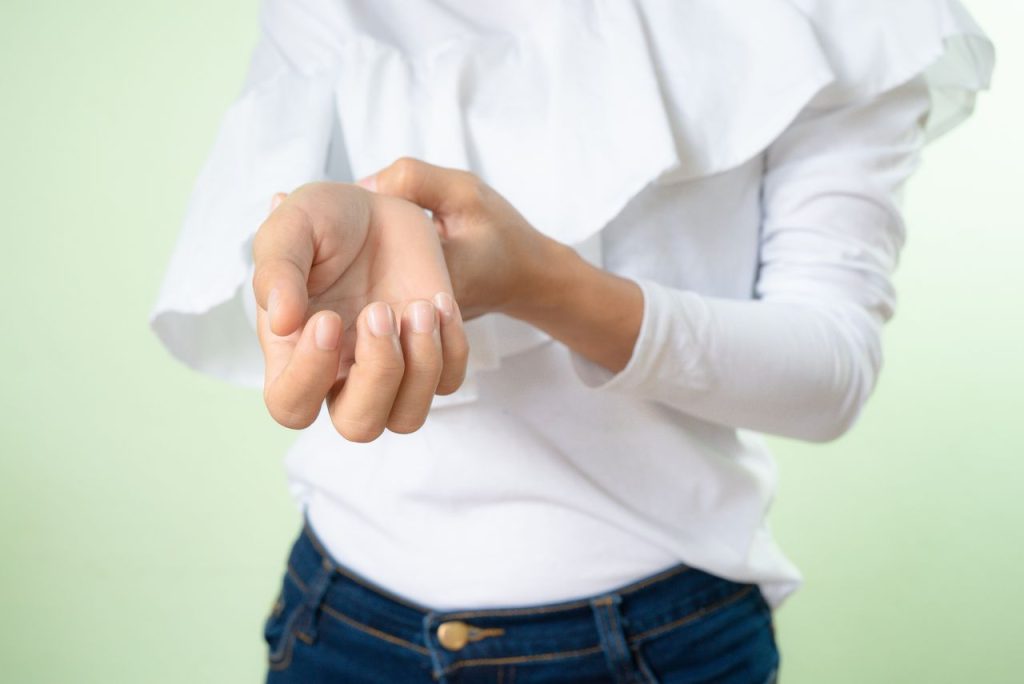
Can Peripheral Neuropathy Affect My Hands?
Not Sure Where to Start?
Choose the description that sounds most like what you’re experiencing:
👣 My feet are numb → What Causes Numbness in My Toes?
🔥 My feet burn → Why Do My Feet Burn at Night?
⚖️ I’m losing my balance → Can Peripheral Neuropathy Affect My Balance?
💪 My legs or feet feel weak → Can Peripheral Neuropathy Cause Muscle Weakness?
✋ My fingers are numb or tingling → You’re in the right place. Keep reading.
What You’ll Learn
In this chapter you’ll discover:
- Why peripheral neuropathy can affect the hands as well as the feet
- Why symptoms often begin in the toes before the fingers
- What hand neuropathy may feel like
- Why numb hands are not always caused by peripheral neuropathy
- How nerve compression such as carpal tunnel can mimic neuropathy
- Why weakness and loss of hand coordination deserve attention
- When symptoms should be evaluated promptly
Quick Answer
Yes. Peripheral neuropathy can affect the hands and fingers.
Many people associate neuropathy only with the feet.
That’s understandable because, in many common forms of peripheral neuropathy, symptoms often begin in the longest nerves first—usually those traveling all the way to the toes.
As nerve involvement progresses, symptoms may eventually move farther up the legs and, in some people, begin affecting the hands.
Patients may notice:
- Numbness
- Tingling
- Burning
- Pins and needles
- Electric sensations
- Increased sensitivity
- Reduced temperature sensation
- Weakness
- Difficulty gripping objects
- Loss of fine motor control
But there is an important caution:
Hand numbness is not automatically peripheral neuropathy.
Many other conditions can cause similar symptoms.
Why Do Neuropathy Symptoms Often Start in the Feet?
A common type of peripheral neuropathy follows what doctors sometimes call a length-dependent pattern.
The longest peripheral nerves are often affected first.
That means symptoms commonly begin in:
- The toes
- The soles of the feet
- The lower legs
As the condition progresses, symptoms may gradually move upward.
Eventually, some people may develop symptoms in the fingers and hands.
Because the pattern can resemble the areas covered by socks and gloves, clinicians sometimes describe this as a:
“Stocking-glove” pattern
That doesn’t mean every neuropathy behaves this way.
But it is a common pattern.
What Does Neuropathy in the Hands Feel Like?
Patients describe hand neuropathy in many different ways.
You might hear someone say:
“My fingertips feel asleep.”
“My hands feel like they’re buzzing.”
“It feels like I’m wearing thin gloves even though I’m not.”
“I keep dropping things.”
“I can’t tell whether water is hot or cold as well as I used to.”
“Buttoning my shirt has become harder.”
Those descriptions can provide valuable clues.
Sensory Symptoms in the Hands
Peripheral neuropathy may affect sensory nerves responsible for touch, pain, vibration, and temperature.
Possible symptoms include:
- Tingling
- Numbness
- Burning
- Shooting pain
- Electric sensations
- Unusual cold sensations
- Increased sensitivity to touch
- Difficulty distinguishing hot from cold
Reduced sensation can also create safety concerns.
For example, someone may not recognize that a pan, stove, heating pad, or cup of hot liquid is too hot.
That makes hand protection important when sensation is significantly reduced.
Can Neuropathy Cause Hand Weakness?
Yes, depending on the type and severity of nerve involvement.
Motor nerves control muscles.
If those nerves become affected, patients may notice:
- Weaker grip
- Difficulty opening jars
- Trouble turning keys
- Difficulty holding utensils
- Dropping objects
- Trouble fastening buttons
- Difficulty writing
- Reduced finger coordination
Hand weakness should not simply be dismissed as aging.
It deserves evaluation—especially when it is new or progressing.
Why Fine Motor Skills Matter
Our hands perform hundreds of small tasks every day without us thinking about them.
We use them to:
- Button clothing
- Tie shoes
- Write
- Type
- Use a phone
- Hold silverware
- Turn doorknobs
- Handle coins
- Open containers
- Prepare food
When nerve sensation or motor control changes, these simple activities may become frustrating.
Patients sometimes notice the problem first during tasks requiring precision rather than strength.
That can be an early clue.
But Numb Hands Are Not Always Neuropathy
This is extremely important.
There are many causes of numbness and tingling in the hands.
Some include:
- Carpal tunnel syndrome
- Ulnar nerve compression
- Pinched nerves in the neck
- Cervical spinal problems
- Diabetes
- Vitamin deficiencies
- Certain medications
- Chemotherapy
- Autoimmune disorders
- Thyroid problems
- Circulatory problems
- Neurological conditions
That’s why we should never assume:
“My fingers are numb, so I must have peripheral neuropathy.”
Symptoms are clues.
They are not conclusions.
What Is Carpal Tunnel Syndrome?
Carpal tunnel syndrome occurs when the median nerve becomes compressed as it travels through the wrist.
Symptoms may include:
- Numbness
- Tingling
- Burning
- Weakness
- Symptoms involving the thumb, index, middle, and part of the ring finger
Symptoms are often worse at night.
Carpal tunnel can sometimes feel very similar to peripheral neuropathy.
And some patients can have both conditions at the same time.
What About the Ulnar Nerve?
The ulnar nerve travels along the inner side of the elbow and into the hand.
Compression can produce symptoms involving the:
- Little finger
- Ring finger
- Inner side of the hand
People sometimes notice symptoms after leaning on the elbow for long periods or sleeping with the elbow bent.
Again, the pattern of symptoms can help identify which nerve may be involved.
Can a Pinched Nerve in the Neck Cause Hand Numbness?
Yes.
A nerve root leaving the cervical spine may become irritated or compressed.
This can sometimes cause:
- Neck pain
- Shoulder pain
- Arm pain
- Numbness
- Tingling
- Weakness
- Changes in reflexes
Symptoms may follow a pattern into specific areas of the arm or hand.
That is different from the more symmetrical pattern often seen in length-dependent peripheral neuropathy.
Why the Pattern Matters
One of the most useful questions is:
Where exactly are the symptoms?
Are they:
- In both hands?
- Only one hand?
- Mainly in the fingertips?
- Mostly in the thumb and first few fingers?
- Mostly in the ring and little finger?
- Associated with neck pain?
- Worse when sleeping?
- Occurring along with numb feet?
Those details matter.
For example, numbness in both feet followed later by numbness in both hands may suggest something different from numbness limited to one thumb, index, and middle finger.
Can Neuropathy Affect My Ability to Feel Temperature?
Yes.
Some peripheral nerves help transmit information about temperature.
If those fibers become impaired, someone may have difficulty judging whether an object is too hot or cold.
That creates risks with:
- Cooking
- Hot water
- Heating pads
- Space heaters
- Outdoor cold exposure
If sensation is reduced, visual checking and extra caution become important.
What If I Keep Dropping Things?
Occasionally dropping something happens to everyone.
But if it is becoming frequent, ask why.
Possible contributors include:
- Reduced sensation
- Weak grip
- Nerve compression
- Joint pain
- Arthritis
- Tremor
- Coordination problems
- Neurological disease
- Muscle weakness
If this represents a real change from your usual function, it deserves attention.
When Hand Symptoms Need Prompt Evaluation
Seek medical evaluation promptly for:
- New or rapidly progressive hand weakness
- Significant loss of grip strength
- Increasing difficulty using the fingers
- Severe or rapidly spreading numbness
- Symptoms following significant trauma
- Symptoms accompanied by severe neck pain and weakness
Sudden weakness or numbness involving one side of the body—especially with facial drooping, speech difficulty, confusion, or vision changes—can indicate a stroke and requires emergency medical attention.
How We Evaluate Hand Symptoms at Advanced Integrated Medical
When a patient tells me:
“My hands are going numb,”
I want to know exactly what that means.
We may discuss:
- When symptoms started
- Which fingers are involved
- Whether one or both hands are affected
- Whether symptoms occur at night
- Whether there is neck pain
- Whether the feet are also affected
- Whether grip strength has changed
- Whether objects are being dropped
- Medical conditions such as diabetes
- Medications and supplements
Depending on the situation, evaluation may include:
- Sensation
- Strength
- Reflexes
- Grip
- Hand coordination
- Wrist and elbow examination
- Cervical spine examination
- Nerve tension or compression testing
Further testing or referral may be appropriate when needed.
About Dr. Dee
Dr. D. Scott (“Dee”) Stevens has spent nearly four decades helping patients with peripheral neuropathy, chronic pain, musculoskeletal disorders, sports injuries, and regenerative medicine.
Throughout his career, he has cared for patients from all walks of life—including professional, collegiate, and Olympic athletes, professional football players, Major League Baseball players, professional boxers, and MMA fighters.
Working with athletes taught him to pay close attention to small changes in strength, coordination, and function.
The same principle applies to every patient.
You don’t have to be an athlete for grip strength, hand coordination, or sensation to matter.
Sometimes those abilities determine whether you can work, cook, drive, write, dress yourself, or enjoy a hobby.
Dr. Dee’s Clinical Pearl
Patients often focus on pain.
But sometimes the more important question is:
“What are your hands no longer doing as well as they used to?”
Maybe you’re dropping cups.
Maybe writing is harder.
Maybe fastening buttons takes longer.
Maybe you can’t feel small objects in your pocket.
Those functional changes can provide important clues.
Never underestimate what your daily activities are telling you.
Dr. Dee’s Office Conversation
Patient: “Doctor, my fingers are numb. Is that just my neuropathy moving into my hands?”
Dr. Dee: “It could be related, but I don’t want to make that assumption. Let’s look at which fingers are involved, whether one or both hands are affected, whether you have neck symptoms, and whether there may be nerve compression at the wrist or elbow. The pattern helps us decide what makes the most sense.”
Facing One of the Biggest Fears
“I’m Afraid I Won’t Be Able to Use My Hands Normally.”
That fear is understandable.
Our hands are tied to independence.
We use them constantly.
But numbness or tingling does not automatically mean that severe disability is inevitable.
The first step is understanding why the symptoms are occurring.
Some causes are treatable.
Some can be managed.
Some require monitoring.
And even when nerve damage cannot be completely reversed, there may still be opportunities to improve function, strength, safety, and adaptation.
Patient Success Principle #11
Pay Attention to Function Before You Lose More of It
Patients sometimes wait because symptoms don’t seem painful enough to justify evaluation.
But pain is not the only thing that matters.
Ask:
- Am I dropping things?
- Is my grip weaker?
- Are buttons becoming harder?
- Is handwriting changing?
- Do I have difficulty using utensils?
- Am I losing confidence using my hands?
Function provides valuable information.
You don’t have to wait until a symptom becomes severe before asking what is causing it.
Ask Dr. Dee
“Doctor, if my hands are numb but my feet aren’t, does that mean I have neuropathy?”
Not necessarily.
Peripheral neuropathy can affect the hands, but isolated hand numbness may also result from nerve compression at the wrist or elbow, a pinched nerve in the neck, or another condition.
The pattern of symptoms matters tremendously.
That’s why I prefer to evaluate the individual rather than assume every numb hand has the same cause.
Lesson I’ve Learned in Nearly 40 Years
Small Functional Changes Often Speak Before Big Ones Do
Patients frequently notice subtle changes long before a condition becomes obvious.
They say:
“I keep dropping things.”
“My handwriting isn’t the same.”
“My fingers just don’t feel right.”
Those comments may seem small.
But small changes can sometimes be the body’s earliest warning signs.
I’ve learned to listen carefully when patients tell me that something simply feels different.
They often know before a test confirms it.
The Hope Principle
Hand symptoms can be frightening because our hands are so important to daily life.
But fear should not decide the outcome before the cause is understood.
Hope begins with asking:
What is happening?
Where is the problem coming from?
What can be treated?
What can be strengthened?
What can be protected?
You may not control every factor.
But understanding the problem often gives you more options than fear suggests.
“I believe the best healthcare decisions are made when patients understand their condition. My job isn’t simply to treat symptoms—it’s to help you understand why they’re happening and what your options are.”
— Dr. D. Scott (“Dee”) Stevens
Frequently Asked Questions
Can peripheral neuropathy affect the fingers?
Yes. Some neuropathies eventually involve the hands and fingers, particularly when symptoms have already affected the feet and lower legs.
Why do neuropathy symptoms usually begin in the feet?
Many common neuropathies affect the longest nerves first, which is why symptoms often begin in the toes before reaching the hands.
Can carpal tunnel feel like neuropathy?
Yes. Carpal tunnel syndrome can cause numbness, tingling, burning, and weakness in the hand and may sometimes be confused with peripheral neuropathy.
Can a neck problem cause numb fingers?
Yes. Compression or irritation of cervical nerve roots can produce numbness, tingling, pain, or weakness in the arm and hand.
Can neuropathy make me drop things?
It can. Reduced sensation, weakness, or impaired coordination may make gripping and manipulating objects more difficult.
Is numbness in both hands more concerning than one hand?
The pattern matters more than simply the number of hands involved. Bilateral symptoms may suggest systemic nerve involvement, while one-sided symptoms may suggest localized compression or another condition. Either pattern may deserve evaluation depending on severity and progression.
Can hand neuropathy improve?
That depends on the underlying cause and severity. Some causes are treatable or manageable, while others may persist. Strength, safety, function, and symptom management may still improve even when complete nerve recovery is not possible.
Key Takeaways
- Peripheral neuropathy can affect the hands as well as the feet.
- Symptoms may include numbness, tingling, burning, weakness, and reduced dexterity.
- Many common neuropathies begin in the feet before involving the hands.
- Hand numbness can also result from carpal tunnel syndrome, ulnar nerve compression, cervical nerve problems, and other conditions.
- The pattern of symptoms is extremely important.
- Weakness and loss of hand function deserve attention.
- Don’t assume every numb hand is peripheral neuropathy—ask why.
Why Patients Choose Advanced Integrated Medical
At Advanced Integrated Medical, we don’t believe every numb hand has the same explanation.
We look at the pattern.
We listen to what has changed.
We evaluate whether symptoms may be coming from the peripheral nerves, wrist, elbow, neck, or another source.
And when additional testing or referral is appropriate, we believe that should be part of the conversation.
Our goal is not simply to name the symptom.
Our goal is to help you understand what may be causing it and what your next step should be.
Continue Exploring the Learning Center
If this article sounds familiar, you may also want to read:
- What Are the First Signs of Peripheral Neuropathy?
- Is Tingling in My Feet Always a Sign of Peripheral Neuropathy?
- Can a Pinched Nerve Cause Symptoms That Feel Like Peripheral Neuropathy?
- Can Peripheral Neuropathy Cause Muscle Weakness?
- What Tests Are Used to Diagnose Peripheral Neuropathy?
- I’ve Been Diagnosed With Peripheral Neuropathy—What Should I Do Next?
Medical Disclaimer
This article is intended for educational purposes only and is not a substitute for individualized medical diagnosis, testing, or treatment.
Hand numbness, tingling, weakness, pain, or loss of coordination can have many possible causes. Seek prompt medical evaluation for new or progressive weakness, significant loss of hand function, severe or rapidly spreading symptoms, or other concerning neurological changes.
Sudden numbness or weakness affecting one side of the body—especially with facial drooping, speech difficulty, confusion, or vision changes—may indicate a stroke and requires emergency medical attention.
Ready to Learn More?
If your fingers are numb, tingling, burning, or becoming harder to control, don’t simply assume it’s “just neuropathy.”
Ask:
Which nerves are involved?
Where is the problem coming from?
Why is it happening?
And what should I do next?
At Advanced Integrated Medical, our goal is to help you understand the pattern, identify possible contributing factors, and determine the most appropriate next step.
Because the better you understand your symptoms, the better prepared you are to make informed decisions about your health.