
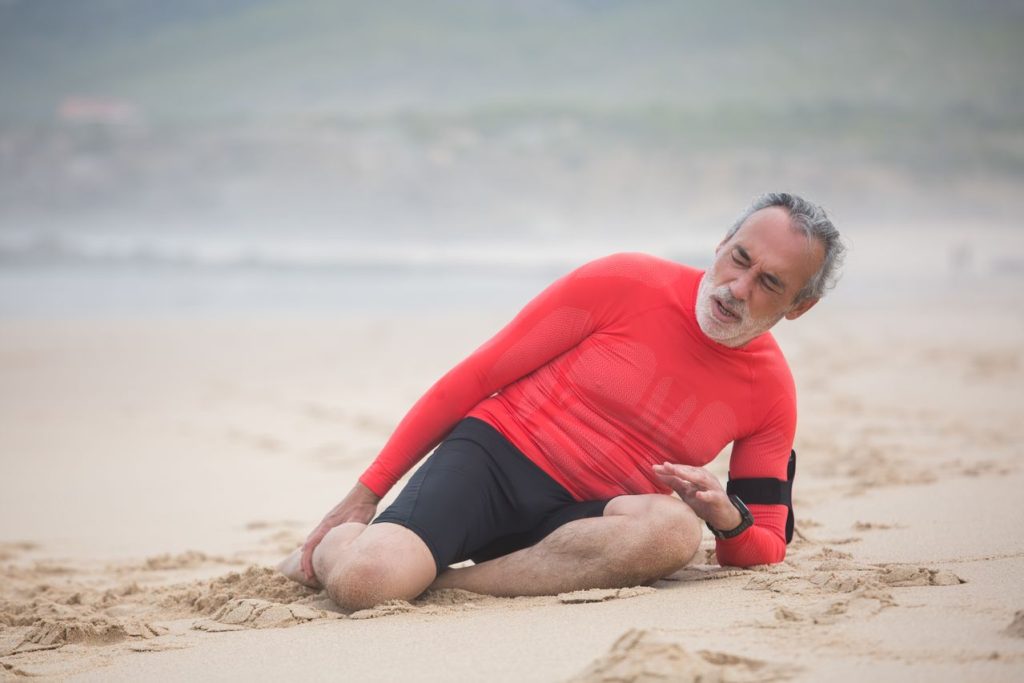
Can Peripheral Neuropathy Cause Falls?
Not Sure Where to Start?
Choose the description that sounds most like what you’re experiencing:
⚖️ I’m losing my balance → Can Peripheral Neuropathy Affect My Balance?
🚶 I keep catching my toes or tripping → Why Do I Keep Tripping? Could Peripheral Neuropathy Be the Cause?
💪 My legs or feet feel weak → Can Peripheral Neuropathy Cause Muscle Weakness?
👣 I’m worried neuropathy will affect my walking → Will Peripheral Neuropathy Eventually Keep Me From Walking?
🌙 I feel especially unsteady at night → Can Peripheral Neuropathy Affect My Sleep?
⚠️ I’ve fallen or I’m afraid I might fall → You’re in the right place. Keep reading.
What You’ll Learn
In this chapter you’ll discover:
- Why peripheral neuropathy can increase fall risk
- How numb feet affect balance
- Why falls may be more likely in darkness
- How weakness and foot drop can contribute
- Why medications, vision, joints, and the inner ear also matter
- Warning signs that may appear before the first serious fall
- Practical ways to make your home safer
- When a cane or walker may actually increase independence
- Why fear of falling can create problems of its own
- How to protect mobility without becoming afraid to move
Quick Answer
Yes. Peripheral neuropathy can increase the risk of falling.
Your feet do much more than support your weight.
Thousands of sensory signals continually travel from your feet and legs toward your brain, helping it understand:
- Where your feet are
- What surface you’re standing on
- Whether your weight is shifting
- Whether the ground is level
- How your joints are positioned
When peripheral neuropathy reduces that sensory information, maintaining balance may become more difficult.
If neuropathy also causes muscle weakness, the risk may increase further.
But this is important:
Having peripheral neuropathy does not mean you are destined to fall.
Understanding your risk gives you an opportunity to do something about it.
Your Feet Are Constantly Talking to Your Brain
You probably don’t think about balance when you stand up and walk across a room.
That’s because your nervous system normally handles much of it automatically.
Your brain receives information from:
- Your feet
- Your ankles
- Your joints
- Your muscles
- Your eyes
- Your inner ears
The brain combines all of that information and continuously makes tiny corrections.
Peripheral neuropathy can reduce part of that communication system.
Imagine trying to drive while some of the information on your dashboard has disappeared.
You may still drive.
But you have less information available.
That’s similar to what can happen with balance.
Why Do Numb Feet Increase Fall Risk?
When sensation decreases, you may have difficulty recognizing:
- Where your foot is contacting the floor
- Whether your foot is flat
- Whether you’re stepping on an uneven surface
- Whether your ankle is beginning to roll
- Whether your toe cleared an obstacle
Your brain may compensate using vision and other sensory systems.
That compensation can work surprisingly well.
But certain situations make it more difficult.
Why Am I More Unsteady in the Dark?
This is one of the classic clues patients describe.
They may say:
“I’m pretty good during the day, but if I get up at night, I’m all over the place.”
Why?
During daylight, your eyes provide important information about:
- The floor
- Furniture
- Steps
- Walls
- Your body’s position
If sensation from your feet is reduced, vision may become even more important.
Turn off the lights, and suddenly one of your major backup systems is gone.
That is why nighttime lighting can be more than a convenience.
For someone with neuropathy, it may be a safety tool.
Closing Your Eyes Can Reveal the Problem
Some people with reduced sensation are surprised by how much they depend on vision.
Standing may feel relatively stable with the eyes open.
Close the eyes, and they become much more unsteady.
This can provide a clue that sensory information from the feet and legs isn’t providing enough feedback for balance.
It does not diagnose the cause by itself.
But it helps illustrate how the sensory systems work together.
Muscle Weakness Can Add Another Problem
Some neuropathies affect motor nerves as well as sensory nerves.
That can contribute to weakness involving:
- Ankles
- Feet
- Lower legs
- Toes
A person may have difficulty:
- Lifting the front of the foot
- Clearing the toes while walking
- Recovering from a stumble
- Climbing stairs
- Rising from a chair
When reduced sensation and weakness occur together, fall risk may increase.
What Is Foot Drop?
Foot drop describes difficulty lifting the front of the foot during walking.
The toes may drag or catch.
Patients may compensate by lifting the knee higher than usual.
Foot drop has several possible causes, including certain peripheral nerve injuries and problems involving the spine or nervous system.
New or progressive foot drop deserves prompt medical evaluation.
Do not simply assume:
“It’s my neuropathy.”
The Fall Often Begins Before the Fall
One of the most important things I’ve learned is that patients often receive warning signs before a major fall.
They may notice:
- Catching their toes
- Stumbling
- Holding onto furniture
- Avoiding stairs
- Feeling unstable in the shower
- Difficulty walking on grass
- Trouble on uneven ground
- Increased unsteadiness in darkness
- Difficulty turning quickly
- Feeling less confident when walking
These are sometimes called near-falls.
Don’t ignore them.
A near-fall can be your body’s way of saying:
“Something has changed.”
Don’t Wait for a Broken Bone to Take Balance Seriously
Patients sometimes tell me:
“I haven’t fallen yet.”
That’s good.
But I also want to know:
“How many times have you almost fallen?”
If you are repeatedly catching yourself on:
- Walls
- Counters
- Furniture
- Railings
- Another person
your balance may already be changing.
Fall prevention works best before the serious fall.
Neuropathy Is Not the Only Cause of Falls
This is extremely important.
If someone with neuropathy falls, it is easy to blame the neuropathy immediately.
But falls often involve multiple factors.
Other contributors can include:
- Vision problems
- Inner-ear disorders
- Blood-pressure changes
- Dizziness
- Muscle weakness
- Arthritis
- Hip or knee problems
- Spinal conditions
- Certain medications
- Sedating medications
- Poor footwear
- Dehydration
- Environmental hazards
Sometimes several of these occur together.
The correct question isn’t simply:
“Do I have neuropathy?”
It is:
“Why am I falling?”
Medications Matter
Certain medications can contribute to:
- Drowsiness
- Dizziness
- Slower reaction time
- Blood-pressure changes
- Unsteadiness
This can be particularly important when someone already has impaired sensation.
If falls or dizziness have increased after a medication change, discuss it with the prescribing healthcare professional.
Do not stop prescribed medications on your own.
A medication review can sometimes reveal an important piece of the puzzle.
Vision Matters More Than You May Realize
If neuropathy reduces sensory feedback from your feet, you may become more dependent on your eyes.
That makes good vision especially important.
Keep appropriate eye examinations.
Use prescribed glasses when needed.
And improve lighting in areas where you walk.
A dim hallway that was merely inconvenient at age 40 may become a genuine hazard when foot sensation and balance are reduced.
Your Home Can Either Help You—or Challenge You
Many falls happen at home.
Walk through your house and look at it as though you were seeing it for the first time.
Watch for:
- Loose rugs
- Electrical cords
- Clutter
- Poor lighting
- Slippery bathroom surfaces
- Unstable furniture
- Pets underfoot
- Uneven flooring
- Difficult stairs
Simple changes can sometimes significantly improve safety.
Pay Special Attention to the Bathroom
Bathrooms combine several fall risks:
- Water
- Slippery surfaces
- Hard floors
- Stepping over bathtub edges
- Turning in small spaces
Depending on individual needs, safety measures may include:
- Nonslip surfaces
- Properly installed grab bars
- Adequate lighting
- A shower chair when appropriate
- Keeping frequently used items within easy reach
The goal isn’t to make your home feel like a hospital.
The goal is to make it safer to live your life.
Stairs Deserve Respect
Stairs become more challenging when you cannot clearly feel where your feet are.
Helpful considerations may include:
- Secure handrails
- Good lighting
- Clear stairways
- Contrasting visibility at step edges when needed
- Avoiding carrying objects that block your view
Don’t rush.
Taking a few extra seconds on stairs is far better than spending months recovering from a fall.
Shoes Matter
Footwear can influence stability.
Shoes should generally:
- Fit properly
- Stay securely on the feet
- Provide appropriate traction
- Avoid excessive looseness
- Protect numb feet
Very loose slippers can sometimes become a tripping hazard.
The best footwear depends on the person’s foot structure, sensation, activity, and medical condition.
What About Walking Barefoot?
If protective sensation is significantly reduced, barefoot walking can create two concerns:
Injury risk and balance risk.
You may not feel:
- Sharp objects
- Heat
- Pressure
- Minor injuries
And certain surfaces may be harder to navigate safely.
Foot protection becomes increasingly important as sensation decreases.
Should I Use a Cane?
Maybe.
A cane can provide additional support and sensory information for some people.
But it needs to be:
- Appropriate for the person
- Properly sized
- Used correctly
Using a cane incorrectly may provide less benefit than expected.
A physical therapist or other qualified professional can help determine whether a cane is appropriate and teach proper use.
What About a Walker?
Patients sometimes resist walkers because they feel using one means their condition has “won.”
I look at it differently.
If a walker allows someone to:
- Go to the store
- Attend church
- Walk outside
- Travel
- Visit family
- Remain independent
then the walker isn’t taking independence away.
It may be helping preserve it.
An assistive device is a tool.
It is not a declaration of defeat.
Can Balance Be Improved?
Often, some aspects of balance can be improved or compensated for.
Depending on the person, strategies may include:
- Strength training
- Balance exercises
- Gait training
- Physical therapy
- Appropriate walking
- Improving footwear
- Correcting vision problems
- Addressing joint problems
- Reviewing medications
- Treating contributing medical conditions
- Using an assistive device when appropriate
Even when normal sensation does not return, the body may sometimes become better at using the information and abilities that remain.
Strength Is Part of Fall Prevention
Strong muscles can help you:
- Stabilize your joints
- Correct small balance errors
- Rise from a chair
- Navigate stairs
- Recover from a stumble
That is one reason appropriate strength training can be valuable.
You don’t have to become an athlete.
The goal is functional strength.
Can you get out of a chair?
Can you climb a step?
Can you recover if you lose your balance?
Those are meaningful abilities.
Fear of Falling Can Create Its Own Cycle
After one fall—or even a near-fall—people may become afraid.
Then something understandable happens.
They move less.
But reduced activity can contribute to:
- Muscle weakness
- Reduced endurance
- Less balance practice
- Lower confidence
Which can make walking feel even less secure.
The cycle becomes:
Fear of falling → Less movement → Loss of strength → Less confidence → Greater fall risk
The answer isn’t reckless activity.
It is:
Safe, appropriate movement.
Should I Stop Walking If I’m Afraid of Falling?
Not automatically.
For many people, appropriate activity remains important.
But if you are experiencing:
- Frequent falls
- Severe instability
- Progressive weakness
- New foot drop
- Significant dizziness
you should be evaluated before simply pushing yourself to walk farther.
Sometimes the safest path back to activity begins with supervised rehabilitation or an assistive device.
How We Evaluate Fall Risk at Advanced Integrated Medical
When a patient tells me:
“I’ve been falling,”
I don’t want to stop with:
“Well, you have neuropathy.”
I want to know:
- When did the falls begin?
- How often are they occurring?
- What were you doing when you fell?
- Did you trip?
- Did you become dizzy?
- Did your leg give way?
- Did you lose consciousness?
- Are you weaker?
- Are you catching your toes?
- Are falls worse in darkness?
- Have medications changed?
- Has your vision changed?
- Do you have hip, knee, back, or ankle problems?
Depending on the individual, evaluation may include:
- Sensation
- Strength
- Reflexes
- Balance
- Gait
- Foot mechanics
- Joint function
- Circulation
- Review of medical history and medications
Additional neurological, vestibular, cardiovascular, vision, or other evaluation may be appropriate.
A fall is an event.
Our job is to understand why it happened.
Treatment Depends on the Cause
There is no single “neuropathy fall treatment.”
Depending on the patient, reducing fall risk may involve:
- Addressing the underlying cause of neuropathy
- Strength training
- Balance rehabilitation
- Physical therapy
- Gait training
- Appropriate footwear
- Home modifications
- Vision care
- Medication review
- Assistive devices
- Management of joint or spinal problems
- Treatment of dizziness or other contributing conditions
The best plan is individualized.
About Dr. Dee
Dr. D. Scott (“Dee”) Stevens has spent nearly four decades helping patients with peripheral neuropathy, chronic pain, musculoskeletal disorders, sports injuries, and regenerative medicine.
Throughout his career, he has cared for patients from all walks of life—including professional, collegiate, and Olympic athletes, professional football players, Major League Baseball players, professional boxers, and MMA fighters.
Athletes understand something very well:
Balance is not simply standing still.
It is the ability to make constant corrections while the body is moving.
The same principle matters as we age and when neuropathy affects sensation.
The goal may not be winning a competition.
It may be something far more important:
Walking safely through your own home.
Dr. Dee’s Clinical Pearl
One question I like to ask is:
“When was the last time you almost fell?”
Sometimes that tells me more than asking whether someone has fallen.
A patient may proudly say:
“I haven’t fallen once.”
Then I discover they catch themselves on the kitchen counter several times a week.
Those near-falls matter.
Don’t wait for the floor to tell you that your balance has changed.
Dr. Dee’s Office Conversation
Patient: “Doctor, I’m scared to walk because I don’t want to fall.”
Dr. Dee: “I understand why you’re concerned. But I don’t want fear to take away your strength and independence either. Let’s find out why you feel unstable, make things safer, and determine what kind of movement is appropriate for you.”
Patient: “So you don’t want me to stop walking?”
Dr. Dee: “I want you to keep moving as safely as your condition allows. Sometimes that means exercises. Sometimes physical therapy. Sometimes a cane or walker. Safety comes first—but staying active matters too.”
Facing One of the Biggest Fears
“I’m Afraid I’ll Fall, Break My Hip, and Lose My Independence.”
That is a legitimate concern.
Falls can cause serious injuries.
But fear should motivate prevention—not surrender.
Instead of asking:
“How do I avoid moving?”
ask:
“How do I make movement safer?”
That shift in thinking is powerful.
Patient Success Principle #18
Prevent the First Fall Whenever You Can
Don’t wait for a serious injury before paying attention to:
- Near-falls
- Toe catching
- Weakness
- Poor lighting
- Loose rugs
- Unsafe stairs
- Dizziness
- Medication effects
- Vision
- Footwear
Prevention is usually easier than recovering from an injury.
Pay attention to the warning signs your body is already giving you.
Ask Dr. Dee
“Doctor, does using a cane or walker mean my neuropathy is getting worse?”
Not necessarily.
An assistive device tells me something about what you need today.
It doesn’t define your future.
If a cane or walker helps you move more safely, remain active, and continue participating in life, it may actually protect your independence.
The important questions are:
Do you need it?
Is it the right device?
Are you using it correctly?
Lesson I’ve Learned in Nearly 40 Years
Independence Is Not the Same as Doing Everything Without Help
Patients sometimes tell me:
“I don’t want to depend on anything.”
I understand.
But independence isn’t refusing every tool.
Independence is being able to live your life.
Glasses help people see.
Hearing aids help people hear.
Railings help people climb stairs.
And sometimes a cane or walker helps someone keep moving.
The tool isn’t the enemy.
A preventable fall is a much greater threat to independence.
The Hope Principle
A fall can shake more than your body.
It can shake your confidence.
Suddenly the hallway looks longer.
The stairs look steeper.
The parking lot looks more dangerous.
And life can begin to shrink.
But neuropathy does not automatically mean that shrinking world is your future.
There may be ways to improve:
- Strength
- Balance
- Safety
- Awareness
- Confidence
- Mobility
Sometimes the victory is walking farther.
Sometimes it is using a railing.
Sometimes it is accepting a cane.
Sometimes it is simply going somewhere you had become afraid to go.
Hope isn’t pretending there is no risk.
Hope is recognizing risk—and doing something useful about it.
“I believe the best healthcare decisions are made when patients understand their condition. My job isn’t simply to treat symptoms—it’s to help you understand why they’re happening and what your options are.”
— Dr. D. Scott (“Dee”) Stevens
Frequently Asked Questions
Can peripheral neuropathy make me fall?
Yes. Reduced sensation, impaired awareness of foot position, balance problems, and sometimes weakness can increase fall risk.
Why am I more unsteady at night?
When vision is reduced in darkness, your body must rely more heavily on other balance systems. If sensation from your feet is impaired, balance may become more difficult.
Are near-falls important?
Yes. Repeated stumbling or catching yourself on furniture can be an early warning that balance or walking has changed.
Does neuropathy cause foot drop?
Certain neuropathies can cause motor weakness that contributes to foot drop, but foot drop has several possible causes and deserves medical evaluation.
Should I stop walking if I have neuropathy?
Not automatically. Appropriate activity is often valuable, but severe instability, progressive weakness, repeated falls, or new foot drop should be evaluated so activity can be made safer.
Can balance improve if my feet stay numb?
Sometimes. Strength, balance training, vision, footwear, gait strategies, and rehabilitation may improve function even when sensation does not completely return.
Should I use a cane?
A cane may be helpful for some patients. Proper selection, sizing, and technique matter.
Does using a walker mean I’ve lost my independence?
No. If a walker allows you to move safely and participate more fully in life, it may help preserve independence.
What can I do at home to reduce fall risk?
Improve lighting, remove tripping hazards, secure rugs, clear walkways, use appropriate handrails or grab bars, wear appropriate footwear, and discuss significant balance changes with your healthcare professional.
When should falling be evaluated urgently?
Seek prompt medical attention for falls associated with sudden weakness, new foot drop, fainting, severe dizziness, head injury, rapidly worsening walking, or other major neurological changes. Stroke symptoms require emergency care.
Key Takeaways
- Peripheral neuropathy can increase fall risk.
- Numb feet provide less sensory information to the brain.
- Darkness can make balance more difficult.
- Weakness and foot drop may increase risk further.
- Near-falls are warning signs worth taking seriously.
- Neuropathy is not the only possible cause of falling.
- Vision, medications, joints, dizziness, and the home environment also matter.
- Strength and balance may sometimes improve even if numbness persists.
- A cane or walker may help preserve independence.
- Fear-driven inactivity can lead to further weakness.
- The goal isn’t to avoid movement. The goal is to make movement safer.
Why Patients Choose Advanced Integrated Medical
At Advanced Integrated Medical, we believe fall prevention begins by asking:
Why are you losing your balance?
Are your feet numb?
Are your legs weak?
Are you catching your toes?
Are you dizzy?
Has your vision changed?
Are medications contributing?
Are your joints affecting your walking?
We don’t want to wait until a serious fall forces those questions.
Our goal is to identify meaningful risks, protect mobility, and help patients remain as active and independent as safely possible.
Continue Exploring the Learning Center
You may also want to read:
- Can Peripheral Neuropathy Affect My Balance?
- Why Do I Keep Tripping? Could Peripheral Neuropathy Be the Cause?
- Can Peripheral Neuropathy Cause Muscle Weakness?
- Will Peripheral Neuropathy Eventually Keep Me From Walking?
- Does Exercise Help Peripheral Neuropathy?
- How Do I Know If My Peripheral Neuropathy Is Getting Better?
- Can Peripheral Neuropathy Affect My Sleep?
- I’ve Been Diagnosed With Peripheral Neuropathy—What Should I Do Next?
Medical Disclaimer
This article is intended for educational purposes only and is not a substitute for individualized medical diagnosis or treatment.
Falls can have neurological, cardiovascular, vestibular, visual, musculoskeletal, medication-related, and environmental causes. Recurrent falls or significant changes in balance should be evaluated by an appropriate healthcare professional.
Seek prompt medical attention for new or rapidly progressive weakness, new foot drop, significant walking changes, fainting, severe dizziness, or injuries following a fall. Sudden one-sided weakness, facial drooping, speech difficulty, confusion, or other possible signs of stroke require emergency medical attention.
Ready to Learn More?
If you have peripheral neuropathy and have started stumbling, losing your balance, or worrying about falling, don’t wait for a serious injury before paying attention.
Ask:
Why am I becoming less steady?
Am I losing sensation?
Is weakness developing?
What hazards can I remove?
Would balance or strength training help?
Would an assistive device make me safer?
And what is my next best step?
At Advanced Integrated Medical, our goal is not to make patients afraid of falling.
Our goal is to help them become better prepared to prevent it.
Because protecting your balance protects your mobility.
Protecting your mobility protects your independence.
And protecting your independence helps protect the life you want to keep living.