
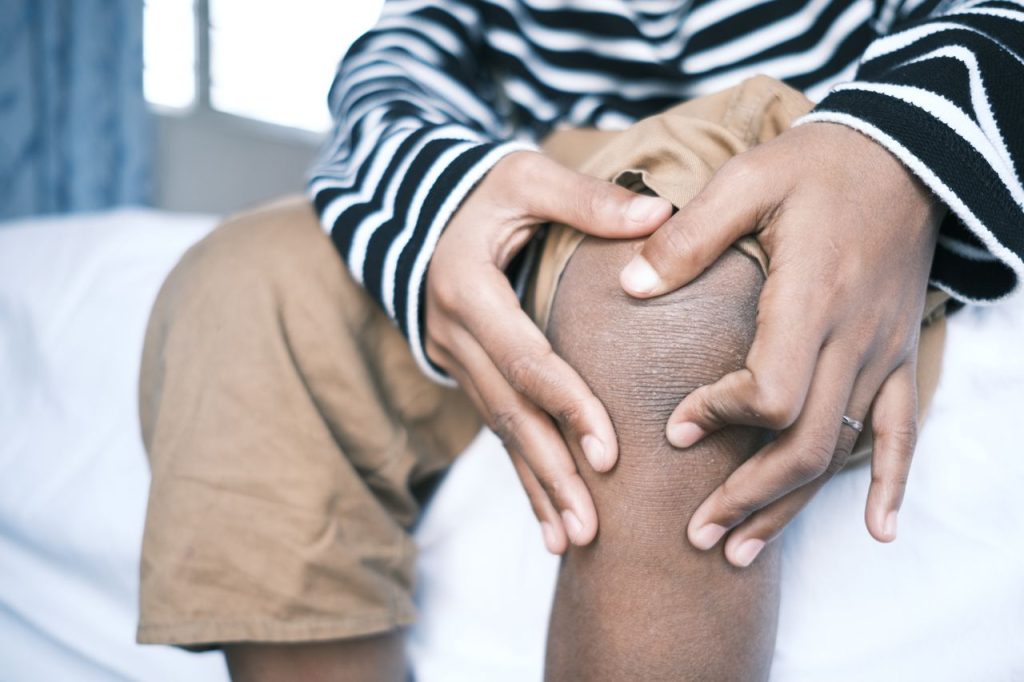
What Causes Knee Pain as We Get Older?
Knee pain is one of the most common complaints I hear from adults as they get older.
Patients often tell me:
“I guess I’m just getting old.”
Or:
“My knees are worn out.”
Or:
“They told me it’s bone-on-bone, so I suppose there’s nothing I can do except replace the knee.”
But knee pain is rarely that simple.
Yes, our joints change as we age.
Cartilage changes.
Muscles may weaken.
Old injuries can catch up with us.
Osteoarthritis becomes more common.
But:
Getting older is not, by itself, a diagnosis.
If your knee hurts, the more useful question is not:
“Am I getting old?”
It’s:
“What is causing my knee to hurt?”
That question opens the door to much better decisions.
What You’ll Learn
In this chapter you’ll discover:
- Why knee pain becomes more common with age
- What happens to cartilage over time
- What osteoarthritis really means
- Why an X-ray doesn’t always explain how much a knee hurts
- How old injuries can affect the knee years later
- Why the meniscus changes with age
- How muscle weakness can increase knee stress
- Why alignment matters
- How body weight affects knee loading
- Why inactivity can sometimes make knees worse
- Why stairs often become painful
- When knee pain deserves prompt evaluation
- Why treatment should be based on the patient—not simply the X-ray
Quick Answer
Knee pain becomes more common as we age because several things may occur simultaneously.
These can include:
- Osteoarthritis
- Cartilage changes
- Meniscus degeneration
- Previous injuries
- Muscle weakness
- Reduced flexibility
- Changes in alignment
- Tendon problems
- Bursitis
- Changes in activity
- Increased mechanical stress on the joint
- Other medical conditions
But two people with very similar-looking knee X-rays can experience completely different levels of pain and disability.
That’s why I tell patients:
Treat the patient—not just the picture.
The Knee Is More Than a Hinge
The knee looks simple from the outside.
It bends.
It straightens.
But mechanically, it is a remarkably complex joint.
The knee includes:
- Femur
- Tibia
- Patella
- Articular cartilage
- Menisci
- Ligaments
- Tendons
- Muscles
- Joint capsule
- Synovial tissue
- Bursae
All of these structures work together.
Pain can come from several of them.
What Happens to Our Knees as We Age?
Aging doesn’t automatically mean painful knees.
But age increases the likelihood that the knee has accumulated:
- Years of loading
- Repetitive stress
- Previous injuries
- Changes in cartilage
- Changes in the meniscus
- Muscle loss
- Reduced flexibility
- Altered movement patterns
Think about how many steps your knees have taken over several decades.
Walking.
Stairs.
Work.
Sports.
Yardwork.
Lifting.
Squatting.
Getting in and out of cars.
Playing with children and grandchildren.
Your knees have been working for you for a very long time.
Is Knee Cartilage Simply “Wearing Out”?
This is a common way people describe osteoarthritis, but it oversimplifies what is happening.
Osteoarthritis is not simply the same as wearing the tread off a tire.
It involves the entire joint.
Changes can occur in:
- Cartilage
- Bone
- Synovium
- Ligaments
- Muscles
- Other joint tissues
Cartilage may become thinner and less resilient.
Bone may remodel.
Bone spurs may develop.
The joint space seen on X-ray may narrow.
Inflammatory processes within the joint may contribute to symptoms.
So osteoarthritis is better thought of as a complex joint condition rather than simple mechanical “wear and tear.”
What Is Articular Cartilage?
Articular cartilage is the smooth tissue covering the ends of bones where they meet within a joint.
Healthy cartilage helps the knee:
- Move smoothly
- Distribute loads
- Reduce friction
With osteoarthritis, cartilage may progressively change and become thinner.
But an important point is:
Cartilage itself has very limited pain-sensing nerve supply.
The pain associated with osteoarthritis can come from other structures in and around the joint, including:
- Bone beneath the cartilage
- Synovium
- Joint capsule
- Ligaments
- Tendons
- Surrounding muscles
That’s one reason the relationship between an X-ray and pain isn’t always straightforward.
What Does “Bone-on-Bone” Mean?
Patients hear this phrase all the time.
Usually, it refers to advanced narrowing of the joint space on an X-ray, suggesting substantial loss of cartilage in that compartment.
It can represent significant osteoarthritis.
But:
“Bone-on-bone” is an imaging description—not a complete description of the patient.
It does not tell me everything about:
- Your pain
- Your strength
- Your walking ability
- Your goals
- Your quality of life
- Which treatments you’ve tried
- Whether you’re ready for surgery
Some people with advanced X-ray changes remain surprisingly functional.
Others with less dramatic X-ray changes have substantial pain.
The X-Ray Matters—but So Does the Patient
I like X-rays.
They provide useful information.
They can show:
- Joint-space narrowing
- Bone spurs
- Alignment
- Bone changes
- Previous injury
- Advanced arthritis
But I never want to treat an X-ray without treating the person attached to it.
An X-ray doesn’t tell me:
Can you walk through the grocery store?
Can you climb stairs?
Does the knee wake you at night?
Can you get out of a chair?
Can you kneel?
Can you play with your grandchildren?
Those questions matter too.
What Is Knee Osteoarthritis?
Knee osteoarthritis is a degenerative joint condition involving changes throughout the knee.
Symptoms may include:
- Pain
- Stiffness
- Swelling
- Reduced motion
- Grinding or creaking
- Difficulty with stairs
- Difficulty standing from a chair
- Reduced walking tolerance
Symptoms often fluctuate.
A knee may feel relatively good one week and flare the next.
Why Does My Knee Hurt When I First Stand Up?
Many patients describe:
“Once I get moving, I’m a little better. It’s those first few steps that hurt.”
This is common with osteoarthritis and other joint conditions.
The knee may feel stiff after:
- Sitting
- Sleeping
- Driving
- Remaining in one position
Movement may temporarily improve mobility.
But excessive activity can sometimes aggravate symptoms later.
Finding the right amount of movement matters.
Why Do Stairs Hurt So Much?
Stairs increase the demands placed on the knee.
Going up requires:
- Quadriceps strength
- Hip strength
- Knee control
Going down requires the muscles to control your body as gravity lowers you.
The kneecap joint also experiences substantial loading during stair activities.
Pain on stairs may be related to:
- Osteoarthritis
- Patellofemoral problems
- Weakness
- Tendon problems
- Meniscus problems
- Other mechanical issues
The location and pattern of pain provide clues.
Why Does It Hurt to Get Out of a Chair?
Standing from a chair requires substantial work from:
- Quadriceps
- Gluteal muscles
- Hip muscles
- Knee extensors
If those muscles weaken, the knee may experience greater difficulty managing the load.
Patients may begin:
- Pushing off with their arms
- Rocking forward
- Avoiding low chairs
- Using furniture for support
Those are functional clues worth paying attention to.
Muscle Weakness Can Be Part of the Problem
One of the most overlooked parts of knee pain is muscle function.
Strong muscles help control the forces passing through the joint.
Important muscle groups include:
- Quadriceps
- Hamstrings
- Gluteal muscles
- Hip stabilizers
- Calf muscles
When strength decreases, movement patterns can change.
The knee may become less stable and everyday activities may require more effort.
Why Do Muscles Become Weaker With Knee Pain?
Sometimes the sequence becomes a cycle:
Knee hurts → patient moves less → muscles weaken → activity becomes harder → patient moves even less
Over time, this can reduce:
- Strength
- Endurance
- Confidence
- Balance
- Mobility
That’s why simply telling someone:
“Rest your knee.”
may not be the best long-term plan.
There are times when rest is appropriate.
But chronic joint pain often benefits from appropriately dosed movement and strengthening.
What Happens to the Meniscus as We Age?
The menisci are fibrocartilage structures that help distribute load and contribute to stability within the knee.
As we age, the meniscus can develop degenerative changes.
A tear may occur without a dramatic sports injury.
A patient may say:
“I didn’t twist it. It just started hurting.”
Imaging may later reveal degenerative meniscal tearing.
Does Every Meniscus Tear Need Surgery?
No.
Treatment depends on:
- Type of tear
- Symptoms
- Mechanical locking
- Arthritis
- Age
- Activity level
- Functional limitations
- Other examination findings
A degenerative meniscus tear seen on MRI is not automatically an explanation for every knee symptom and does not automatically mean surgery is required.
Again:
Treat the patient—not simply the MRI.
Can Old Injuries Cause Knee Pain Years Later?
Absolutely.
A previous:
- ACL injury
- Meniscus injury
- Fracture
- Sports injury
- Work injury
- Significant knee trauma
may change how forces are distributed through the knee.
Post-traumatic osteoarthritis can develop years after the original injury.
Sometimes patients almost forget about an injury from decades earlier until we discuss their history.
Why Does Alignment Matter?
The knee carries enormous repetitive loads.
How those loads are distributed matters.
Some patients develop more stress in one compartment of the knee.
For example, osteoarthritis may predominantly affect the:
- Medial compartment
- Lateral compartment
- Patellofemoral compartment
Alignment can influence where loads are concentrated.
What Is Varus Alignment?
Varus alignment is sometimes described as a:
Bow-legged alignment
This can increase loading through the medial, or inside, portion of the knee.
Patients with medial-compartment osteoarthritis often report pain along the inside of the knee.
What Is Valgus Alignment?
Valgus alignment is sometimes described as:
Knock-kneed alignment
This can change loading through the lateral side of the knee.
Alignment isn’t the whole story.
But it can be an important part of understanding why certain areas hurt.
Does Body Weight Affect Knee Pain?
Body weight can influence the forces passing through the knee during:
- Walking
- Stairs
- Rising from chairs
- Other weight-bearing activities
For patients carrying excess weight, even modest weight reduction may help reduce joint loading and improve function.
But this conversation should never be:
“Your knee hurts because you’re overweight.”
That’s rarely the whole story.
A patient deserves a complete evaluation.
What If I’m Thin and Still Have Arthritis?
You absolutely can.
Osteoarthritis is not simply a weight-related disease.
Other contributors include:
- Age
- Genetics
- Previous injury
- Joint anatomy
- Alignment
- Occupational stress
- Muscle function
- Other biological factors
Weight is one factor.
It is not the diagnosis.
Can Being Inactive Make Knee Pain Worse?
It can.
When people stop moving because their knees hurt, they may lose:
- Strength
- Flexibility
- Endurance
- Balance
The joint may feel even stiffer.
Then activity becomes harder.
The solution isn’t:
“Exercise as hard as possible.”
It’s:
Find the amount and type of movement your knee can tolerate and build appropriately from there.
What Types of Exercise May Help Aging Knees?
Depending on the individual, useful activities may include:
- Walking
- Stationary cycling
- Water exercise
- Quadriceps strengthening
- Hip strengthening
- Flexibility exercises
- Balance work
The right program depends on:
- Severity of arthritis
- Pain
- Strength
- Balance
- Other joint problems
- Cardiovascular health
- Overall medical condition
Can Too Much Exercise Aggravate the Knee?
Yes.
The answer to inactivity isn’t overactivity.
If you dramatically increase:
- Walking
- Hiking
- Squatting
- Stairs
- Exercise intensity
the knee may become irritated.
One of the most useful principles in joint rehabilitation is:
Challenge the joint enough to improve function—but not so aggressively that every session creates a major flare.
What About Tendons?
Not all knee pain comes from arthritis.
Tendons around the knee may become painful.
Examples include problems involving:
- Patellar tendon
- Quadriceps tendon
- Hamstring tendons
The location of pain and activities that provoke it can help distinguish tendon pain from joint pain.
What Is Bursitis?
Bursae are small fluid-filled structures that help reduce friction around joints.
Several bursae are located around the knee.
Inflammation of a bursa may produce:
- Localized pain
- Tenderness
- Swelling
Again, someone can have an arthritic knee and bursitis at the same time.
Could My Hip Be Causing My Knee Pain?
Sometimes.
Pain can be referred.
Hip problems may occasionally present partly as:
- Thigh pain
- Groin pain
- Knee pain
That’s one reason a good knee evaluation shouldn’t necessarily stop at the knee.
If the symptoms don’t fit, look elsewhere.
Could My Back Cause Knee or Leg Pain?
Yes.
Lumbar nerve irritation can produce symptoms into the leg.
These may include:
- Pain
- Numbness
- Tingling
- Weakness
That pattern is different from isolated knee osteoarthritis.
A careful neurological and musculoskeletal examination can help distinguish them.
Can Peripheral Neuropathy Affect the Knee?
Neuropathy doesn’t usually cause knee osteoarthritis.
But it can influence:
- Balance
- Walking
- Muscle function
- Foot placement
- Movement patterns
A patient may therefore have both:
Peripheral neuropathy + knee osteoarthritis
Each can make the other more difficult to manage functionally.
Why Does My Knee Swell?
Swelling can occur with:
- Osteoarthritis flare
- Injury
- Meniscus problems
- Inflammatory arthritis
- Gout
- Infection
- Other conditions
New significant swelling deserves attention.
A suddenly hot, very swollen, red, severely painful knee—particularly with fever or illness—requires prompt medical evaluation.
Why Does My Knee Pop and Crack?
Knees make noise.
You may hear:
- Popping
- Clicking
- Grinding
- Crackling
The medical term often used for a grinding or crackling sensation is:
Crepitus
Noise alone does not necessarily mean serious damage.
What matters more is whether the noise occurs with:
- Pain
- Swelling
- Locking
- Giving way
- Loss of function
What Does It Mean When My Knee Gives Way?
Patients use “giving way” to describe several different experiences.
It may reflect:
- Muscle weakness
- Pain inhibition
- Ligament instability
- Meniscus problems
- Neurological weakness
- Balance problems
If the knee repeatedly buckles, determine why.
A buckling knee can become a fall risk.
What About Morning Stiffness?
Some stiffness after rest can occur with osteoarthritis.
But prolonged morning stiffness or multiple swollen joints may raise questions about inflammatory forms of arthritis.
The pattern matters.
Again:
Symptoms are clues—not conclusions.
When Should Knee Pain Be Evaluated?
Consider an evaluation when knee pain:
- Persists
- Repeatedly returns
- Limits walking
- Interferes with stairs
- Wakes you at night
- Causes significant swelling
- Causes the knee to give way
- Prevents exercise
- Reduces your independence
- Changes your quality of life
You don’t need to wait until you can barely walk.
When Does Knee Pain Need Prompt Medical Attention?
Seek prompt evaluation for:
- Significant acute injury
- Inability to bear weight
- Major swelling after trauma
- Obvious deformity
- A locked knee
- New significant weakness
- A hot, red, very swollen knee
- Fever associated with a swollen painful knee
Calf swelling, warmth, redness, or pain—especially with shortness of breath or chest pain—also deserves urgent or emergency evaluation because a blood clot must be considered.
What Should a Good Knee Evaluation Include?
At Advanced Integrated Medical, I want to understand more than:
“Does your knee hurt?”
I want to know:
- Where does it hurt?
- When does it hurt?
- How long has it hurt?
- Was there an injury?
- Does it swell?
- Does it lock?
- Does it buckle?
- Does it hurt on stairs?
- Does it hurt getting out of a chair?
- How far can you walk?
- Does it wake you at night?
- What treatments have you already tried?
- How is your hip?
- How is your back?
- Is there numbness or weakness?
Then we examine:
- Motion
- Strength
- Stability
- Alignment
- Tenderness
- Swelling
- Walking
- Function
Imaging may then help us understand the structural part of the picture.
X-Rays Can Be Extremely Helpful
Weight-bearing knee X-rays may provide valuable information about:
- Joint-space narrowing
- Osteoarthritis severity
- Bone spurs
- Alignment
- Bone changes
Different views can reveal different parts of the knee.
But remember:
The X-ray should support the evaluation—not replace it.
When Is an MRI Helpful?
MRI can provide information about:
- Menisci
- Ligaments
- Cartilage
- Bone marrow
- Tendons
- Other soft tissues
But not every patient with chronic knee pain needs an MRI.
If ordinary weight-bearing X-rays already demonstrate advanced osteoarthritis and the symptoms fit the findings, an MRI may not necessarily change management.
Imaging should answer a useful clinical question.
What Are the Treatment Options for Aging Knees?
Treatment depends on:
- Diagnosis
- Severity
- Function
- Goals
- Age
- Health
- Previous treatments
Options may include:
- Activity modification
- Appropriate exercise
- Strengthening
- Weight management when appropriate
- Physical therapy
- Bracing
- Medication
- Selected injections
- Other nonsurgical approaches
- Surgery when appropriate
There is no single correct treatment for every arthritic knee.
What About Knee Braces?
Braces may help selected patients.
For example, certain unloading braces may be useful when arthritis predominantly affects one compartment of the knee.
A brace should match:
- The patient’s anatomy
- Alignment
- Arthritis pattern
- Functional needs
Simply buying a random knee sleeve isn’t the same as determining whether a specific brace could help.
What About Cortisone Injections?
Corticosteroid injections may provide temporary symptom relief for some patients with knee osteoarthritis.
They don’t restore lost cartilage.
The decision to use them should consider:
- Diagnosis
- Severity
- Previous response
- Medical history
- Frequency of injections
- Other treatment options
We’ll discuss cortisone in much greater detail in another Learning Center article.
What Is PRP?
PRP stands for:
Platelet-Rich Plasma
PRP is prepared from a patient’s own blood and contains a concentrated platelet component.
It has been studied as an injectable treatment for several musculoskeletal conditions, including knee osteoarthritis.
Some patients with knee osteoarthritis may experience improvement in pain and function following PRP treatment.
But PRP is not appropriate for everyone, and it should not be described as a guaranteed way to:
- Regrow an entire joint
- Reverse every case of arthritis
- Avoid every knee replacement
We’ll devote an entire Learning Center chapter to PRP.
What About Regenerative Medicine?
“Regenerative medicine” is a broad term and is sometimes used too loosely in advertising.
Different products and procedures have:
- Different biological properties
- Different levels of scientific evidence
- Different regulatory considerations
- Different potential benefits and limitations
Patients deserve clear explanations rather than exaggerated promises.
At Advanced Integrated Medical, our goal is to discuss available options honestly and determine whether a nonsurgical approach is reasonable for the individual patient.
Hope should be based on understanding—not hype.
Does Bone-on-Bone Arthritis Always Mean Knee Replacement?
No.
But sometimes knee replacement is absolutely the right decision.
The question should not be:
“Is knee replacement good or bad?”
The question should be:
“Is knee replacement the right option for this patient at this point in his or her life?”
That depends on:
- Pain
- Disability
- Function
- Imaging
- Previous treatment
- Health
- Goals
- Quality of life
Some patients can function reasonably well with nonsurgical care for years.
Others reach a point where surgery provides the best opportunity to restore quality of life.
Good healthcare isn’t about avoiding surgery at all costs.
It’s about choosing the right treatment at the right time.
How We Approach Knee Pain at Advanced Integrated Medical
When someone comes in with knee pain, I don’t want to begin with:
“Which injection should we give you?”
I want to begin with:
“Why does your knee hurt?”
Is it:
- Osteoarthritis?
- Meniscus?
- Tendon?
- Bursa?
- Alignment?
- Muscle weakness?
- Previous injury?
- Hip referral?
- Lumbar nerve involvement?
- A combination?
Then we can talk intelligently about treatment.
About Dr. Dee
Dr. D. Scott (“Dee”) Stevens has spent nearly four decades helping patients with musculoskeletal disorders, sports injuries, chronic pain, peripheral neuropathy, joint problems, and regenerative medicine.
Throughout his career, he has cared for patients from all walks of life—including professional, collegiate, and Olympic athletes, professional football players, Major League Baseball players, professional boxers, and MMA fighters.
Working with athletes teaches you to pay close attention to movement.
But you don’t need to be a professional athlete for movement to matter.
For many of my patients, success means:
- Walking through the grocery store
- Climbing the stairs
- Working in the yard
- Getting out of a chair
- Going to church
- Traveling
- Playing with grandchildren
Those goals matter just as much.
Dr. Dee’s Clinical Pearl
When a patient says:
“My knee is bone-on-bone,”
my next question isn’t:
“When are you scheduling surgery?”
My next question is:
“What can you still do—and what is the knee preventing you from doing?”
The X-ray tells me something important about the joint.
The patient tells me something important about the life attached to that joint.
I need both.
Dr. Dee’s Office Conversation
Patient: “Doctor, I’m 68. I suppose knee pain is just part of getting old.”
Dr. Dee: “Knee pain becomes more common as we age, but age isn’t a diagnosis.”
Patient: “But my X-ray shows arthritis.”
Dr. Dee: “That’s important. Now I want to know how that arthritis is affecting you.”
Patient: “Stairs are getting difficult, and I can’t walk as far as I used to.”
Dr. Dee: “Now we’re getting somewhere. Let’s look at your arthritis, strength, alignment, motion, walking, and goals and decide what options make sense.”
Facing One of the Biggest Fears
“Does Arthritis Mean My Knee Will Just Keep Getting Worse Until I Need Surgery?”
Not necessarily.
Osteoarthritis is often progressive structurally, but symptoms and function don’t always follow a perfectly predictable path.
Some patients remain functional for many years.
Others progress more quickly.
There are often things we can address along the way:
- Strength
- Activity
- Weight when appropriate
- Alignment
- Bracing
- Pain management
- Rehabilitation
- Selected injection therapies
- Other contributing problems
And if surgery eventually becomes the best option, making that decision thoughtfully is not failure.
Joint Health Success Principle #1
Don’t Blame Your Birthday
Age can influence your joints.
But don’t let:
“I’m just getting old”
end the investigation.
If your knee hurts, ask:
- Why?
- Which structure?
- What activity triggers it?
- Is strength part of the problem?
- Is alignment involved?
- What does the imaging show?
- What can I do now?
Your age tells us how many birthdays you’ve had. It doesn’t tell us everything about why your knee hurts.
Ask Dr. Dee
“Doctor, if I already have arthritis on my X-ray, is there any point in exercising?”
In many cases, yes.
Appropriate strengthening and movement can be very important for maintaining:
- Strength
- Motion
- Walking ability
- Confidence
- Overall function
Exercise does not mean ignoring pain or forcing a severely irritated joint through aggressive activity.
The program should be appropriate for your condition.
But arthritis on an X-ray is not automatically a reason to stop moving.
Lesson I’ve Learned in Nearly 40 Years
People Don’t Come to Me Because Their X-Ray Hurts
They come because:
They can’t walk like they used to.
They can’t climb stairs.
They can’t golf.
They can’t work in the yard.
They can’t sleep comfortably.
They can’t get down on the floor with their grandchildren.
That’s why treatment decisions should never be made from an image alone.
After nearly four decades, one of the most important lessons I’ve learned is:
Treat the person. Use the image to help you understand the person.
Not the other way around.
The Hope Principle
When someone tells you:
“Your knee is worn out.”
it can sound final.
It can make you feel as though the only question left is:
“How long until I can’t use it anymore?”
I prefer better questions:
What is actually causing the pain?
How strong is the knee?
How well are you moving?
What can we improve?
What can we protect?
What nonsurgical options are reasonable?
When would surgery make sense?
Hope does not mean promising that advanced arthritis will disappear.
It means understanding that there is often a large space between:
“My knee is perfect.”
and
“There’s nothing I can do.”
Inside that space may be opportunities to improve:
- Pain
- Strength
- Movement
- Confidence
- Function
- Quality of life
Don’t let an aging knee convince you that your active life has to be over.
“I believe the best healthcare decisions are made when patients understand their condition. My job isn’t simply to treat symptoms—it’s to help you understand why they’re happening and what your options are.”
— Dr. D. Scott (“Dee”) Stevens
Frequently Asked Questions
Is knee pain a normal part of aging?
Knee pain becomes more common with age, but pain should not simply be dismissed as normal aging. Osteoarthritis, old injuries, meniscus changes, muscle weakness, tendon problems, alignment, and other conditions may contribute.
What is the most common cause of knee pain in older adults?
Osteoarthritis is one of the most common causes, but it is not the only one. A proper evaluation helps determine which structures and factors are contributing.
Does bone-on-bone arthritis always hurt?
No. Imaging severity and pain do not always correlate perfectly. Some patients with substantial structural arthritis remain relatively functional, while others experience significant symptoms.
Does bone-on-bone arthritis mean I need a knee replacement?
Not automatically. Surgery may eventually be appropriate for some patients, but decisions should consider pain, disability, function, imaging, health, previous treatments, goals, and quality of life.
Can strengthening help an arthritic knee?
For many patients, appropriate strengthening can help improve function and support the joint. The exercise program should be matched to the individual’s condition.
Why does my knee hurt on stairs?
Stairs increase loading and muscular demands around the knee. Osteoarthritis, patellofemoral problems, weakness, tendon disorders, and other conditions may contribute.
Why does my knee hurt after sitting?
Joint stiffness after inactivity is common with osteoarthritis and other knee conditions. The pattern and duration of stiffness can provide diagnostic clues.
Do all meniscus tears require surgery?
No. Many degenerative meniscal tears can be managed nonsurgically depending on symptoms, arthritis, mechanical problems, and functional limitations.
Is PRP an option for knee osteoarthritis?
PRP has been studied for knee osteoarthritis, and some patients may experience improvement in pain and function. It is not appropriate for everyone and is not a guaranteed method of restoring a severely damaged joint.
When should I see someone about knee pain?
Consider evaluation when pain persists, limits walking or stairs, repeatedly swells, causes buckling or locking, interferes with sleep, or reduces your ability to participate in normal activities.
Key Takeaways
- Knee pain becomes more common with age, but age itself is not the diagnosis.
- Osteoarthritis involves the whole joint—not simply cartilage “wearing out.”
- X-ray findings and pain severity do not always match perfectly.
- Bone-on-bone arthritis does not automatically mean immediate knee replacement.
- Meniscus changes become more common with age and do not always require surgery.
- Previous injuries may contribute to arthritis decades later.
- Muscle weakness can worsen functional problems around an arthritic knee.
- Alignment can influence how forces are distributed through the knee.
- Appropriate movement and strengthening can be valuable for many patients.
- Knee pain may occasionally originate from the hip, spine, or other structures.
- PRP and other nonsurgical options should be discussed realistically rather than promoted as guaranteed cures.
- Knee replacement can be an excellent option when it is the right treatment for the right patient.
- Treat the patient—not just the picture.
Why Patients Choose Advanced Integrated Medical
At Advanced Integrated Medical, we don’t want to begin knee care with:
“You’re getting old.”
Or:
“You’re bone-on-bone.”
Or:
“Here’s an injection.”
We begin with:
“Why does your knee hurt?”
Then we look at:
- History
- Location of pain
- Strength
- Motion
- Stability
- Alignment
- Swelling
- Walking
- Function
- Imaging when appropriate
- Your goals
Because the best treatment decision begins with the best understanding of the problem.
Continue Exploring the Joint Pain & Regenerative Medicine Learning Center
This is the beginning of our Joint Pain & Regenerative Medicine Learning Center.
Coming topics include:
- What Is Knee Osteoarthritis—and Why Does It Hurt?
- Does Bone-on-Bone Knee Arthritis Always Mean I Need a Knee Replacement?
- What Is PRP, and How Is It Used for Joint Pain?
- PRP vs. Cortisone Injections for Knee Pain: What’s the Difference?
- Can Regenerative Medicine Help Knee Osteoarthritis?
- Why Does My Knee Hurt Going Up and Down Stairs?
- Why Does My Knee Hurt on the Inside? Understanding Medial Knee Pain
- When Should I Consider Knee Replacement?
- What Should a Good Knee Pain Evaluation Include?
Medical Disclaimer
This article is intended for educational purposes only and is not a substitute for individualized medical diagnosis or treatment.
Knee pain may result from osteoarthritis, injury, meniscus disorders, tendon problems, bursitis, inflammatory disease, infection, neurological conditions, referred pain, and other causes.
Treatment recommendations—including exercise, medication, bracing, injections, regenerative procedures, and surgery—should be individualized based on diagnosis, health history, examination findings, imaging when appropriate, and patient goals.
Seek prompt medical evaluation for severe acute injury, inability to bear weight, major swelling, deformity, a locked knee, rapidly worsening weakness, or a hot, red, significantly swollen knee—particularly when accompanied by fever or illness.
Seek urgent or emergency care for concerning leg swelling associated with chest pain or sudden shortness of breath.
Ready to Learn More?
If your knees hurt as you get older, don’t stop with:
“I guess it’s my age.”
Ask:
Where does it hurt?
What activities make it worse?
Is arthritis present?
How strong are the muscles around the knee?
Does alignment matter?
Is another structure involved?
What does the imaging actually show?
What can I still do?
What do I want to be able to do again?
At Advanced Integrated Medical, we believe the goal isn’t simply to give your knee a diagnosis.
It’s to understand how that knee is affecting your life—and what reasonable options may help you keep living it.
Your knees may be getting older. That doesn’t mean you should stop asking what can be done to keep them moving.
Advanced Integrated Medical
Advanced Care • Natural Healing • Real Results