
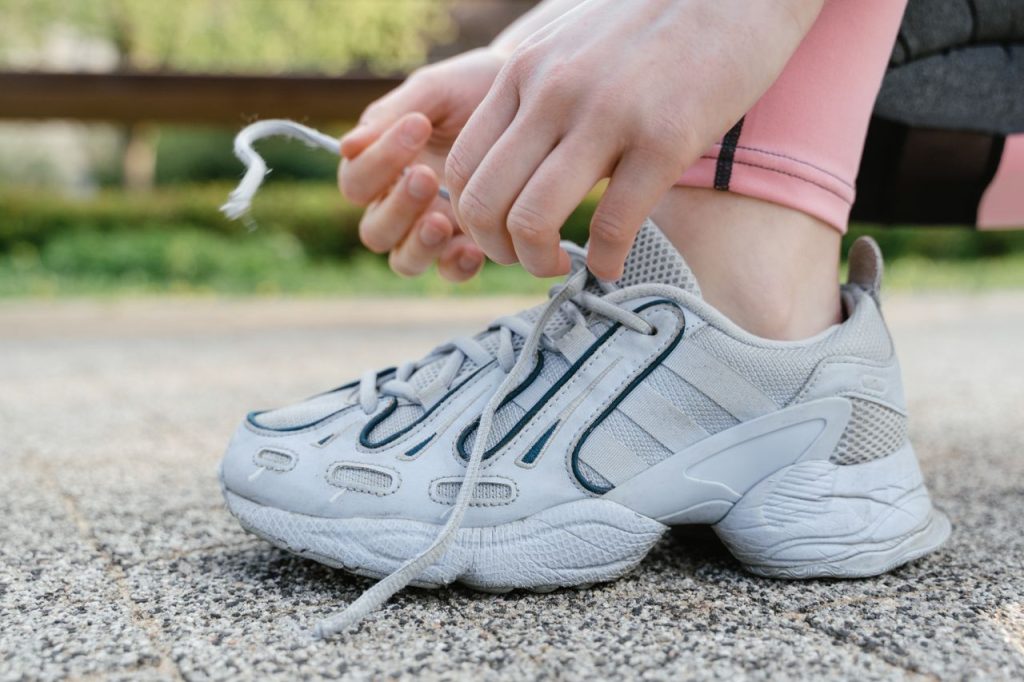
What Shoes Are Best for Peripheral Neuropathy?
Not Sure Where to Start?
Choose the description that sounds most like what you’re experiencing:
👣 My feet or toes are numb → What Causes Numbness in My Toes?
🔥 My feet burn → Why Do My Feet Burn at Night?
🪨 It feels like I’m walking on rocks → Why Do My Feet Feel Like I’m Walking on Rocks?
🧦 It feels like I’m wearing socks when I’m barefoot → Why Do My Feet Feel Like They’re Wearing Socks When I’m Barefoot?
⚖️ I’m losing my balance → Can Peripheral Neuropathy Affect My Balance?
🚶 I keep tripping → Why Do I Keep Tripping? Could Peripheral Neuropathy Be the Cause?
👟 I’m trying to find safer, more comfortable shoes for neuropathy → You’re in the right place. Keep reading.
What You’ll Learn
In this chapter you’ll discover:
- What features to look for in shoes when you have peripheral neuropathy
- Why fit matters more than the brand name
- Why a roomy toe box can help
- Why the softest shoe isn’t always the safest shoe
- How cushioning and stability work together
- Why seams and pressure points matter
- Whether you should walk barefoot
- What kind of socks may be helpful
- Why you should inspect the inside of your shoes
- When therapeutic or diabetic footwear may be appropriate
- Why foot shape, weakness, balance, and circulation all affect footwear decisions
Quick Answer
For many people with peripheral neuropathy, a good shoe should provide a combination of:
- Proper fit
- Adequate room for the toes
- Protection from injury
- Appropriate cushioning
- Stability
- Secure fastening
- Minimal internal pressure points
- A sole appropriate for the person’s walking needs
But there is no single:
“Best neuropathy shoe.”
The best footwear depends on the individual.
A person with painful hypersensitivity may need something different from someone with:
- Severe numbness
- Foot drop
- Significant swelling
- Hammertoes
- A history of foot ulcers
- Poor circulation
- Major balance problems
Don’t choose a shoe based only on how soft it feels. Choose it based on what your feet need.
Why Shoes Matter More When You Have Neuropathy
Healthy sensation acts as an early-warning system.
If a shoe is:
- Too tight
- Rubbing
- Pinching
- Creating a blister
- Pressing against a toe
most people feel it and make an adjustment.
But neuropathy may reduce that warning system.
A shoe can injure the foot without producing enough pain to get your attention.
That makes footwear part of foot protection.
Numbness Can Hide a Problem
Suppose a small pebble gets inside your shoe.
Someone with normal sensation will probably stop walking almost immediately.
But someone with significant neuropathy might continue walking on it.
Over time, that small object can create:
- Redness
- Irritation
- A blister
- Skin breakdown
- A wound
The problem isn’t the pebble.
The problem is that the warning system didn’t work.
Start With Fit
Before worrying about:
- Brand
- Style
- Price
- Technology
start with:
Does the shoe actually fit your foot?
A well-fitting shoe should generally:
- Allow adequate room for the toes
- Avoid excessive pressure
- Hold the heel reasonably securely
- Stay on the foot without excessive sliding
- Accommodate the shape of the foot
- Not create obvious rubbing
A shoe that looks great but doesn’t fit is not a good neuropathy shoe.
Why Is a Wide Toe Box Helpful?
Many people with neuropathy benefit from adequate room in the front of the shoe.
The toes should not be unnecessarily compressed together.
A roomy toe box may help accommodate:
- Natural toe spread
- Hammertoes
- Bunions
- Swelling
- Other foot deformities
But “wide” doesn’t mean:
Buy a shoe that is too large.
An oversized shoe can allow the foot to slide around, creating instability and friction.
The goal is appropriate room—not looseness everywhere.
Measure Your Feet
Many adults haven’t had their feet professionally measured in years.
Feet can change with:
- Age
- Weight changes
- Pregnancy
- Arthritis
- Flattening of the arch
- Swelling
- Foot deformity
And one foot may be larger than the other.
Shoes should generally be fitted to the larger foot.
Don’t assume:
“I’ve worn size 10 for 30 years, so I’m still a size 10.”
You might not be.
Shop Later in the Day When Appropriate
Feet may swell as the day progresses.
For someone whose feet routinely swell, trying on shoes later in the day may give a more realistic idea of how they will fit when the feet are at their larger size.
But significant or new swelling deserves medical evaluation rather than simply buying larger shoes.
What About Cushioning?
Cushioning can improve comfort and reduce certain pressure forces.
That may be helpful for someone with:
- Painful feet
- Reduced natural fat padding
- Pressure sensitivity
- Arthritis
- Metatarsal discomfort
But cushioning has limits.
More cushioning is not automatically better.
An extremely soft or unstable shoe may feel wonderful while sitting in the store but may not provide adequate stability during walking.
The Softest Shoe Isn’t Always the Safest Shoe
This deserves special emphasis.
Patients with neuropathy sometimes look for the softest possible shoe because their feet hurt.
Comfort matters.
But so does stability.
If a shoe is excessively:
- Soft
- Flexible
- Unstable
- Loose
it may make balance more difficult for certain people.
The goal is often a combination of:
Comfort + Protection + Stability
not maximum softness.
Why Stability Matters
Peripheral neuropathy may reduce your awareness of where your feet are in space.
This is called impaired:
Proprioception
If sensory feedback from the feet is reduced, your brain may receive less accurate information about:
- Foot position
- Ground contact
- Weight shifting
A reasonably stable shoe can provide a more predictable base during walking.
But footwear cannot replace lost sensation.
It is one tool among many.
Look at the Sole
The outsole should generally provide appropriate traction for the surfaces you use.
A sole that is too slippery can increase fall risk.
But a sole that catches excessively may also create problems for someone who already has difficulty clearing the foot during walking.
This is especially important for people with:
- Foot drop
- Weakness
- Shuffling gait
- History of tripping
Footwear should complement the person’s gait rather than interfere with it.
Secure Shoes Are Usually Better Than Loose Shoes
Shoes that stay securely on the foot are generally preferable to footwear that slides or requires you to grip with your toes to keep it on.
Depending on the person, useful closure systems may include:
- Laces
- Straps
- Hook-and-loop closures
The important issue is secure fit.
Loose slip-on shoes may be convenient, but they aren’t ideal for every patient with balance problems or weakness.
Be Careful With Flip-Flops and Backless Shoes
Flip-flops and loose backless footwear provide limited protection.
They may also:
- Shift on the foot
- Expose toes to injury
- Provide limited stability
- Require altered walking mechanics
That doesn’t mean every person with mild neuropathy can never wear sandals.
It means footwear should match the person’s:
- Sensation
- Balance
- Strength
- Environment
- Risk level
For someone with substantial loss of protective sensation, exposed or unstable footwear deserves particular caution.
Should I Walk Barefoot If I Have Neuropathy?
If you have significant loss of protective sensation, walking barefoot can increase the risk of unnoticed injury.
Possible hazards include:
- Glass
- Splinters
- Sharp objects
- Hot pavement
- Rough surfaces
- Furniture edges
Even inside the house, injuries can occur.
Someone with good sensation immediately knows:
“I stepped on something.”
Someone with severe neuropathy may not.
For patients with reduced protective sensation, protective footwear is generally the safer choice.
Don’t Forget Temperature
Neuropathy may reduce your ability to accurately judge temperature.
A surface can be dangerously hot without feeling dangerously hot.
Be especially careful with:
- Hot pavement
- Beach sand
- Pool decks
- Heating pads
- Hot-water bottles
- Very hot bath water
Protective footwear helps, but good judgment is still necessary.
Check the Inside of Your Shoes
This is one of the simplest neuropathy safety habits.
Before putting your shoes on, check inside for:
- Pebbles
- Folded insoles
- Torn lining
- Foreign objects
- Rough seams
- Moisture
- Anything that could create pressure
You can use your hand to inspect the inside if hand sensation is normal.
If your hand sensation is also reduced, visually inspect carefully or ask for help.
Don’t assume an empty-looking shoe is an empty shoe.
Seams Can Matter
A rough internal seam may be a minor annoyance to someone with normal sensation.
For someone with reduced protective sensation, repeated friction may cause skin damage without much warning.
When choosing shoes, inspect the inside.
Look for:
- Rough stitching
- Raised seams
- Hard edges
- Areas likely to rub
Smooth interiors may be particularly helpful for high-risk feet.
What About Socks?
Socks provide another layer of protection.
Depending on the patient, helpful features may include:
- Proper fit
- Moisture management
- Minimal bunching
- Comfortable seams
- No excessively tight bands
Socks that wrinkle inside the shoe can create pressure points.
A patient with neuropathy may not feel that wrinkle clearly.
Are “Diabetic Socks” Necessary?
Not everyone with neuropathy needs a product specifically labeled:
“Diabetic socks.”
The label is less important than the features.
Ask:
- Does the sock fit properly?
- Does it bunch?
- Is the top excessively tight?
- Are the seams irritating?
- Does it help manage moisture?
- Does it work with the shoe?
Buy the feature—not the marketing term.
Be Careful With Tight Socks
If a sock leaves a deep indentation around the leg, it may be too constrictive for that individual.
However, don’t confuse ordinary socks with medically prescribed compression stockings.
Compression garments may be appropriate for certain circulatory or swelling problems.
But compression is not appropriate for everyone, particularly when significant arterial disease is present.
If you’re unsure, ask your healthcare professional.
Should I Wear Compression Socks for Neuropathy?
Compression socks do not repair damaged peripheral nerves.
They may help selected patients who also have:
- Venous insufficiency
- Leg swelling
- Certain circulatory problems
But they should not automatically be recommended to everyone with neuropathy.
We have an entire Learning Center article devoted to this question:
“Do Compression Socks Help Peripheral Neuropathy?”
The important principle is:
Use the right tool for the right problem.
What About Orthotics?
Orthotics or shoe inserts may be helpful for selected patients.
They may be used to:
- Redistribute pressure
- Accommodate certain deformities
- Improve comfort
- Support specific biomechanical needs
But an insert takes up space inside the shoe.
If you place a thick insert inside a shoe that already fits tightly, you may actually increase pressure on the foot.
Orthotics and shoes have to work together.
What If It Feels Like I’m Walking on Rocks?
This is a common description among neuropathy patients.
Patients may say:
- “It feels like pebbles are under my feet.”
- “It feels like I’m walking on marbles.”
- “It feels like my sock is bunched up.”
Neuropathy can create distorted sensory signals that produce these sensations even when nothing is actually inside the shoe.
But don’t automatically assume the sensation is neuropathy.
Other causes of forefoot discomfort can include:
- Metatarsalgia
- Morton’s neuroma
- Arthritis
- Fat-pad changes
- Plantar-plate problems
- Foot deformity
- Actual pressure from footwear
If the symptom is persistent, determine the cause.
What About Foot Drop?
Foot drop requires special consideration.
If you cannot adequately lift the front of the foot, simply buying a softer shoe may not solve the problem.
Depending on the cause and severity, management may involve:
- Neurological evaluation
- Physical therapy
- Gait training
- An ankle-foot orthosis, or AFO
- Appropriate footwear
- Other treatment directed at the underlying cause
New foot drop deserves prompt evaluation.
Can an AFO Fit Inside a Regular Shoe?
Some ankle-foot orthoses are designed to work with footwear.
But the shoe may need:
- Additional depth
- A removable insole
- Adequate width
- Secure closure
- Sufficient room for the brace
A shoe that fit perfectly before an AFO may become too tight afterward.
The brace and shoe should function as a system.
What If My Feet Swell?
Swelling changes fit.
A shoe that fits comfortably in the morning may become too tight later.
If swelling is persistent or new, don’t simply assume:
“It’s part of my neuropathy.”
Swelling can have many causes, including:
- Venous problems
- Medication effects
- Heart disease
- Kidney disease
- Injury
- Other medical conditions
Significant new or one-sided swelling deserves appropriate evaluation.
What Are Therapeutic or Diabetic Shoes?
Some patients with diabetes and high-risk foot conditions may benefit from specially designed therapeutic footwear.
These shoes may provide features such as:
- Additional depth
- Accommodative insoles
- Reduced internal pressure
- Space for deformities
- Customized inserts in selected patients
Not everyone with diabetes or neuropathy needs therapeutic shoes.
They are most useful when matched to the patient’s specific risk and foot structure.
Who May Need Professional Footwear Help?
Consider professional evaluation if you have:
- Previous foot ulcer
- Significant loss of protective sensation
- Major foot deformity
- Charcot foot
- Recurrent calluses
- Significant swelling
- Foot drop
- Poor circulation
- Previous amputation
- Difficulty finding shoes that fit
- Repeated blisters or pressure areas
Depending on the problem, evaluation may involve a:
- Podiatrist
- Orthotist
- Pedorthist
- Physical therapist
- Other qualified healthcare professional
What Is Charcot Foot?
Charcot neuroarthropathy is a serious condition that can occur in people with substantial neuropathy, particularly those with diabetes.
Bones and joints in the foot can become damaged, sometimes with surprisingly little pain because sensation is impaired.
Possible warning signs include:
- Swelling
- Warmth
- Redness
- Change in foot shape
A warm, swollen, red foot in someone with significant neuropathy deserves prompt medical evaluation.
Do not simply buy a larger shoe and continue walking on it.
Break New Shoes In Gradually
A shoe may feel comfortable for five minutes in the store and still create a pressure area after several hours.
For someone with reduced sensation, consider gradually increasing wear time with new footwear.
After wearing new shoes, inspect the feet for:
- Redness
- Blisters
- Irritation
- Pressure marks
Persistent redness after the shoe is removed may indicate excessive pressure.
Don’t Let Numbness Decide Whether a Shoe Fits
This is one of the most important points in this article.
Patients sometimes say:
“The shoe doesn’t hurt, so it must fit.”
But if sensation is reduced, pain is no longer a reliable measuring tool.
Instead, evaluate:
- Length
- Width
- Toe space
- Pressure areas
- Skin response
- Heel security
- Stability
When sensation becomes unreliable, inspection becomes more important.
Check Your Feet Every Day
If you have meaningful loss of protective sensation, make foot inspection part of your routine.
Look at:
- Tops of the feet
- Soles
- Heels
- Between the toes
Watch for:
- Cuts
- Blisters
- Redness
- Swelling
- Cracks
- Drainage
- Calluses
- Color changes
- Open wounds
Use a mirror if needed.
If you cannot inspect your feet adequately, ask someone to help.
Never Ignore an Open Wound
A foot wound in someone with neuropathy—especially someone with diabetes or poor circulation—deserves attention.
Seek prompt medical evaluation for:
- Open sores
- Drainage
- Increasing redness
- Warmth
- Swelling
- Pus
- Foul odor
- Black or discolored tissue
- Fever
- Rapidly worsening changes
Reduced pain does not mean reduced seriousness.
How We Evaluate Footwear Needs at Advanced Integrated Medical
When discussing shoes with a neuropathy patient, I want to know:
- How much sensation have you lost?
- Do your feet hurt?
- Are your toes crowded?
- Do you have hammertoes or bunions?
- Are you developing calluses?
- Have you ever had a foot ulcer?
- Do your feet swell?
- Do you have diabetes?
- Is circulation adequate?
- Are you losing balance?
- Are you tripping?
- Is foot drop present?
- What shoes are you wearing now?
The best shoe isn’t determined by neuropathy alone.
It is determined by:
Neuropathy + foot structure + gait + balance + circulation + lifestyle.
About Dr. Dee
Dr. D. Scott (“Dee”) Stevens has spent nearly four decades helping patients with peripheral neuropathy, chronic pain, musculoskeletal disorders, sports injuries, and regenerative medicine.
Throughout his career, he has cared for patients from all walks of life—including professional, collegiate, and Olympic athletes, professional football players, Major League Baseball players, professional boxers, and MMA fighters.
One thing I’ve learned from treating active people at every level is that what happens where the body meets the ground matters.
For someone with neuropathy, footwear isn’t simply about fashion.
It can affect:
- Comfort
- Stability
- Pressure
- Walking
- Confidence
- Foot protection
Sometimes a small change at ground level makes a meaningful difference in everyday function.
Dr. Dee’s Clinical Pearl
When patients ask:
“Doctor, what brand of shoe should I buy?”
I usually think the better question is:
“What does your foot need the shoe to do?”
Protect?
Cushion?
Stabilize?
Accommodate a deformity?
Work with an AFO?
Reduce pressure?
A brand name can’t answer that question.
Your feet can.
Dr. Dee’s Office Conversation
Patient: “Doctor, I bought the softest shoes I could find because of my neuropathy.”
Dr. Dee: “Are they helping?”
Patient: “My feet feel comfortable, but I feel less steady.”
Dr. Dee: “Then softness may have solved one problem and created another.”
Patient: “So I need harder shoes?”
Dr. Dee: “Not necessarily. You need the right balance between comfort and stability for your feet and your walking.”
Facing One of the Biggest Fears
“What If I Injure My Foot and Don’t Feel It?”
That is a legitimate concern when protective sensation is significantly reduced.
But fear shouldn’t make you stop walking unnecessarily.
It should make you smarter about protecting your feet.
You can:
- Wear appropriate footwear
- Avoid walking barefoot
- Inspect your shoes
- Inspect your feet
- Address pressure areas early
- Choose properly fitting socks
- Seek help for wounds
- Have circulation and foot risk evaluated when appropriate
The goal isn’t to fear your feet. The goal is to protect them.
Patient Success Principle #28
When You Can’t Rely on Sensation, Rely on Inspection
Pain is normally one of the body’s warning systems.
Neuropathy may make that warning system unreliable.
So replace what you’ve lost with something you can control:
Look.
Look at your feet.
Look inside your shoes.
Look for redness.
Look for pressure.
Look for blisters.
Look for wounds.
If your feet can’t always warn you about a problem, your eyes can help.
Ask Dr. Dee
“Doctor, what is the single best shoe for neuropathy?”
There isn’t one.
The right shoe depends on your:
- Foot shape
- Sensation
- Pain
- Balance
- Strength
- Gait
- Swelling
- Circulation
- Deformities
- Activities
I would rather help someone identify the features they need than tell every neuropathy patient to buy the same shoe.
Lesson I’ve Learned in Nearly 40 Years
Comfort and Function Have to Work Together
A treatment can feel good and still not improve function.
A shoe can feel soft and still make someone unstable.
A brace can provide support and still create pressure if it doesn’t fit properly.
Over nearly four decades, I’ve learned to ask two questions:
“How does it feel?”
and
“How does it function?”
Neither question should be ignored.
The Hope Principle
When neuropathy changes the way your feet feel, it can change the way you think about walking.
Patients may become afraid of:
- Falling
- Injuring their feet
- Walking too far
- Leaving home
But protecting your feet doesn’t mean giving up movement.
It means making movement safer.
The right footwear won’t cure peripheral neuropathy.
But appropriate shoes may help protect your feet, improve comfort, support safer walking, and preserve confidence.
And those things matter.
Sometimes protecting your independence begins with protecting the two feet carrying you through your day.
“I believe the best healthcare decisions are made when patients understand their condition. My job isn’t simply to treat symptoms—it’s to help you understand why they’re happening and what your options are.”
— Dr. D. Scott (“Dee”) Stevens
Frequently Asked Questions
What shoes are best for peripheral neuropathy?
There is no single best shoe. Look for appropriate fit, toe room, protection, cushioning, stability, secure fastening, and minimal internal pressure points.
Should neuropathy shoes be extra soft?
Not necessarily. Cushioning can improve comfort, but excessive softness or instability may make balance more difficult for some people.
Is a wide toe box good for neuropathy?
Often, especially when the toes need additional room or foot deformities are present. But the entire shoe should still fit securely.
Should I buy shoes one size larger for neuropathy?
Not automatically. Oversized shoes may allow excessive sliding and create instability or friction. Proper professional sizing is preferable.
Can I walk barefoot if I have neuropathy?
If protective sensation is reduced, barefoot walking increases the risk of unnoticed cuts, burns, punctures, and other injuries.
Are diabetic shoes necessary for everyone with neuropathy?
No. Therapeutic footwear is particularly useful for selected high-risk patients, including some people with significant sensory loss, deformity, or previous ulceration.
What socks are best for neuropathy?
Properly fitting socks that don’t bunch, create excessive pressure, or have irritating seams may be helpful. Moisture management can also be useful.
Are compression socks good for neuropathy?
Compression may help selected patients with venous problems or swelling, but it does not repair damaged nerves and is not appropriate for everyone.
Should I inspect my shoes before wearing them?
Yes, particularly when sensation is reduced. Check for foreign objects, damaged lining, folded insoles, or other pressure sources.
Should I break new shoes in gradually?
For someone with reduced sensation, gradually increasing wear time and inspecting the feet afterward can help identify pressure areas before they become more serious.
Key Takeaways
- There is no single best shoe for every person with peripheral neuropathy.
- Proper fit matters more than brand name.
- A roomy toe box can reduce unnecessary toe pressure.
- Cushioning should be balanced with stability.
- The softest shoe isn’t automatically the safest shoe.
- Secure footwear may be safer than loose or unstable shoes for people with balance problems.
- Significant loss of protective sensation makes barefoot walking risky.
- Inspect the inside of your shoes regularly.
- Socks should fit well and avoid bunching and excessive pressure.
- Orthotics and braces require enough room inside the shoe.
- Therapeutic footwear may be appropriate for selected high-risk patients.
- New swelling, wounds, or major changes in foot shape deserve medical attention.
- When sensation becomes unreliable, inspection becomes more important.
Why Patients Choose Advanced Integrated Medical
At Advanced Integrated Medical, we don’t simply tell every neuropathy patient:
“Buy a comfortable pair of shoes.”
We want to know:
How much sensation have you lost?
What hurts?
How is your balance?
Are you tripping?
Is there weakness or foot drop?
Are there deformities?
Do your feet swell?
Is circulation adequate?
Have you had an ulcer?
What do you need your shoes to help you do?
The goal isn’t to find the most expensive shoe.
It’s to find footwear that makes sense for the person wearing it.
Continue Exploring the Learning Center
You may also want to read:
- What Causes Numbness in My Toes?
- Why Do My Feet Feel Like I’m Walking on Rocks?
- Why Do My Feet Feel Like They’re Wearing Socks When I’m Barefoot?
- Can Peripheral Neuropathy Affect My Balance?
- Why Do I Keep Tripping? Could Peripheral Neuropathy Be the Cause?
- Can Peripheral Neuropathy Cause Foot Drop?
- Can Peripheral Neuropathy Cause Falls?
- Do Compression Socks Help Peripheral Neuropathy?
- Can Peripheral Neuropathy Lead to Foot Ulcers or Amputation?
- I’ve Been Diagnosed With Peripheral Neuropathy—What Should I Do Next?
Medical Disclaimer
This article is intended for educational purposes only and is not a substitute for individualized medical diagnosis, treatment, podiatric care, or professional footwear assessment.
Footwear needs vary depending on sensation, circulation, diabetes status, foot deformity, gait, balance, weakness, swelling, wounds, and other medical factors.
Seek prompt medical evaluation for an open wound, increasing redness, warmth, drainage, infection, black or discolored tissue, rapidly changing swelling, or a warm, red, swollen foot in someone with significant neuropathy or diabetes.
New foot drop, rapidly progressive weakness, or significant changes in walking also deserve prompt medical evaluation.
Ready to Learn More?
If you have peripheral neuropathy and you’re looking for better shoes, don’t begin with:
“Which brand should I buy?”
Begin with:
Do my shoes fit correctly?
Do my toes have enough room?
Are my feet protected?
Is there enough cushioning?
Am I stable when I walk?
Are there seams or pressure points?
Do I have enough sensation to know when something is wrong?
Should my feet be professionally evaluated?
At Advanced Integrated Medical, we believe footwear should help you do more than feel comfortable while you’re sitting down.
It should help protect the feet you depend on when you stand up and move.
Because the best shoe isn’t necessarily the softest, newest, or most expensive one. It’s the shoe that fits your foot, your function, and your life.