
Why Do My Feet Change Color?
Not Sure Where to Start?
Choose the description that sounds most like what you’re experiencing:
🧊 My feet feel cold even when they’re warm → Why Are My Feet Cold Even When They Feel Warm?
👣 My feet or toes are numb → What Causes Numbness in My Toes?
🔥 My feet burn → Why Do My Feet Burn at Night?
🦶 My feet or ankles are swollen → Can Peripheral Neuropathy Cause Swelling in My Feet and Ankles?
🩸 I’m worried about circulation → Can Poor Circulation Cause Numbness in My Feet?
🔴🟣⚪ My feet turn red, purple, blue, or pale → You’re in the right place. Keep reading.
What You’ll Learn
In this chapter you’ll discover:
- Whether peripheral neuropathy can affect foot color
- How autonomic nerves help regulate blood vessels
- Why red feet can have several different causes
- Why feet may look purple or bluish
- What unusually pale feet may indicate
- Why temperature can change skin color
- How venous and arterial circulation problems differ
- Why swelling can affect color
- Why diabetes makes foot color changes particularly important
- When infection or Charcot foot should be considered
- Why comparing one foot with the other can be helpful
- Which color changes require prompt or emergency evaluation
Quick Answer
Peripheral neuropathy can sometimes contribute to changes in skin color because certain autonomic nerves help regulate small blood vessels and skin blood flow.
But this is extremely important:
Do not assume a red, purple, blue, or pale foot is “just neuropathy.”
Foot color changes may also be related to:
- Arterial circulation problems
- Venous circulation problems
- Swelling
- Temperature
- Infection
- Inflammation
- Injury
- Pressure
- Blood clots
- Charcot neuroarthropathy
- Other medical conditions
Sometimes the color change is harmless and temporary.
Sometimes it is an important warning sign.
The pattern tells us a great deal.
What Color Are Healthy Feet Supposed to Be?
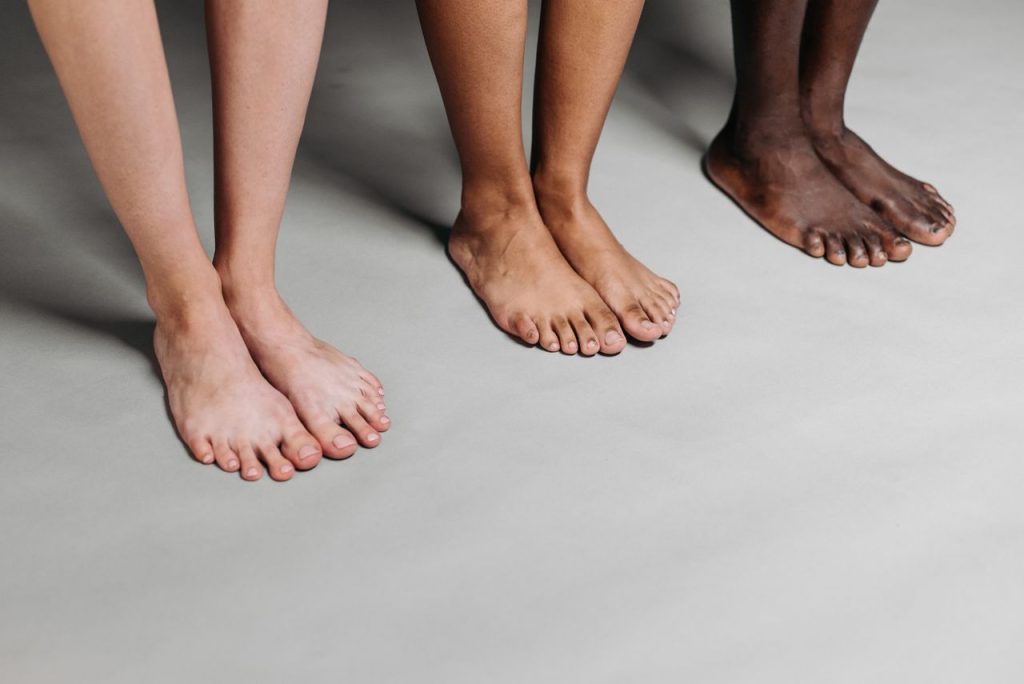
There isn’t one universal “normal” color.
Normal skin tone varies greatly from person to person.
That’s why the most useful comparison is often:
What is normal for you?
Ask:
- Is this color new?
- Is one foot different from the other?
- Does it change with position?
- Does it change with temperature?
- Is there swelling?
- Is the foot painful?
- Is it unusually warm or cold?
- Are there wounds?
A change from your normal may be more meaningful than the color by itself.
Why Does Skin Change Color?
Skin color partly reflects blood flow through small vessels near the surface.
Blood flow changes in response to:
- Temperature
- Activity
- Position
- Pressure
- Nervous-system signals
- Circulatory function
That’s why healthy skin may become temporarily:
- Pinker after exercise
- Redder when warm
- Paler when cold
But persistent or dramatic changes deserve more attention.
How Could Neuropathy Affect Skin Color?
Most people think about neuropathy as a problem involving:
- Numbness
- Burning
- Tingling
- Pain
But peripheral nerves also include:
Autonomic nerves
These help regulate automatic functions, including aspects of:
- Blood-vessel tone
- Sweating
- Skin temperature
If autonomic nerve function is disrupted, regulation of small blood vessels in the skin may become abnormal.
That can sometimes contribute to changes in:
- Skin temperature
- Sweating
- Color
But again:
Visible color change should not automatically be attributed to neuropathy.
Why Might My Feet Look Red?
Redness can occur for many reasons.
Possibilities include:
- Increased blood flow from warmth
- Pressure
- Inflammation
- Infection
- Injury
- Venous congestion
- Autonomic dysfunction
- Certain painful nerve disorders
- Charcot neuroarthropathy
The important questions are:
Is the redness temporary or persistent?
One foot or both?
Warm or cold?
Swollen or not?
Painful or painless?
Is there a wound?
What If My Feet Become Red When They’re Hanging Down?
Some patients notice that their feet become:
- Red
- Dark red
- Purplish
when sitting or standing with the feet down.
Then the color changes when they elevate the legs.
Position-dependent color change may reflect changes in blood flow or venous pooling.
But certain arterial circulation problems can also produce abnormal color changes when the foot is dependent.
This is not something to diagnose simply by looking at one photograph.
The circulation needs to be considered in context.
What Is Dependent Rubor?
In some people with significant peripheral arterial disease, a foot may become unusually red when hanging downward.
This is sometimes called:
Dependent rubor
When the leg is elevated, the foot may become unusually pale.
This pattern can be an important vascular clue.
It should not be dismissed as:
“My neuropathy makes my foot red.”
Why Might My Feet Look Purple?
A purple or dusky appearance may occur when blood flow and oxygen delivery through the tissues are altered.
Possible causes include:
- Venous congestion
- Cold exposure
- Certain vascular conditions
- Reduced circulation
- Swelling
- Other medical problems
Some people notice more purplish discoloration when their feet are hanging down for prolonged periods.
But persistent purple or blue discoloration deserves attention.
What Does Blue Skin Mean?
Bluish discoloration is sometimes referred to as:
Cyanosis
It can occur when tissues are not receiving or circulating oxygenated blood normally.
The cause may be local or systemic.
A newly blue or markedly discolored foot—especially if it is:
- Cold
- Painful
- Numb
- Weak
requires urgent evaluation.
Why Might My Feet Look Pale?
Paleness can occur temporarily from:
- Cold
- Pressure
- Normal blood-vessel constriction
But persistent or unusual pallor may also suggest reduced arterial blood flow.
A foot that suddenly becomes:
- Pale
- Cold
- Painful
- Numb
- Weak
may represent an acute circulation emergency.
That is not something to watch at home and see if it improves tomorrow.
Arteries and Veins Do Different Jobs
This distinction helps patients understand circulation.
Arteries
carry oxygen-rich blood from the heart to the feet.
Veins
carry blood from the feet back toward the heart.
Problems with either system can change the appearance of the legs and feet.
But they often produce different patterns.
What Can Arterial Circulation Problems Look Like?
Peripheral artery disease may be associated with:
- Cold feet
- Reduced pulses
- Poor wound healing
- Leg discomfort during walking
- Color changes
- Shiny skin
- Loss of hair on the legs or feet in some patients
- Severe symptoms when blood flow becomes critically reduced
Not every person with peripheral artery disease has all of these findings.
And some people have relatively few symptoms.
Why Can Neuropathy Hide Circulation Problems?
Normally, inadequate blood flow may produce pain.
But a patient with substantial neuropathy may not perceive pain normally.
That creates a potentially dangerous combination:
Poor circulation + reduced warning sensation
A patient might have a serious foot problem without the level of pain we would ordinarily expect.
That’s why we look at more than symptoms.
What Can Venous Circulation Problems Look Like?
Chronic venous insufficiency may contribute to:
- Ankle swelling
- Leg heaviness
- Aching
- Varicose veins
- Skin discoloration
- Changes around the lower legs and ankles
Over time, some patients develop brownish discoloration around the lower legs due to chronic venous changes.
This is very different from the sudden pallor of an acute arterial problem.
Why Do My Feet Look More Purple at the End of the Day?
If blood pools in the lower extremities because of venous problems or prolonged dependency, the feet may appear darker or more congested.
Swelling may also become more noticeable.
But again, don’t diagnose venous disease solely from color.
The complete picture matters.
Can Swelling Change Foot Color?
Yes.
Swelling stretches tissues and can affect how the skin appears.
A swollen foot may look:
- Redder
- Shinier
- Darker
- Different from the opposite foot
But swelling plus color change deserves more attention than color alone.
This is especially true when only one foot is involved.
Why Is One Red, Swollen, Warm Foot Concerning?
In someone with neuropathy, particularly a patient with diabetes, a red, warm, swollen foot may raise concern for several important conditions.
These include:
- Infection
- Injury
- Charcot neuroarthropathy
- Gout
- Other inflammation
The absence of severe pain does not rule these out.
What Is Charcot Foot?
Charcot neuroarthropathy can occur when a person with substantial neuropathy develops damage to the bones and joints of the foot.
Because protective sensation is reduced, the injury may continue without normal pain warning.
Early signs can include:
- Warmth
- Redness
- Swelling
Sometimes the foot is much warmer than the opposite side.
If not recognized and appropriately managed, structural changes may develop.
A red, hot, swollen neuropathic foot deserves prompt evaluation.
Could Redness Mean Infection?
Yes.
Infection can cause:
- Redness
- Warmth
- Swelling
- Tenderness
- Drainage
- Skin breakdown
There may also be:
- Fever
- Chills
- Feeling generally unwell
But patients with diabetes or neuropathy may not always have dramatic pain.
A wound surrounded by increasing redness should never be ignored.
Look Between the Toes
Foot problems don’t always begin in obvious places.
Check:
- Between the toes
- Under the toes
- Heels
- Soles
- Sides of the feet
Look for:
- Cuts
- Blisters
- Cracks
- Fungal changes
- Drainage
- Pressure areas
- Foreign objects
If sensation is reduced, visual inspection becomes increasingly important.
Can Pressure From Shoes Make My Foot Red?
Absolutely.
A tight shoe can create a localized red pressure area.
For someone with normal sensation, discomfort usually provides an early warning.
For someone with neuropathy, the pressure may continue unnoticed.
If you remove your shoes and repeatedly find the same red spot, don’t ignore it simply because it doesn’t hurt.
Why Should I Compare My Two Feet?
This is a simple habit that can be surprisingly useful.
Look at both feet.
Ask:
- Is one redder?
- Is one paler?
- Is one more purple?
- Is one more swollen?
- Does one feel warmer?
- Does one feel colder?
- Is one changing shape?
Your two feet provide a built-in comparison.
Sometimes the opposite foot tells you what’s abnormal.
Should I Take Pictures of My Feet?
If a color change comes and goes, a photograph may help document what you’re seeing.
You might photograph:
- The color change
- Swelling
- A pressure area
- A wound
This can sometimes help your healthcare professional understand a symptom that isn’t present during the appointment.
But photographs should not delay urgent medical care when warning signs are present.
Can Cold Weather Change Foot Color?
Yes.
Cold causes blood vessels near the skin to constrict.
That may temporarily make skin appear:
- Paler
- Bluish
- Mottled
People vary greatly in their response to cold.
But persistent, painful, or dramatic changes—especially affecting one foot—should not automatically be blamed on the weather.
What Is Raynaud’s Phenomenon?
Raynaud’s phenomenon causes episodes of reduced blood flow, usually affecting fingers and sometimes toes.
Cold or emotional stress may trigger color changes that can include:
- White
- Blue
- Red
There may also be:
- Numbness
- Tingling
- Pain
Raynaud’s is different from typical peripheral neuropathy, although someone can have both conditions.
Can Neuropathy Make My Feet Feel Cold Without Actually Being Cold?
Yes.
We discussed this in another Learning Center article.
Damaged sensory nerves can create a false sensation of cold even when the skin temperature is normal.
That’s why we distinguish:
“My feet feel cold.”
from:
“My feet actually are cold.”
A genuinely cold, pale foot deserves a different level of concern than a warm foot that merely feels cold because of altered nerve sensation.
Can My Feet Feel Hot Without Being Hot?
Yes.
Burning neuropathic pain can create the sensation that the feet are extremely hot even when the skin temperature is normal.
Again:
What the foot feels like and what the foot physically is may not be the same thing.
That distinction is extremely useful in neuropathy evaluation.
Can Autonomic Neuropathy Affect Sweating and Temperature?
Yes.
Autonomic nerve dysfunction can affect:
- Sweating
- Skin blood-vessel regulation
- Temperature regulation
Some patients may notice:
- Unusually dry feet
- Altered sweating
- Temperature differences
- Color fluctuations
But significant visible changes should still be evaluated rather than automatically assigned to autonomic neuropathy.
What If My Toes Turn Dark or Black?
Darkening or black discoloration can represent tissue injury or severely compromised tissue and requires prompt medical evaluation.
This is particularly concerning in someone with:
- Diabetes
- Peripheral artery disease
- Neuropathy
- A foot wound
Do not wait for pain.
A severely numb toe may become dangerously injured without hurting very much.
What About Bruising?
Not every purple area is a circulation problem.
Bruising from:
- Injury
- Pressure
- Blood-thinning medications
may also create discoloration.
But remember:
Someone with neuropathy may not remember an injury because they didn’t feel it normally.
New unexplained bruising or discoloration deserves attention.
What If My Foot Changes Color After Walking?
That pattern is worth describing carefully.
Ask:
- Does it become red?
- Pale?
- Purple?
- Is there pain?
- Does the calf ache?
- Does rest make it better?
- How quickly does the color return to normal?
Exercise-related symptoms may provide clues about circulation, pressure, footwear, or other problems.
When Should Foot Color Changes Be Evaluated?
Consider medical evaluation when the color change is:
- New
- Persistent
- Progressively worsening
- Primarily on one side
- Associated with swelling
- Associated with unusual warmth
- Associated with unusual coldness
- Associated with wounds
- Associated with pain
- Associated with weakness or numbness
- Accompanied by poor wound healing
Don’t wait until the problem becomes severe.
When Is a Color Change an Emergency?
Seek urgent or emergency medical attention if a foot or leg suddenly becomes:
- Pale
- Blue
- Severely discolored
- Cold
- Very painful
- Newly numb
- Weak
especially if the change is sudden.
Also seek urgent medical attention for:
- Rapidly spreading redness
- Significant swelling
- Fever
- Red streaking
- A serious-looking wound
- Black or dying-looking tissue
Sudden shortness of breath or chest pain associated with leg swelling requires emergency care.
How We Evaluate Foot Color Changes at Advanced Integrated Medical
When a patient says:
“My feet keep changing color,”
I want to know:
- What color?
- One foot or both?
- Toes or whole foot?
- Constant or intermittent?
- Worse when standing?
- Better when elevated?
- Triggered by cold?
- Does the foot feel warm or cold to the touch?
- Is there swelling?
- Any wounds?
- Any new shoe pressure?
- Any pain?
- Any numbness?
- Any diabetes?
- Any vascular disease?
- Any history of blood clots?
- Any smoking history?
- Any medication changes?
Then we examine the feet rather than simply assigning the color change to neuropathy.
Treatment Depends on the Cause
There is no single treatment for foot discoloration.
Management may involve addressing:
- Peripheral nerve dysfunction
- Arterial disease
- Venous disease
- Swelling
- Infection
- Foot injury
- Charcot neuroarthropathy
- Pressure from footwear
- Temperature exposure
- Other underlying conditions
The treatment for venous congestion is not necessarily the treatment for arterial disease.
The treatment for neuropathic burning is not the treatment for infection.
The color is a clue. The cause determines the treatment.
About Dr. Dee
Dr. D. Scott (“Dee”) Stevens has spent nearly four decades helping patients with peripheral neuropathy, chronic pain, musculoskeletal disorders, sports injuries, and regenerative medicine.
Throughout his career, he has cared for patients from all walks of life—including professional, collegiate, and Olympic athletes, professional football players, Major League Baseball players, professional boxers, and MMA fighters.
One lesson I’ve learned over nearly four decades is that what patients see can sometimes be just as important as what they feel.
Neuropathy can make sensation unreliable.
A patient may not feel:
- Pressure
- Injury
- Heat
- Cold
- A developing wound
normally.
That’s why I tell neuropathy patients:
Use your eyes as another set of nerves.
Dr. Dee’s Clinical Pearl
If someone with neuropathy says:
“My foot changed color,”
don’t immediately ask only:
“Does it hurt?”
Ask:
“Is it different from the other foot?”
Then look.
Color.
Temperature.
Swelling.
Skin.
Wounds.
Pulses.
Structure.
Because with significant neuropathy:
The eye may recognize danger before the foot feels it.
Dr. Dee’s Office Conversation
Patient: “Doctor, my toes sometimes look purple, but they don’t really hurt.”
Dr. Dee: “The fact that they don’t hurt doesn’t automatically reassure me because your sensation is reduced.”
Patient: “Could it just be the neuropathy?”
Dr. Dee: “Neuropathy can affect some automatic control of the skin and blood vessels, but we shouldn’t assume that’s the explanation.”
Patient: “So what do we look at?”
Dr. Dee: “Color, temperature, circulation, swelling, wounds, when it happens, and whether one foot behaves differently from the other.”
Facing One of the Biggest Fears
“Does a Color Change Mean I’m Going to Lose My Foot?”
No.
Many foot color changes have explanations that are far less serious.
Temperature, position, venous pooling, pressure, and other factors can all change skin color.
But we also don’t want fear to push us toward ignoring something important.
The answer isn’t panic.
The answer is:
Pay attention to the pattern.
Ask:
- New or longstanding?
- One side or both?
- Warm or cold?
- Swollen or normal?
- Wound or no wound?
- Temporary or persistent?
Awareness is more useful than fear.
Patient Success Principle #33
Look at Your Feet—Don’t Just Listen to Them
Neuropathy may interfere with the messages your feet send.
So add another source of information:
Your eyes.
Look at your feet regularly.
Notice:
- Color
- Swelling
- Wounds
- Pressure marks
- Cracks
- Blisters
- Changes in shape
Compare one foot with the other.
When sensation becomes less reliable, observation becomes more valuable.
Ask Dr. Dee
“Doctor, my feet sometimes turn red or purple. Does that mean I have poor circulation?”
Not necessarily.
Color changes can occur for several reasons, including temperature, position, venous pooling, autonomic nerve dysfunction, inflammation, and circulation problems.
The pattern matters.
I would want to know:
- When it happens
- Whether both feet are affected
- Whether the feet are warm or cold
- Whether swelling is present
- Whether the color changes with elevation
- Whether there are wounds
- How your circulation appears on examination
Color is information.
But color alone is not a diagnosis.
Lesson I’ve Learned in Nearly 40 Years
What You Can See Sometimes Matters More Than What You Can Feel
A patient with normal sensation may discover a problem because it hurts.
A patient with significant neuropathy may not get that warning.
That’s why I pay attention when patients say:
“This foot looks different.”
Different color.
Different swelling.
Different temperature.
Different shape.
After nearly four decades, I’ve learned:
“It looks different” is sometimes one of the most important things a neuropathy patient can tell me.
The Hope Principle
Seeing your feet turn red, purple, or pale can be frightening.
It’s easy to imagine the worst.
But color change is not a diagnosis.
It’s a clue.
And clues give us questions we can answer.
Is it:
- Temperature?
- Position?
- Venous circulation?
- Arterial circulation?
- Swelling?
- Pressure?
- Infection?
- Nerve-related vascular regulation?
Once we understand the reason, we can make better decisions.
Hope doesn’t mean ignoring what you see. It means paying attention early enough to do something useful with the information.
“I believe the best healthcare decisions are made when patients understand their condition. My job isn’t simply to treat symptoms—it’s to help you understand why they’re happening and what your options are.”
— Dr. D. Scott (“Dee”) Stevens
Frequently Asked Questions
Can peripheral neuropathy cause my feet to change color?
Certain neuropathies involving autonomic nerves may affect small-vessel regulation, sweating, and skin temperature. However, visible color changes can have many other causes and should not automatically be attributed to neuropathy.
Why do my feet turn red?
Possible reasons include warmth, pressure, inflammation, infection, venous congestion, autonomic dysfunction, Charcot foot, and vascular disease.
Why do my feet look purple when I sit?
Dependent positioning can allow blood to pool in the lower extremities, particularly when venous return is impaired. Other vascular problems may also cause positional color changes.
Why does one foot look different from the other?
A one-sided change may suggest a localized problem involving circulation, injury, infection, swelling, pressure, or inflammation and deserves closer attention if new or persistent.
Why are my feet pale and cold?
Cold temperatures can temporarily cause paleness, but a persistently or suddenly pale and cold foot may indicate reduced arterial blood flow and requires appropriate evaluation.
Can neuropathy make my feet feel cold even if they’re warm?
Yes. Altered sensory nerve signals can create a false sensation of cold even when the foot is physically warm.
What is dependent rubor?
Dependent rubor is abnormal redness that may appear when a limb is hanging down and can occur in significant peripheral arterial disease.
Can diabetes cause foot color changes?
Diabetes may be associated with neuropathy, vascular disease, infection risk, and other foot problems that can affect appearance. A new color change should not simply be labeled “diabetes.”
Should I worry if my foot is red, warm, and swollen but doesn’t hurt?
Yes. In someone with significant neuropathy—especially diabetes—a red, warm, swollen foot can represent infection, injury, Charcot neuroarthropathy, or another condition requiring prompt evaluation.
When is foot discoloration an emergency?
A suddenly pale, blue, cold, severely painful, newly numb, or weak foot may indicate an acute circulation problem and requires emergency evaluation. Rapidly spreading redness, severe infection signs, or black tissue also require urgent care.
Key Takeaways
- Neuropathy can sometimes influence skin temperature, sweating, and small-vessel regulation.
- Red, purple, blue, or pale feet should not automatically be blamed on neuropathy.
- Arterial and venous circulation problems can produce different color patterns.
- Position and temperature can affect foot color.
- Neuropathy may reduce the pain that would normally warn you about a serious foot problem.
- A red, warm, swollen neuropathic foot deserves prompt evaluation.
- A suddenly pale, cold, blue, painful, numb, or weak foot can be a vascular emergency.
- Pressure from poorly fitting shoes can create localized redness.
- Comparing one foot with the other can reveal important changes.
- Regular visual inspection is particularly important when protective sensation is reduced.
- Color is a clue. The cause determines the treatment.
Why Patients Choose Advanced Integrated Medical
At Advanced Integrated Medical, if you tell us:
“My feet are changing color,”
we don’t simply say:
“That’s your neuropathy.”
We ask:
What color?
One foot or both?
When does it happen?
What happens when you elevate your feet?
Are they warm or cold?
Is there swelling?
Are there wounds?
How is the circulation?
Could pressure, infection, injury, or another condition be involved?
Understanding the pattern helps us decide what should happen next.
Continue Exploring the Learning Center
You may also want to read:
- Why Are My Feet Cold Even When They Feel Warm?
- Can Poor Circulation Cause Numbness in My Feet?
- Can Peripheral Neuropathy Cause Swelling in My Feet and Ankles?
- Can Peripheral Neuropathy Lead to Foot Ulcers or Amputation?
- What Is Autonomic Neuropathy?
- What Shoes Are Best for Peripheral Neuropathy?
- Why Do My Feet Hurt Even Though They Feel Numb?
- Why Does Neuropathy Make My Feet So Sensitive to Touch?
- Can Diabetes Cause Peripheral Neuropathy Even When My Blood Sugar Is “Under Control”?
- I’ve Been Diagnosed With Peripheral Neuropathy—What Should I Do Next?
Medical Disclaimer
This article is intended for educational purposes only and is not a substitute for individualized medical diagnosis or treatment.
Changes in foot or leg color can have many causes, including temperature, position, peripheral neuropathy, autonomic dysfunction, arterial disease, venous disease, infection, inflammation, injury, pressure, blood clots, Charcot neuroarthropathy, and other medical conditions.
Seek prompt medical evaluation for a newly red, warm, swollen foot in someone with significant neuropathy or diabetes; rapidly spreading redness; an open or infected wound; significant unexplained one-sided swelling; or darkening or black tissue.
Seek emergency medical attention for a suddenly pale, blue, cold, severely painful, newly numb, or weak foot or leg, or for chest pain, sudden shortness of breath, fainting, or coughing up blood associated with leg swelling.
Do not begin compression therapy or make major changes to prescription medications based solely on this article.
Ready to Learn More?
If your feet change color, don’t stop with:
“That must be my neuropathy.”
Ask:
Is it one foot or both?
Is the foot actually warm or cold?
Is there swelling?
Does the color change when I stand or elevate my legs?
Is there a wound?
Could my circulation be involved?
Is the foot changing shape?
At Advanced Integrated Medical, we believe your feet provide information in more ways than one.
Sometimes they tell you something through pain.
Sometimes through numbness.
And sometimes—
they tell you something through what you can see.
When your feet look different, pay attention—even if they don’t feel different.