
What You’ll Learn
In this article you’ll discover:
- Why some people feel like they’re walking on rocks, pebbles, or marbles
- The most common medical conditions that can cause this sensation
- How peripheral neuropathy differs from other foot problems
- When this symptom deserves medical evaluation
- What treatment options may be available
Quick Answer
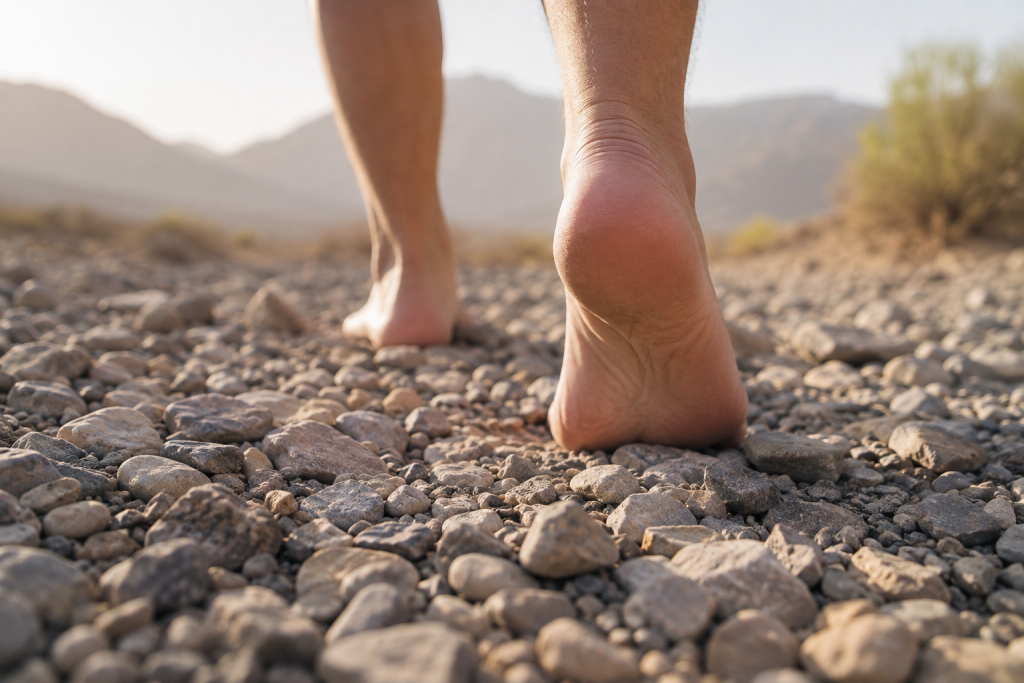
Have you ever stepped out of bed and felt as though you were walking on small rocks or marbles—even though the floor was perfectly flat?
If so, you’re not alone.
This is one of the most common descriptions I hear from patients with nerve-related foot problems.
People describe it in many different ways:
- “It feels like I’m walking on pebbles.”
- “It’s like I have a sock bunched up under my foot.”
- “It feels like there’s a golf ball under my toes.”
- “I keep checking my shoe because it feels like something is inside.”
- “It feels like I’m walking on rocks.”
Although this sensation is commonly associated with peripheral neuropathy, it may also result from other conditions affecting the nerves, joints, soft tissues, or structures of the foot.
The important question is not simply what it feels like, but why it’s happening.
Why Does It Feel Like You’re Walking on Rocks?
Healthy nerves constantly send information from your feet to your brain.
They tell your brain:
- How much pressure you’re applying
- Where your foot is positioned
- What surface you’re walking on
- Whether something is hot, cold, rough, or smooth
When those nerves stop sending accurate information, your brain may interpret normal pressure as something entirely different.
Instead of feeling a smooth floor…
It may feel like you’re standing on gravel.
Peripheral Neuropathy
Peripheral neuropathy is one of the most common reasons patients describe this sensation.
As nerves become damaged or irritated, they may produce abnormal sensory signals.
Instead of accurately reporting what your feet are touching, they create distorted sensations that your brain interprets as pebbles, rocks, or thick padding beneath the feet.
This symptom often develops gradually and may be accompanied by:
- Numbness
- Tingling
- Burning
- Decreased balance
- Sharp or electric-like pain
Morton’s Neuroma
Another possible cause is Morton’s neuroma.
This condition involves irritation or thickening of tissue around a nerve, most commonly between the third and fourth toes.
Patients often describe:
- Feeling like they’re standing on a marble
- Pain in the ball of the foot
- Tingling into the toes
- Discomfort that worsens in tight shoes
Unlike peripheral neuropathy, Morton’s neuroma is usually localized to one area of the foot.
Fat Pad Atrophy
As we age, the natural cushioning beneath the ball of the foot may gradually become thinner.
Without that protective padding, walking may become uncomfortable and produce the sensation of walking directly on bone or small rocks.
Arthritis
Arthritis affecting the joints of the foot may also create unusual pressure sensations, stiffness, or discomfort while walking.
Other Possible Causes
Additional causes may include:
- Diabetes
- Tarsal tunnel syndrome
- Previous foot injuries
- Stress fractures
- Plantar plate injuries
- Metatarsalgia
- Foot deformities
- Poorly fitting shoes
Because several different conditions can produce similar symptoms, an accurate diagnosis is important.
How We Evaluate This Symptom at Advanced Integrated Medical
One of the first questions I ask is:
“Can you point to exactly where you feel it?”
That simple question often provides valuable clues.
We also discuss:
- When the sensation began
- Whether it affects one foot or both
- If symptoms worsen during walking
- Whether numbness or burning is also present
- Your medical history
- Previous injuries
- Current footwear
- Existing medical conditions
Your examination may include:
- Neurological testing
- Orthopedic evaluation
- Balance assessment
- Sensory testing
- Gait analysis
- Circulation assessment
- Review of previous imaging when appropriate
Our goal is to determine not only what you’re feeling—but why you’re feeling it.
Treatment Depends on the Cause
Because several different conditions may create this sensation, treatment should always be individualized.
Depending on your diagnosis, recommendations may include:
- Footwear modifications
- Custom orthotics when appropriate
- Therapeutic exercise
- Balance rehabilitation
- Chiropractic care when spinal dysfunction contributes
- Nutritional guidance
- Functional medicine evaluation
- Regenerative medicine for selected patients
- Referral to another healthcare provider when appropriate
There is no single treatment appropriate for everyone.
Understanding the underlying cause allows treatment to be directed toward the actual problem rather than simply the symptom.
About Dr. Dee
Dr. D. Scott (“Dee”) Stevens has spent nearly four decades helping patients with peripheral neuropathy, chronic pain, sports injuries, musculoskeletal disorders, and regenerative medicine. During his career, he has cared for everyone from young athletes to older adults striving to remain active and independent, including professional, collegiate, and Olympic athletes.
His philosophy is to educate patients, identify the underlying cause whenever possible, and develop treatment recommendations based on each person’s unique needs and goals.
Dr. Dee’s Clinical Pearl
When patients tell me they’re walking on rocks, I never assume the answer.
I’ve seen this symptom caused by peripheral neuropathy.
I’ve also seen it caused by Morton’s neuroma, fat pad atrophy, spinal conditions, arthritis, and several other foot problems.
One lesson I’ve learned after nearly four decades in practice is this:
The body often speaks in symptoms—but symptoms don’t always tell the whole story.
That’s why careful listening and a thorough examination remain some of the most valuable tools in healthcare.
When we understand the cause, we can begin having a meaningful conversation about the best treatment options.
And that conversation almost always brings something else with it…
Hope.
“I believe the best healthcare decisions are made when patients understand their condition. My job isn’t simply to treat symptoms—it’s to help you understand why they’re happening and what your options are.”
— Dr. D. Scott (“Dee”) Stevens
Frequently Asked Questions
Is walking on rocks a sign of neuropathy?
It can be, but it isn’t the only possibility. Several foot and nerve conditions may create similar sensations.
Why does it feel worse when I’m barefoot?
Without the cushioning provided by supportive shoes, irritated nerves or painful structures in the foot may become more noticeable.
Can orthotics help?
For certain conditions, properly fitted orthotics may improve comfort by redistributing pressure. They are not appropriate for every cause of foot pain, so an evaluation is recommended.
Could this be caused by my back?
Yes. Certain spinal conditions can affect the nerves traveling into the feet and sometimes produce unusual sensations.
Should I ignore this if it comes and goes?
Occasional symptoms may have a simple explanation, but recurring or worsening symptoms deserve a professional evaluation.
Key Takeaways
- Feeling like you’re walking on rocks is a common symptom with several possible causes.
- Peripheral neuropathy is one possible explanation, but it is not the only one.
- Conditions such as Morton’s neuroma, arthritis, fat pad atrophy, and spinal disorders may produce similar sensations.
- A careful evaluation is important because treatment depends on identifying the underlying cause.
- Understanding your condition is often the first step toward improving function and restoring confidence.
Why Patients Choose Advanced Integrated Medical
At Advanced Integrated Medical, we believe patients deserve more than temporary symptom relief. Our goal is to understand the underlying cause of your discomfort through careful listening, a thorough examination, and individualized recommendations.
Whether your symptoms arise from peripheral neuropathy, a foot condition, or another musculoskeletal problem, we are committed to helping you better understand your health and explore treatment options that align with your needs and goals.
Continue Exploring the Neuropathy Learning Center
You may also enjoy reading:
- What Are the First Signs of Peripheral Neuropathy?
- Why Do My Feet Burn at Night?
- What Causes Numbness in My Toes?
- Can Peripheral Neuropathy Be Reversed?
- Is Peripheral Neuropathy Always Caused by Diabetes?
- What Vitamins Are Important for Healthy Nerves?
- Does Exercise Help Peripheral Neuropathy?
- Will My Peripheral Neuropathy Continue to Get Worse?
Medical Disclaimer
This article is intended for educational purposes only and should not replace evaluation or treatment by a qualified healthcare professional. If your symptoms are severe, rapidly worsening, or accompanied by sudden weakness, significant swelling, or signs of infection, seek prompt medical attention.
Ready to Learn More?
If your feet feel like you’re walking on rocks, marbles, or pebbles, don’t assume you simply have to live with it.
At Advanced Integrated Medical, we believe understanding the cause is the first step toward improving comfort, function, and quality of life. Through a comprehensive evaluation and individualized recommendations, we work with patients to help them move forward with confidence, knowledge, and realistic hope.
If you’d like to learn more about your symptoms, we invite you to schedule a consultation with our team.