
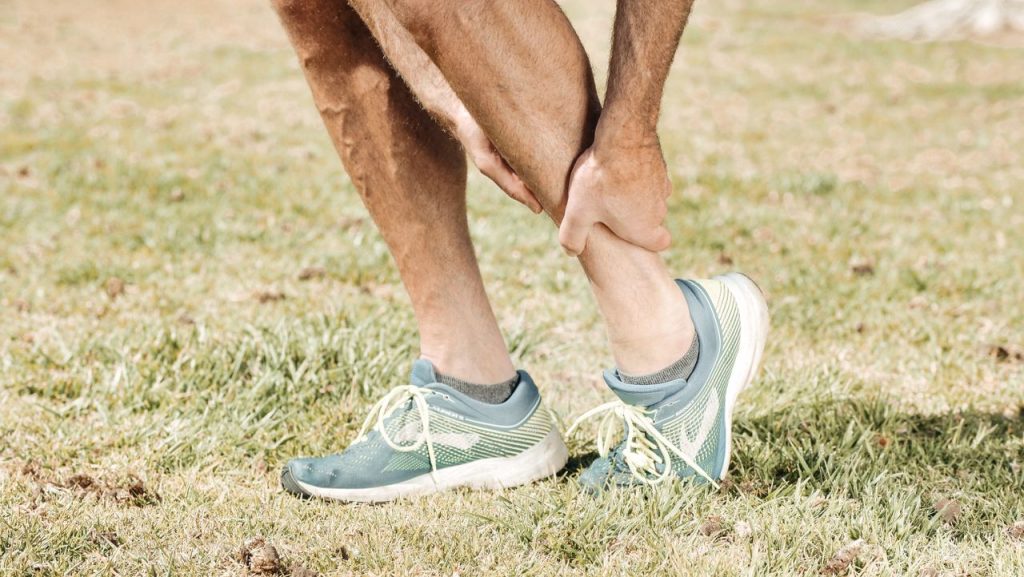
Why Do My Legs Hurt When I Walk but Feel Better When I Sit?
Imagine walking through the grocery store.
You start out feeling pretty good.
But after a few minutes, something begins to happen.
Your legs start aching.
Perhaps they feel heavy.
Maybe there’s burning in your calves, tingling in your feet, or a deep discomfort in your buttocks.
You keep walking, hoping the symptoms will disappear.
Instead, they become more noticeable.
Finally, you stop and lean forward over your shopping cart.
And something interesting happens.
Your legs begin to feel better.
You can walk again.
But a few minutes later, the discomfort returns.
Some patients tell me:
“Doctor, I can walk farther if I’m pushing a shopping cart.”
Others say:
“I can ride a stationary bicycle, but I can’t walk around the block.”
And occasionally someone tells me:
“My legs feel like they’re running out of gas!”
These symptoms can have several possible causes.
One important possibility is lumbar spinal stenosis.
After nearly four decades of treating patients with spinal and nerve-related conditions, I’ve learned that the way symptoms change during standing, walking, sitting, and bending can provide valuable clues.
But here’s something important I want patients to understand:
Leg pain during walking doesn’t always mean the problem is in your legs.
Sometimes the source is in the lower spine.
Let’s explore why.
Not Sure Where to Start?
Choose the question that sounds most like yours:
- My lower back hurts, but I don’t know why. → Why Does My Lower Back Hurt?
- Pain shoots down one leg. → What Is Sciatica, and What Causes It?
- My MRI mentions a bulging or herniated disc. → What Is a Bulging or Herniated Disc?
- My legs hurt when I stand or walk, but improve when I sit. → You’re in the right place.
- My back hurts more when I sit or drive. → Why Does My Back Hurt When I Sit?
- My feet burn or feel numb even at rest. → Explore our Peripheral Neuropathy Learning Center.
What You’ll Learn
In this chapter, we’ll discuss:
- What lumbar spinal stenosis means
- How the spinal canal protects nerve structures
- Central canal, lateral recess, and foraminal stenosis
- Why spinal spaces can narrow with age
- Disc degeneration and facet joint enlargement
- Ligament thickening and spondylolisthesis
- Why symptoms often worsen with standing and walking
- The shopping cart sign
- Neurogenic claudication
- Spinal stenosis versus sciatica
- Spinal stenosis versus peripheral neuropathy
- Spinal stenosis versus poor circulation
- How doctors evaluate walking-related leg pain
- When MRI or vascular testing may be appropriate
- Whether ice or heat can help
- Why ice cannot reverse spinal canal narrowing
- Exercise and physical therapy
- Chiropractic care and its limitations
- PRP injections and regenerative medicine
- Why PRP has not been proven to correct spinal stenosis
- Epidural injections and surgical options
- Warning signs requiring urgent medical attention
Quick Answer
Lumbar spinal stenosis occurs when spaces within the lower spine become narrowed.
The narrowing may affect spinal nerve roots.
Some patients experience:
- Lower back discomfort
- Buttock pain
- Leg aching
- Burning
- Tingling
- Numbness
- Weakness
- Reduced walking tolerance
A characteristic symptom pattern is worsening leg discomfort during standing or walking, with improvement during sitting or bending forward.
This is called neurogenic claudication.
Ice or heat may provide temporary relief from accompanying back or muscular discomfort, but neither reverses spinal canal narrowing.
Exercise and appropriately selected conservative treatments may improve function.
PRP and other regenerative injections have not been established as treatments that enlarge the spinal canal or reverse mechanical nerve compression.
The most important step is determining whether spinal stenosis actually explains the patient’s symptoms and how much neurological function is affected.
First, What Is the Spinal Canal?
Your spine is made up of vertebrae stacked one above another.
Together, these bones form a protective passage called the spinal canal.
In the lumbar region, this canal contains the cauda equina—a collection of spinal nerve roots that continue downward after the spinal cord ends.
These nerve roots help transmit signals involved in:
- Leg movement
- Sensation
- Reflexes
- Certain bowel and bladder functions
The nerves exit the spine through openings between adjacent vertebrae.
When the available space becomes reduced, nearby nerve structures may be affected.
What Does Stenosis Mean?
The word stenosis means narrowing.
Lumbar spinal stenosis refers to narrowing of spaces within the lumbar spine.
However, an important distinction is:
Narrowing on an MRI does not automatically mean the patient has symptomatic spinal stenosis.
Some people have narrowing without significant symptoms.
Others develop pain, numbness, weakness, or reduced walking tolerance.
The diagnosis depends on the clinical picture, not simply the MRI report.
Three Types of Lumbar Spinal Stenosis
The location of narrowing matters.
- Central Canal Stenosis
This occurs when the main spinal canal becomes narrowed.
It may affect multiple nerve roots within the cauda equina.
Possible symptoms include:
- Bilateral leg discomfort
- Heaviness
- Tingling
- Reduced walking tolerance
- Neurogenic claudication
- Lateral Recess Stenosis
The lateral recess is a region within the spinal canal where nerve roots travel before exiting.
Narrowing here may affect a particular nerve root.
Symptoms can resemble lumbar radiculopathy.
- Foraminal Stenosis
The neural foramina are openings through which spinal nerves exit.
Narrowing of these openings may irritate or compress an exiting nerve root.
Symptoms may include:
- Radiating leg pain
- Tingling
- Numbness
- Weakness
These types of narrowing can occur together.
What Causes Lumbar Spinal Stenosis?
Several structural changes may contribute.
Cause #1: Disc Degeneration
Spinal discs change over time.
They may:
- Lose water content
- Decrease in height
- Become less flexible
- Develop bulges
A disc bulge may contribute to narrowing of the spinal canal or nerve openings.
However, disc degeneration is common and does not always cause symptoms.
Cause #2: Facet Joint Enlargement
Facet joints are small joints located toward the back of the spine.
Degenerative changes may cause these joints to enlarge.
This can contribute to narrowing of nearby spaces.
Facet joint changes may also coexist with other spinal conditions.
Cause #3: Ligamentum Flavum Thickening
The ligamentum flavum is a ligament located along the back portion of the spinal canal.
With degenerative changes, it may become thickened or buckle inward.
This can reduce the available space for nerve roots.
Cause #4: Spondylolisthesis
Spondylolisthesis occurs when one vertebra shifts relative to another.
In some patients, this may contribute to narrowing of the spinal canal or neural foramina.
However, not every case of spondylolisthesis causes symptoms.
Cause #5: Congenitally Narrow Spinal Canal
Some people are born with a relatively narrow spinal canal.
They may develop symptoms earlier if additional degenerative changes occur.
Why Is Lumbar Spinal Stenosis More Common With Age?
Degenerative changes become more common as people get older.
These may include:
- Disc height loss
- Facet joint enlargement
- Ligament thickening
- Changes in spinal alignment
Together, these changes may reduce the available space for nerve structures.
However:
Spinal stenosis is not an inevitable consequence of aging, and age alone does not determine whether symptoms will develop.
Why Do My Legs Hurt When I Walk?
This is one of the most important questions.
In symptomatic lumbar spinal stenosis, standing and walking may change the dimensions of the spinal canal and nerve openings.
Lumbar extension—bending the lower back backward—can reduce the available space in certain regions.
For some patients, this contributes to nerve-root irritation and the development of symptoms.
Possible symptoms include:
- Leg aching
- Burning
- Tingling
- Numbness
- Heaviness
- Weakness
- Reduced walking tolerance
The symptoms may gradually intensify as the patient continues walking.
What Is Neurogenic Claudication?
Neurogenic claudication describes a pattern of symptoms associated with lumbar spinal stenosis.
It commonly involves leg discomfort during standing or walking.
Symptoms often improve when the patient sits or bends forward.
A patient may describe:
“I can walk for five minutes, but then I have to sit.”
Or:
“My legs start feeling heavy, and I need to lean forward.”
The symptoms can vary considerably.
Some patients have prominent lower back pain.
Others primarily experience leg discomfort.
Why Does Leaning Forward Help?
Bending forward can increase the available space within certain parts of the lumbar spinal canal.
This may reduce mechanical irritation of nerve structures.
That’s why some patients feel better when:
- Sitting
- Leaning forward
- Pushing a shopping cart
- Riding a stationary bicycle
However, not every patient with spinal stenosis experiences the same response.
What Is the Shopping Cart Sign?
The shopping cart sign refers to improvement in walking-related symptoms when a patient leans forward over a shopping cart.
It can be a useful clinical clue.
But it is not diagnostic by itself.
Other conditions may produce similar symptoms.
Why Can I Ride a Bicycle but Have Trouble Walking?
Some patients with lumbar spinal stenosis tolerate cycling better than upright walking.
One possible explanation is that cycling often places the lumbar spine in a more flexed position.
This may increase space available for certain nerve structures.
However, exercise tolerance varies.
A patient who experiences leg pain during walking still needs evaluation for other possible causes, including vascular disease.
Can Spinal Stenosis Cause Sciatica?
Yes.
Lumbar spinal stenosis may irritate or compress nerve roots and produce radiating leg pain.
However, the symptom pattern may differ from an acute disc herniation.
For example:
Disc-related sciatica may worsen with certain sitting or bending positions.
Neurogenic claudication often worsens during standing or walking and improves with sitting or bending forward.
These are general patterns, not absolute rules.
Can Spinal Stenosis Cause Foot Numbness?
Yes.
Nerve-root involvement may produce numbness or tingling in parts of the feet.
However, foot numbness can also result from peripheral neuropathy or other neurological conditions.
The distribution of symptoms and neurological examination help distinguish possible causes.
Can Spinal Stenosis Cause Muscle Weakness?
Yes.
Some patients develop weakness associated with nerve-root dysfunction.
Possible findings may include:
- Reduced ankle strength
- Difficulty lifting the foot
- Difficulty rising onto the toes
- Changes in reflexes
- Reduced walking tolerance
Progressive neurological weakness requires prompt medical evaluation.
Can Spinal Stenosis Cause Balance Problems?
Yes, in some patients.
Possible contributors include:
- Leg weakness
- Sensory changes
- Pain
- Reduced walking tolerance
- Coexisting peripheral neuropathy
- Other neurological or musculoskeletal conditions
A comprehensive evaluation may be necessary.
Spinal Stenosis vs. Peripheral Neuropathy
This is particularly important at Advanced Integrated Medical.
Both conditions may cause:
- Burning
- Tingling
- Numbness
- Weakness
- Balance problems
However, the symptom patterns may differ.
Lumbar Spinal Stenosis
Symptoms often:
- Worsen during standing or walking
- Improve during sitting or bending forward
- Affect one or both legs
- Include reduced walking tolerance
Peripheral Polyneuropathy
Symptoms often:
- Begin in the toes or feet
- Affect both feet
- Follow a stocking-like distribution
- Occur even at rest
- Are less consistently related to spinal position
These are common patterns, not absolute rules.
A Simple Comparison
| Feature | Lumbar Spinal Stenosis | Peripheral Polyneuropathy |
| Common symptom location | Buttocks and legs | Feet and lower legs |
| Worse with walking | Often | Variable |
| Better with sitting | Often | Not consistently |
| Better bending forward | Often | Usually not |
| Burning or tingling | Possible | Common |
| Weakness | Possible | Possible |
| Reflex changes | Possible | Common in some forms |
| Evaluation | History, neurological exam, selected MRI | History, neurological exam, labs, selected nerve testing |
A patient can have both conditions simultaneously.
Spinal Stenosis vs. Poor Circulation
This is another critical distinction.
Peripheral artery disease can cause leg discomfort during walking.
This is called vascular claudication.
Vascular claudication occurs when blood flow is insufficient to meet the demands of exercising muscles.
Possible symptoms include:
- Calf pain
- Cramping
- Fatigue
- Reduced walking tolerance
The symptoms may improve after stopping activity.
Neurogenic vs. Vascular Claudication
| Feature | Neurogenic Claudication | Vascular Claudication |
| Common cause | Lumbar nerve-root compression or irritation | Reduced arterial blood flow |
| Trigger | Standing or walking | Walking or exertion |
| Relief | Often sitting or bending forward | Often stopping activity |
| Posture influence | Frequently important | Usually less important |
| Cycling tolerance | Sometimes better than walking | May still provoke symptoms |
| Important tests | Neurological exam, selected MRI | Pulse assessment, ankle-brachial index |
These patterns overlap.
A patient can also have both spinal stenosis and peripheral artery disease.
Why Is This Distinction Important?
Because the treatments are different.
A patient with vascular claudication needs evaluation of circulation and cardiovascular risk.
A patient with symptomatic lumbar spinal stenosis may benefit from a spine-focused evaluation and rehabilitation plan.
Treating presumed spinal stenosis without recognizing significant vascular disease can delay appropriate care.
How Is Lumbar Spinal Stenosis Diagnosed?
The diagnosis begins with a careful medical history.
Important questions include:
- How far can you walk?
- How long can you stand?
- Do symptoms improve when sitting?
- Does leaning forward help?
- Can you ride a bicycle?
- Are symptoms in one leg or both?
- Is there numbness or weakness?
- Are symptoms progressing?
- Are there bowel or bladder changes?
- Could circulation problems be contributing?
The examination may include:
- Lumbar range of motion
- Muscle strength testing
- Reflex testing
- Sensory testing
- Walking assessment
- Balance assessment
- Hip examination
- Peripheral pulse assessment when indicated
The goal is to determine whether the symptom pattern suggests lumbar spinal stenosis or another condition.
Do I Need an MRI?
MRI is commonly used when imaging is indicated to evaluate suspected lumbar spinal stenosis.
It can help identify:
- Central canal narrowing
- Lateral recess narrowing
- Foraminal narrowing
- Disc bulges
- Facet joint enlargement
- Ligament thickening
- Other structural findings
However, MRI abnormalities do not always correlate directly with symptom severity.
Some patients have significant narrowing without severe symptoms.
Others have substantial functional limitations with less dramatic imaging findings.
The MRI should support the clinical diagnosis—not replace it.
Does Severe Stenosis on MRI Always Mean Surgery?
No.
The severity of narrowing on MRI is only one consideration.
Treatment decisions also depend on:
- Symptoms
- Neurological findings
- Walking tolerance
- Functional limitations
- Response to conservative treatment
- Patient preferences
However, progressive neurological deficits or certain emergency symptoms require urgent evaluation.
Ice or Heat: Which Is Better for Lumbar Spinal Stenosis?
This is a common question.
And the answer is:
Either may provide temporary comfort, but neither reverses spinal canal narrowing.
Cold therapy may help some patients manage accompanying lower back discomfort.
Heat may be more comfortable when stiffness or muscle tightness is prominent.
However, neither has been established as a treatment that enlarges the spinal canal or permanently relieves nerve-root compression.
Can Ice Reduce Inflammation Associated With Spinal Stenosis?
This requires an important distinction.
Some patients with spinal stenosis may have accompanying inflammatory processes or irritated nerve structures.
However, the central problem in degenerative spinal stenosis is often structural narrowing.
Applying ice to the lower back can lower local tissue temperature and temporarily reduce pain sensitivity.
But there is limited evidence that icing the skin reliably reduces inflammation around deep spinal nerve roots.
And ice cannot remove:
- Enlarged facet joints
- Thickened ligaments
- Bone spurs
- Disc bulges
- Other structural causes of narrowing
Ice may help manage discomfort, but it does not correct the anatomy responsible for spinal stenosis.
When Might Ice Be Helpful?
Some patients prefer ice when they experience:
- A painful lower back flare-up
- Soreness after activity
- Accompanying muscular discomfort
- Pain that feels better with cold
The response varies.
If cold aggravates symptoms, it should be discontinued.
Where Should I Place Ice?
For accompanying lower back discomfort, a cold pack may be placed over the painful lumbar region.
Some patients find cold over a sore buttock area comfortable.
However, the location should be based on comfort and safety.
Applying ice to the lower back should not be expected to directly cool or decompress deep spinal nerve roots.
How Long Should I Ice My Lower Back?
A practical approach is:
- Wrap a cold pack in a thin towel.
- Apply it to the painful region for approximately 10–15 minutes.
- Remove the pack and allow the skin to return to normal temperature.
- Repeat later if needed and if the skin tolerates it.
Never place ice directly against the skin.
Do not fall asleep with a cold pack in place.
Stop if the skin becomes unusually painful, pale, excessively numb, or irritated.
Longer applications are not necessarily more effective.
Important Ice Precautions for Patients With Neuropathy
This is particularly relevant at Advanced Integrated Medical.
Some patients with lumbar spinal stenosis also have peripheral neuropathy.
Peripheral neuropathy may reduce the ability to sense:
- Cold
- Heat
- Pain
- Temperature changes
A patient who cannot accurately sense temperature may not recognize that a cold pack is damaging the skin.
Cold therapy may also be inappropriate for patients with impaired circulation or certain cold-sensitive conditions.
If you have reduced sensation or impaired circulation, seek professional guidance before using ice or heat.
When Might Heat Be Helpful?
Heat may be useful when the primary complaint involves:
- Lower back stiffness
- Muscle tightness
- Generalized aching
- Discomfort associated with prolonged inactivity
Some patients prefer heat before gentle movement or exercise.
Superficial heat may provide short-term relief for certain types of lower back pain.
However, heat does not enlarge the spinal canal or reverse spinal stenosis.
How Should I Apply Heat Safely?
A practical approach is:
- Use a comfortably warm heating pad or pack.
- Begin with approximately 15–20 minutes.
- Avoid excessive heat.
- Protect the skin.
- Do not sleep on a heating pad.
- Stop if skin irritation develops.
Patients with reduced sensation or impaired circulation may need to avoid thermal therapy unless cleared by a healthcare professional.
Ice vs. Heat for Spinal Stenosis
| Situation | Ice | Heat |
| Painful lower back flare-up | May provide temporary relief | May also help |
| Muscle tightness or stiffness | Sometimes helpful | Often preferred |
| General lower back discomfort | May provide comfort | May provide comfort |
| Leg pain from neurogenic claudication | Direct benefit is uncertain | Direct benefit is uncertain |
| Spinal canal narrowing | Does not reverse narrowing | Does not reverse narrowing |
| Nerve-root compression | Does not reliably relieve compression | Does not reliably relieve compression |
| Reduced temperature sensation | Requires special caution | Requires special caution |
There is no universal rule that every patient with spinal stenosis must use ice first and heat later.
Comfort and safety should guide the choice.
Dr. Dee’s Practical Advice About Ice and Heat
When patients ask whether they should use ice or heat for spinal stenosis, I encourage them to consider:
Which one provides temporary relief?
Is it safe for their sensation and circulation?
Are we also addressing walking tolerance and functional limitations?
Are there neurological symptoms that require further evaluation?
Ice and heat can be useful comfort measures.
But they should not replace appropriate evaluation and treatment of significant nerve-related symptoms.
What Treatments Can Help Lumbar Spinal Stenosis?
Treatment depends on:
- Symptoms
- Neurological findings
- Walking tolerance
- Functional limitations
- Imaging when appropriate
- Overall health
- Patient preferences
Some patients improve with conservative management.
Others require more specialized care.
Treatment #1: Education and Activity Modification
Patients should understand how spinal position may influence symptoms.
For example, some patients tolerate:
- Sitting
- Slight forward bending
- Stationary cycling
- Walking with support
Better than prolonged upright standing or walking.
However, patients should not be encouraged to avoid all activity.
The goal is to maintain function while managing symptoms.
Treatment #2: Exercise and Rehabilitation
Exercise may help improve:
- Leg strength
- Trunk strength
- Balance
- Walking tolerance
- General conditioning
- Functional capacity
Some rehabilitation programs emphasize flexion-tolerant activities because certain patients with spinal stenosis feel better when the lumbar spine is slightly flexed.
However, exercise selection should be individualized.
Treatment #3: Physical Therapy
Physical therapy may help patients improve mobility, strength, and function.
Treatment may include:
- Exercise
- Education
- Graded walking programs
- Balance training
- Functional rehabilitation
- Selected manual techniques
The goal is to improve activity tolerance and quality of life.
Treatment #4: Chiropractic Care
Some patients with accompanying mechanical lower back pain may benefit from selected chiropractic approaches.
These may include:
- Education
- Exercise recommendations
- Manual therapy
- Spinal manipulation when appropriate
- Activity modification
However, spinal manipulation does not reverse structural spinal canal narrowing.
And it is not appropriate for every patient.
Significant neurological deficits, suspected serious pathology, fracture risk, and other contraindications must be considered.
Evidence supporting chiropractic manipulation specifically for symptomatic lumbar spinal stenosis is limited.
The treatment plan should be based on the patient’s neurological findings and functional limitations—not simply the presence of stenosis on MRI.
Treatment #5: Ice, Heat, and Comfort Measures
Ice or heat may provide temporary relief from accompanying lower back discomfort.
These measures can support a broader treatment plan.
However, neither has been established as a method of correcting spinal canal narrowing.
Treatment #6: Nonsurgical Spinal Decompression
Some clinics offer mechanical traction or nonsurgical spinal decompression.
These systems apply controlled pulling forces to the spine.
Some patients may experience temporary symptom relief.
However, evidence does not establish that commercial nonsurgical decompression systems reliably reverse spinal stenosis or provide superior long-term outcomes compared with other appropriate conservative treatments.
They should not be presented as guaranteed methods of enlarging the spinal canal.
Treatment #7: PRP Injections and Regenerative Medicine
Regenerative medicine is an area of growing interest in musculoskeletal healthcare.
One approach being investigated for selected spinal conditions is:
Platelet-Rich Plasma (PRP)
PRP is prepared from a sample of the patient’s own blood.
The blood is processed to produce a preparation containing an increased concentration of platelets.
Platelets contain growth factors and other biologically active substances involved in tissue signaling and repair processes.
Researchers are studying PRP for certain musculoskeletal and spinal pain conditions.
However, the evidence varies substantially by diagnosis and injection technique.
Can PRP Help Lumbar Spinal Stenosis?
This question requires an important distinction.
PRP has been investigated for selected spinal pain conditions, including certain disc-related and joint-related disorders.
But lumbar spinal stenosis often involves structural narrowing caused by:
- Enlarged facet joints
- Thickened ligaments
- Disc bulging
- Bone spurs
- Changes in spinal alignment
PRP has not been established as a treatment that reverses these structural changes.
PRP is not a proven method of enlarging the spinal canal or decompressing spinal nerve roots.
Could PRP Help Inflammation Associated With Stenosis?
PRP contains biologically active substances that may influence inflammatory and repair processes.
However, PRP preparations vary, and their biological effects are complex.
Current clinical evidence does not establish PRP as a reliable treatment for inflammation associated with lumbar spinal stenosis.
Even if a treatment were to reduce some inflammatory signaling, that would not necessarily correct the structural narrowing responsible for nerve compression.
What About PRP Injections Around Spinal Nerves?
Some researchers have investigated PRP injections near spinal nerve structures for selected pain conditions.
However, evidence remains limited.
Results from studies involving lumbar radiculopathy or other spinal pain disorders cannot automatically be applied to neurogenic claudication caused by lumbar spinal stenosis.
Different conditions may require different treatment approaches.
Can PRP Regenerate Spinal Nerves Damaged by Stenosis?
At present, there is insufficient high-quality clinical evidence to conclude that PRP injections reliably regenerate damaged human spinal nerve roots.
PRP has not been proven to:
- Restore normal spinal nerve conduction
- Reverse nerve-root compression
- Eliminate neurogenic claudication
- Restore normal spinal canal dimensions
- Prevent progression of structural stenosis
A patient may experience symptom improvement without structural regeneration.
These are different outcomes.
Are PRP Injections Around the Spine Risk-Free?
No.
Potential risks depend on the injection site and technique.
They may include:
- Temporary pain flare-ups
- Bleeding
- Infection
- Injury to nearby structures
- Neurological complications
- Other procedure-specific risks
Spinal and perineural injections require appropriate training, sterile technique, careful patient selection, and imaging guidance when indicated.
Patients should understand the proposed procedure, evidence, expected benefits, alternatives, costs, and risks before proceeding.
Is PRP FDA-Approved for Lumbar Spinal Stenosis?
No PRP injection has been established as an FDA-approved treatment for reversing lumbar spinal stenosis or regenerating compressed spinal nerves.
Certain PRP preparation devices may have FDA clearance for specific processing purposes.
However, device clearance does not establish that the resulting PRP injection is approved or proven effective for spinal stenosis.
Patients should be cautious about claims of guaranteed nerve repair or spinal canal regeneration.
What About Wharton’s Jelly and Umbilical Cord–Derived Products?
Some clinics market umbilical cord–derived products, including preparations described as Wharton’s jelly, for musculoskeletal and spinal conditions.
These products are different from PRP.
They should not automatically be described as stem-cell treatments.
Their contents, manufacturing processes, and regulatory status may vary.
Importantly, there are no FDA-approved umbilical cord–derived regenerative products for treating lumbar spinal stenosis, sciatica, disc degeneration, or spinal nerve injury.
Individual patient improvement or clinical experience does not establish that these products regenerate spinal nerves or reverse spinal canal narrowing.
Because of important safety, effectiveness, and regulatory considerations, they should not be presented as established treatments for spinal stenosis.
At Advanced Integrated Medical, we believe patients deserve clear information about the difference between emerging research and treatments supported by established clinical evidence.
Dr. Dee’s Clinical Pearl: Regenerative Medicine and Stenosis
A patient may ask:
“Doctor, if PRP contains growth factors, couldn’t it help my spinal nerves heal?”
It’s a reasonable question.
But before considering an injection, we need to determine:
Is there significant structural narrowing?
Are nerve roots being compressed?
Is the patient experiencing neurogenic claudication?
Are neurological deficits present?
What evidence supports the proposed treatment?
Would the treatment address the actual cause of the symptoms?
A treatment that may influence biological processes is not necessarily a treatment that corrects mechanical nerve compression.
Treatment #8: Medications
A prescribing clinician may recommend medications for selected symptoms.
The choice depends on:
- The diagnosis
- Medical history
- Other health conditions
- Potential adverse effects
Some medications may provide temporary relief.
However, medications do not generally reverse structural spinal stenosis.
Treatment #9: Epidural Steroid Injections
For selected patients with lumbar spinal stenosis and significant symptoms, a specialist may consider an epidural steroid injection.
These injections may provide limited short-term relief for some patients.
However, benefits for neurogenic claudication are often modest or uncertain, and long-term improvement is not reliably established.
Epidural steroid injections do not reverse spinal canal narrowing.
Treatment #10: Surgery
Surgery may be appropriate for selected patients with symptomatic lumbar spinal stenosis.
Possible reasons for surgical evaluation include:
- Persistent disabling neurogenic claudication
- Significant walking limitations despite appropriate conservative care
- Progressive neurological deficits
- Other specific structural or neurological concerns
A common procedure is lumbar decompression surgery, such as laminectomy.
The goal is to create more space for affected nerve structures.
In selected cases, spinal fusion may also be considered, particularly when clinically significant instability is present.
However, fusion is not necessary for every patient with spinal stenosis.
Surgical decisions should be individualized.
When Is Lumbar Spinal Stenosis an Emergency?
Most lumbar spinal stenosis is not an emergency.
However, certain symptoms require immediate medical attention.
Seek Emergency Care For:
- New inability to urinate or significant urinary retention
- New loss of bowel or bladder control
- Numbness in the saddle or groin region
- Rapidly progressive leg weakness
- Symptoms suggesting cauda equina syndrome
New foot drop or significant new weakness warrants urgent medical assessment.
Other concerning findings, including major trauma, fever with back pain, or a history of cancer with new unexplained symptoms, require prompt evaluation.
Do not delay emergency care in order to try ice, chiropractic treatment, PRP, or another conservative therapy.
What Can I Do at Home for Lumbar Spinal Stenosis?
For uncomplicated symptoms, general strategies may include:
Stay Appropriately Active
Avoid unnecessary prolonged inactivity.
Choose Tolerable Exercise
Some patients find stationary cycling or flexion-tolerant activities more comfortable than prolonged upright walking.
Take Walking Breaks
Walking in shorter intervals may be more tolerable than one prolonged session.
Change Positions Regularly
Avoid prolonged positions that strongly aggravate symptoms.
Use Ice or Heat if Helpful
Choose the method that provides comfort and is safe for your sensation and circulation.
Follow an Appropriate Exercise Program
Exercise selection should reflect the diagnosis and symptom response.
Monitor Neurological Changes
New weakness, progressive numbness, or bowel and bladder changes require medical evaluation.
Is Walking Good for Spinal Stenosis?
Walking can be useful for maintaining general health and function.
However, tolerance varies.
Some patients benefit from shorter walking intervals with rest breaks.
Others may need alternative activities while gradually improving conditioning.
The goal is not to force walking through severe neurological symptoms.
Is a Stationary Bicycle Good for Spinal Stenosis?
Some patients tolerate stationary cycling better than upright walking.
The slightly flexed position may reduce symptoms associated with certain forms of stenosis.
However, cycling is not appropriate for everyone.
Exercise should be selected according to the patient’s abilities and medical conditions.
Can Spinal Stenosis Get Better Without Surgery?
Some patients experience meaningful improvement in symptoms and function with conservative care.
Others have persistent limitations.
Structural narrowing may remain even when symptoms improve.
The goal of conservative care is generally to improve function and manage symptoms—not to promise that the spinal canal will return to normal dimensions.
How We Evaluate Lumbar Spinal Stenosis at Advanced Integrated Medical
At Advanced Integrated Medical, I believe the first step is understanding how symptoms change with activity and position.
We want to know:
How far can you walk before symptoms begin?
How long can you stand?
Does sitting provide relief?
Does leaning forward help?
Can you ride a stationary bicycle?
Are symptoms in one leg or both?
Is there numbness or weakness?
Could peripheral neuropathy be contributing?
Could poor circulation be involved?
Does the MRI match the clinical findings?
Have ice or heat provided temporary relief?
Depending on the findings, the evaluation may include:
- Lumbar range of motion
- Orthopedic testing
- Muscle strength testing
- Reflex testing
- Sensory testing
- Walking assessment
- Balance assessment
- Hip examination
- Peripheral pulse assessment when indicated
- Review of existing imaging
When appropriate, additional imaging, electrodiagnostic testing, vascular evaluation, or specialist referral may be recommended.
We also believe patients should understand the evidence and limitations of the treatments being considered, including injection-based procedures.
About Dr. Dee
Dr. D. Scott (“Dee”) Stevens has spent nearly four decades helping patients with spinal pain, joint conditions, and nerve-related symptoms.
Throughout his career, he has worked with patients from many backgrounds, including professional, collegiate, and Olympic athletes.
One thing I’ve learned is that patients often describe spinal stenosis in terms of what they can no longer do.
They may say:
“I can’t walk around the grocery store anymore.”
Or:
“I have to sit down halfway through the mall.”
Or:
“I can ride a bicycle, but I can’t walk very far.”
Those functional changes matter.
They often tell us more about the patient’s daily limitations than the MRI report alone.
Dr. Dee’s Clinical Pearl
A patient may tell me:
“Doctor, my MRI says I have severe spinal stenosis. Does that mean I’m going to need surgery?”
My response is:
“Let’s look at your symptoms, neurological findings, and walking tolerance before making that decision.”
Some patients with significant narrowing have relatively modest symptoms.
Others experience major functional limitations.
The MRI helps identify the anatomy. The examination helps us understand how the condition is affecting the patient.
Dr. Dee’s Office Conversation
Patient: “Doctor, my legs start hurting after I walk for five minutes.”
Dr. Dee: “What happens when you sit down?”
Patient: “The pain usually settles down.”
Dr. Dee: “Does leaning forward help?”
Patient: “Yes. I can walk much farther when I’m pushing a shopping cart.”
Dr. Dee: “That pattern can occur with lumbar spinal stenosis. We’ll examine your neurological function and consider whether imaging or circulation testing is needed.”
Patient: “Should I use ice or heat?”
Dr. Dee: “Either may help accompanying back discomfort. Ice may provide comfort during a flare-up, while heat may help stiffness. But neither reverses the narrowing.”
Patient: “What about PRP injections?”
Dr. Dee: “PRP is being studied for some spinal pain conditions, but it hasn’t been proven to enlarge the spinal canal or reverse nerve compression. We’d need to discuss treatments supported by evidence for your specific condition.”
Facing One of the Biggest Fears
“Will Spinal Stenosis Eventually Keep Me From Walking?”
This is a common concern.
Some patients worry that their walking distance will continue to decrease until they can no longer walk independently.
But the course of lumbar spinal stenosis varies.
Some patients remain stable.
Others improve with appropriate conservative care.
And some experience progressive limitations requiring specialist evaluation.
The important thing is to monitor:
- Walking tolerance
- Muscle strength
- Balance
- Sensation
- Daily function
- Neurological changes
A diagnosis of spinal stenosis does not automatically mean you will lose your ability to walk.
Back & Spine Health Success Principle #4
Measure What Your Legs Can Do—Not Just What the MRI Shows
An MRI can reveal spinal narrowing.
But it cannot fully describe the patient’s daily experience.
The important questions include:
How far can you walk?
How long can you stand?
Do you need frequent rest breaks?
Are your legs becoming weaker?
Can you perform your daily activities?
Are symptoms improving or worsening?
Functional progress matters just as much as anatomical findings.
Ask Dr. Dee
“Doctor, should I use ice, heat, chiropractic care, spinal decompression, or PRP for spinal stenosis?”
These treatments have different purposes and different levels of supporting evidence.
Ice and heat may provide temporary comfort.
Exercise and selected conservative treatments may improve function and walking tolerance.
Chiropractic care may be appropriate for certain accompanying mechanical back symptoms, depending on neurological findings and contraindications.
Commercial nonsurgical decompression has not been established as a reliable method of reversing spinal stenosis.
PRP remains investigational for spinal conditions and has not been proven to enlarge the spinal canal or reverse nerve compression.
The appropriate approach depends on the patient’s symptoms, neurological findings, functional limitations, and treatment goals.
A Lesson I’ve Learned in Nearly 40 Years
Sometimes the Most Important Measurement Isn’t on the MRI
Patients often arrive concerned about the word severe in an MRI report.
And that concern is understandable.
But I also want to know:
Can they walk to the mailbox?
Can they shop for groceries?
Can they stand long enough to prepare dinner?
Can they enjoy an outing with family?
These are meaningful measurements of function.
A treatment plan should aim to improve the patient’s daily life while recognizing when further medical evaluation or surgical consultation is appropriate.
The goal is not simply to treat an MRI finding. It’s to help the patient function as well as possible.
The Hope Principle
Lumbar spinal stenosis can be frustrating.
Especially when activities you once enjoyed become difficult.
Walking.
Shopping.
Traveling.
Standing at family events.
Playing with grandchildren.
But a diagnosis of spinal stenosis does not automatically mean that your mobility will continue to decline.
Some patients improve with appropriate conservative care.
Others benefit from specialized procedures or surgery.
The important thing is to understand the condition, recognize warning signs, and choose treatment based on the patient’s actual symptoms and functional needs.
Spinal stenosis may change how you approach certain activities, but it does not automatically define your future mobility.
“I believe the best healthcare decisions are made when patients understand their condition. My job isn’t simply to treat symptoms—it’s to help you understand why they’re happening and what your options are.”
— Dr. D. Scott (“Dee”) Stevens
Frequently Asked Questions
- What is lumbar spinal stenosis?
Lumbar spinal stenosis refers to narrowing of spaces within the lower spine that may affect spinal nerve roots.
- Why do my legs hurt when I walk?
In symptomatic spinal stenosis, standing and walking may reduce available space around nerve structures and aggravate nerve-related symptoms.
- Why does sitting make my legs feel better?
Sitting often places the lumbar spine in a more flexed position, which may increase space around certain nerve structures.
- What is the shopping cart sign?
It refers to improvement in walking-related symptoms when leaning forward over a shopping cart.
- Can spinal stenosis cause sciatica?
Yes. Narrowing may irritate spinal nerve roots and produce radiating leg pain.
- Can spinal stenosis cause foot numbness?
Yes. Nerve-root involvement may cause sensory changes in the feet, but peripheral neuropathy and other conditions can produce similar symptoms.
- Should I use ice or heat for spinal stenosis?
Either may provide temporary comfort. Ice may help during a painful flare-up, while heat is often preferred for stiffness or muscle tightness.
- Does ice reduce inflammation around compressed spinal nerves?
Ice may reduce pain sensitivity, but evidence that applying ice to the lower back reliably reduces inflammation around deep spinal nerve roots is limited.
- How long should I ice my lower back?
A practical starting point is approximately 10–15 minutes with a protective towel, provided sensation and circulation are normal.
- Is ice safe if I have peripheral neuropathy?
Not always. Reduced temperature sensation increases the risk of skin injury. Professional guidance is recommended before using cold or heat.
- Can chiropractic care help spinal stenosis?
Selected chiropractic approaches may help some accompanying mechanical back symptoms, but spinal manipulation does not reverse structural narrowing.
- Does nonsurgical spinal decompression reverse stenosis?
Commercial nonsurgical decompression has not been established as a reliable way to reverse spinal canal narrowing.
- Can PRP injections help spinal stenosis?
PRP is being investigated for selected spinal pain conditions, but it is not an established treatment for lumbar spinal stenosis.
- Can PRP regenerate spinal nerves or enlarge the spinal canal?
There is insufficient high-quality clinical evidence to conclude that PRP reliably regenerates compressed spinal nerves or reverses structural narrowing.
- Are Wharton’s jelly injections approved for spinal stenosis?
No. Umbilical cord–derived regenerative products are not FDA-approved for treating lumbar spinal stenosis.
- Is walking good for spinal stenosis?
Walking may help maintain function, but tolerance varies. Some patients benefit from shorter walking intervals or alternative exercise.
- Will I eventually need surgery?
Not necessarily. Surgery may be appropriate for selected patients with persistent disabling symptoms or progressive neurological deficits.
- When is spinal stenosis an emergency?
New urinary retention, bowel or bladder dysfunction, saddle numbness, or rapidly progressive weakness requires emergency evaluation.
Key Takeaways
- Lumbar spinal stenosis involves narrowing of spaces within the lower spine.
- Narrowing may affect spinal nerve roots.
- Symptoms often worsen during standing or walking.
- Sitting or bending forward may provide relief.
- The shopping cart sign can be a useful diagnostic clue.
- Neurogenic claudication is a common symptom pattern.
- Peripheral neuropathy can mimic or coexist with spinal stenosis.
- Poor circulation can also cause leg pain during walking.
- MRI findings must be interpreted alongside symptoms and examination.
- Ice and heat may provide temporary comfort.
- Cold therapy requires special caution in patients with neuropathy or impaired circulation.
- Exercise and rehabilitation may improve function.
- Chiropractic care may be considered for selected accompanying mechanical symptoms.
- Commercial nonsurgical decompression has not been established as a reliable method of reversing stenosis.
- PRP has not been proven to enlarge the spinal canal or regenerate compressed spinal nerves.
- Umbilical cord–derived regenerative products are not FDA-approved for spinal stenosis.
- Surgery may be appropriate for selected patients.
- Serious neurological warning signs require immediate evaluation.
- Functional improvement and neurological safety matter more than the MRI description alone.
Why Patients Choose Advanced Integrated Medical
At Advanced Integrated Medical, we believe patients deserve a thoughtful evaluation of walking-related leg pain.
We want to understand:
How far can you walk?
How long can you stand?
Does sitting or leaning forward help?
Could spinal stenosis be contributing?
Could peripheral neuropathy also be present?
Could poor circulation be involved?
Are reflexes or muscle strength affected?
Are there warning signs?
Would ice or heat provide safe temporary relief?
Could conservative care improve function?
Would imaging or specialist referral be appropriate?
What evidence supports an injection-based or regenerative treatment for this diagnosis?
Our goal is to help patients understand their condition and make informed decisions about their care.
Continue Exploring the Back, Neck & Sciatica Learning Center
You may also want to read:
- Article #66: Why Does My Lower Back Hurt? Understanding the Most Common Causes of Back Pain
- Article #67: What Is Sciatica, and What Causes It? Understanding Pain That Travels Down Your Leg
- Article #68: What Is a Bulging or Herniated Disc—and Does It Always Cause Pain?
- Article #70: Why Does My Back Hurt When I Sit? Understanding Disc Pain, Posture, and Prolonged Sitting
You may also find helpful information in our Peripheral Neuropathy Learning Center, especially:
- What Are the First Signs of Peripheral Neuropathy?
- Can a Pinched Nerve Cause Symptoms That Feel Like Peripheral Neuropathy?
- What Tests Are Used to Diagnose Peripheral Neuropathy?
- Can Peripheral Neuropathy Affect My Balance?
Medical Disclaimer
This article is intended for educational purposes only and does not replace individualized medical diagnosis or treatment.
Lumbar spinal stenosis may cause lower back pain, neurogenic claudication, radiculopathy, sensory changes, or weakness. Similar symptoms may result from peripheral neuropathy, vascular disease, hip disorders, or other medical conditions.
Ice and heat may provide temporary symptom relief but are not established methods of reversing spinal canal narrowing or nerve-root compression. Patients with reduced sensation, peripheral neuropathy, impaired circulation, or certain temperature-sensitive conditions should seek professional guidance before using thermal therapies.
PRP injections for spinal conditions remain investigational. Their safety and effectiveness depend on the indication, preparation, injection site, and procedure. FDA clearance of a PRP preparation device does not establish FDA approval of PRP as a treatment for spinal stenosis or nerve regeneration.
Umbilical cord–derived regenerative products are not FDA-approved for treating lumbar spinal stenosis, sciatica, disc degeneration, or spinal nerve injury.
Spinal manipulation, traction, injections, medications, and surgery are not appropriate for every patient.
New urinary retention, bowel or bladder dysfunction, saddle numbness, or rapidly progressive neurological weakness may indicate a serious neurological emergency and require immediate medical evaluation.
New foot drop or significant new weakness warrants urgent assessment.
Treatment decisions should be individualized based on the patient’s history, examination, neurological findings, imaging when appropriate, medical conditions, available evidence, and preferences.
Ready to Learn More?
If your legs hurt when you walk, don’t automatically assume:
“It’s just old age.”
Or:
“My legs are wearing out.”
Instead, ask:
Could the symptoms be coming from my lower spine?
Does sitting or leaning forward provide relief?
Could poor circulation be involved?
Could peripheral neuropathy be contributing?
Are my reflexes and muscle strength normal?
Would ice or heat help me manage symptoms safely?
Could exercise or conservative care improve my walking tolerance?
What is the evidence for spinal decompression or PRP?
Would imaging or specialist referral be appropriate?
At Advanced Integrated Medical, we believe understanding the source of walking-related leg pain is the first step toward making informed healthcare decisions.
Understand the cause. Protect neurological function. Improve walking tolerance. Work toward better mobility and quality of life.
Advanced Integrated Medical
1635 N 200 E
Logan, UT 84341
Phone: (435) 999-3953
Advanced Care • Natural Healing • Real Results