
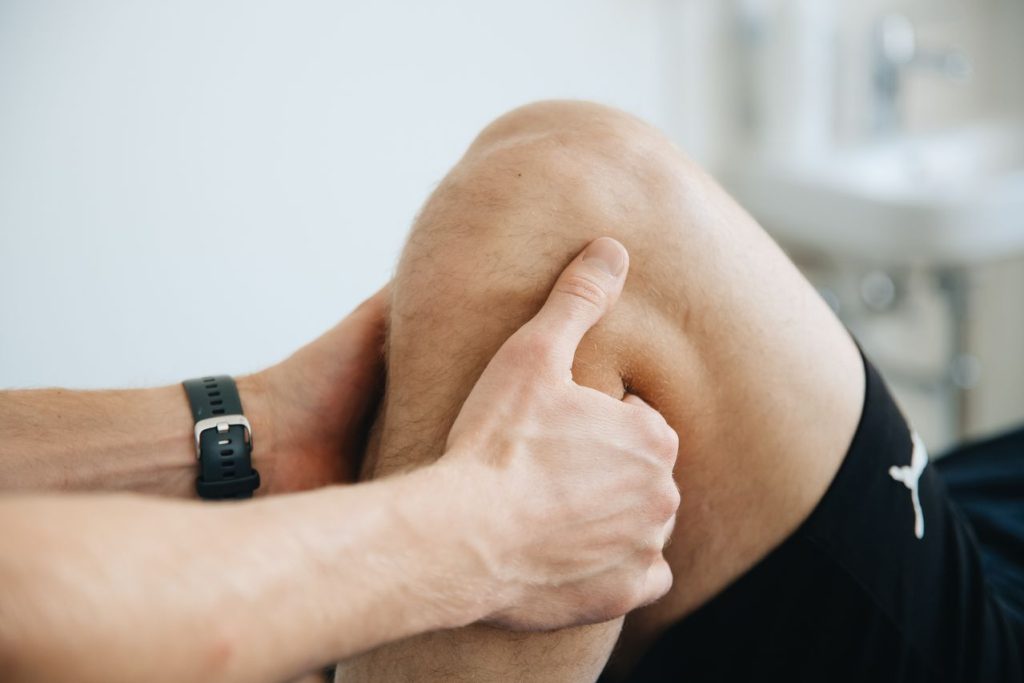
What Is Knee Osteoarthritis—and Why Does It Hurt?
When patients are told they have knee osteoarthritis, the explanation they often receive sounds something like this:
“The cartilage in your knee is wearing out.”
Or:
“You have bone-on-bone arthritis.”
Those descriptions aren’t entirely wrong.
But they are incomplete.
Osteoarthritis is much more than cartilage wearing away.
It can involve changes in:
- Cartilage
- Bone
- Joint lining
- Menisci
- Ligaments
- Muscles
- Joint mechanics
And understanding that helps explain an interesting question:
If cartilage itself has very little ability to feel pain, why can an arthritic knee hurt so much?
The answer is that osteoarthritis affects the entire joint.
Not Sure Where to Start?
Choose the question that sounds most like yours:
🦵 My knees hurt as I’m getting older → What Causes Knee Pain as We Get Older?
🦴 I’ve been told I have arthritis → You’re in the right place. Keep reading.
🩻 They told me I’m “bone-on-bone” → Does Bone-on-Bone Knee Arthritis Always Mean I Need a Knee Replacement?
🪜 My knee hurts on stairs → Why Does My Knee Hurt Going Up and Down Stairs?
📍 My pain is mostly on the inside of my knee → Why Does My Knee Hurt on the Inside?
💉 I’m wondering about PRP → What Is PRP, and How Is It Used for Joint Pain?
🏥 I’m wondering whether it’s time for knee replacement → When Should I Consider Knee Replacement?
What You’ll Learn
In this chapter you’ll discover:
- What knee osteoarthritis actually is
- Why calling it simply “wear and tear” is incomplete
- What happens to cartilage
- Why cartilage loss isn’t the only source of pain
- What subchondral bone is
- Why the joint lining can become irritated
- What bone spurs mean
- Why knees become stiff
- Why arthritic knees swell
- Why some knees grind and crack
- Why two people with similar X-rays can have very different symptoms
- What “bone-on-bone” actually means
- Why muscle strength matters
- What treatment options may be considered
- Why surgery isn’t determined by an X-ray alone
Quick Answer
Knee osteoarthritis is a condition involving progressive changes throughout the knee joint.
It may involve:
- Loss and alteration of articular cartilage
- Changes in the bone underneath the cartilage
- Bone spur formation
- Changes in the menisci
- Irritation of the joint lining
- Changes in ligaments
- Muscle weakness
- Altered joint mechanics
Pain can come from several pain-sensitive structures around the knee.
That’s why osteoarthritis is better understood as:
A whole-joint condition—not simply worn-out cartilage.
First, Let’s Understand the Knee
The knee is where three bones come together:
Femur
The thigh bone.
Tibia
The larger bone of the lower leg.
Patella
The kneecap.
The knee has several important compartments.
The Medial Compartment
This is the inside portion of the knee.
It is a very common location for osteoarthritis.
Patients often point directly to the inside of the knee and say:
“It hurts right here.”
The Lateral Compartment
This is the outside portion of the knee.
Some patients develop arthritis predominantly in this compartment.
The Patellofemoral Compartment
This is where the kneecap interacts with the femur.
Problems here may be particularly noticeable with:
- Stairs
- Squatting
- Kneeling
- Rising from a chair
- Prolonged sitting
A patient may have arthritis in one compartment or several.
What Is Articular Cartilage?
Articular cartilage is the smooth tissue covering the ends of the bones within the joint.
Healthy cartilage helps:
- Reduce friction
- Distribute loads
- Allow smooth movement
It’s remarkable tissue.
But it does not have the same healing capacity as many other tissues in the body.
With osteoarthritis, cartilage can undergo structural and biochemical changes and may gradually become thinner.
Is Osteoarthritis Just “Wear and Tear”?
This phrase has been used for generations.
But today we understand that osteoarthritis is more complicated.
It’s not simply:
“You used your knee too much and wore it out.”
Biology matters.
Genetics matter.
Previous injury matters.
Inflammation within the joint matters.
Alignment matters.
Muscle function matters.
Mechanical loading matters.
Age matters.
Metabolic health may matter.
Osteoarthritis is a biological and mechanical disease process—not simply an old hinge wearing out.
If Cartilage Doesn’t Feel Much Pain, Why Does Arthritis Hurt?
This is one of the most important concepts for patients to understand.
Articular cartilage itself has very limited pain-sensing nerve supply.
But many surrounding structures do have nerves.
Pain associated with knee osteoarthritis may arise from:
- Bone beneath the cartilage
- Synovium
- Joint capsule
- Ligaments
- Tendons
- Muscles
- Other surrounding tissues
That’s why simply saying:
“Your cartilage is gone, so that’s why you hurt”
doesn’t tell the whole story.
What Is Subchondral Bone?
“Subchondral” means:
Under the cartilage
The bone immediately underneath the joint cartilage responds to changes in load and joint mechanics.
With osteoarthritis, this bone may undergo remodeling and structural changes.
Unlike cartilage, bone contains pain-sensitive nerve fibers.
Changes in subchondral bone may therefore contribute to osteoarthritis pain.
What Is the Synovium?
The synovium is tissue lining the inside of the joint capsule.
It helps produce synovial fluid, which contributes to joint lubrication and nutrition.
In osteoarthritis, the synovium may become irritated or inflamed.
This is called:
Synovitis
Synovitis may contribute to:
- Pain
- Swelling
- Warmth
- Stiffness
This is another reason osteoarthritis shouldn’t be viewed as purely mechanical wear.
Why Does My Knee Swell?
An arthritic knee may sometimes produce excess joint fluid.
Patients may notice:
- Puffiness
- Tightness
- Reduced bending
- Fullness around the kneecap
- Swelling behind the knee
Swelling can fluctuate.
But not every swollen knee is simply osteoarthritis.
Other possibilities include:
- Injury
- Meniscus problems
- Gout
- Inflammatory arthritis
- Infection
- Other joint disorders
A newly hot, red, significantly swollen knee deserves appropriate evaluation.
What Is a Baker’s Cyst?
Fluid from the knee can sometimes collect behind the joint, producing what is commonly called a:
Baker’s cyst
Some patients feel:
- Tightness behind the knee
- Fullness
- Discomfort with bending
A Baker’s cyst often reflects something happening inside the knee that is producing additional fluid.
The cyst itself isn’t always the primary problem.
What Are Bone Spurs?
Bone spurs are also called:
Osteophytes
They commonly develop around joints affected by osteoarthritis.
Patients sometimes imagine a bone spur as a sharp spike stabbing the joint.
That isn’t necessarily what’s happening.
Osteophytes are part of the joint’s response to altered loading and osteoarthritis.
They can contribute to changes in joint shape and motion, but the mere presence of an osteophyte does not automatically tell us how much pain a person should have.
What Does Joint-Space Narrowing Mean?
On an X-ray, we don’t directly see cartilage very well.
Instead, we look at the space between the bones.
That space indirectly reflects the cartilage and other structures between them.
When the joint space becomes narrower, it may suggest loss of cartilage and other degenerative changes.
The narrowing may be:
- Mild
- Moderate
- Severe
And it may affect one compartment more than another.
What Does “Bone-on-Bone” Actually Mean?
When a healthcare professional says:
“You’re bone-on-bone,”
they usually mean there is very severe joint-space narrowing in part of the knee, suggesting advanced cartilage loss.
That’s important information.
But it doesn’t automatically answer:
How much do you hurt?
How well can you walk?
Can you climb stairs?
Does your knee wake you at night?
How strong are you?
What treatments have you tried?
Are you ready for surgery?
Those questions still matter.
Why Doesn’t the X-Ray Always Match the Pain?
This surprises many patients.
One person may have substantial osteoarthritis on X-ray and say:
“It aches occasionally, but I’m doing pretty well.”
Another person may have less dramatic X-ray changes and report considerable pain.
Why?
Because pain is influenced by more than cartilage thickness.
It can involve:
- Inflammation
- Bone changes
- Muscle weakness
- Joint mechanics
- Other painful structures
- Previous injury
- Overall health
- Sleep
- Nervous-system pain processing
The X-ray matters.
But:
The X-ray does not experience the pain. The patient does.
Can Osteoarthritis Affect the Meniscus?
Yes.
The menisci are fibrocartilage structures within the knee that help distribute load and contribute to joint stability.
As osteoarthritis develops, the menisci may also undergo degenerative changes.
Degenerative meniscal tears become increasingly common with age.
An MRI may therefore show:
“Meniscal tear.”
But that doesn’t automatically mean the tear is the main source of pain or that surgery is necessary.
Can Osteoarthritis Affect the Ligaments?
The joint is an interconnected system.
As osteoarthritis progresses, changes in:
- Alignment
- Joint space
- Bone
- Menisci
can alter forces on the ligaments.
Some patients may feel:
- Instability
- Buckling
- Lack of confidence in the knee
But “my knee gives way” can also result from muscle weakness or pain inhibition.
The reason matters.
Why Does My Knee Become Stiff?
Stiffness may result from a combination of:
- Joint changes
- Swelling
- Reduced movement
- Muscle tightness
- Pain
- Changes in the joint capsule
Patients often notice stiffness:
- First thing in the morning
- After sitting
- After driving
- After watching television
- After prolonged inactivity
The first few steps may be the hardest.
Is Morning Stiffness Always Osteoarthritis?
No.
The duration and pattern of stiffness matter.
Brief stiffness after inactivity is common in osteoarthritis.
More prolonged morning stiffness—particularly when several joints are swollen—may raise questions about inflammatory arthritis or other conditions.
Again:
The pattern matters.
Why Does My Knee Grind or Crack?
Patients frequently describe:
- Grinding
- Crackling
- Clicking
- Popping
The term:
Crepitus
is often used to describe grinding or crackling sensations.
Crepitus can occur with changes around the patella and other parts of the knee.
But noise alone does not mean the knee is severely damaged.
A noisy knee that functions well and doesn’t hurt is different from a knee that:
- Hurts
- Swells
- Locks
- Buckles
- Loses motion
Why Does My Knee Hurt on Stairs?
Stairs place increased demands on the knee and surrounding muscles.
Going upstairs requires significant muscular effort.
Going downstairs requires the muscles to control your body’s descent.
The patellofemoral joint also experiences substantial loading during these activities.
Arthritis, weakness, patellofemoral problems, and other conditions may therefore make stairs particularly difficult.
Why Does Squatting Hurt?
Squatting requires deeper knee flexion and increases joint loading.
Depending on where the arthritis is located, deep bending may aggravate symptoms.
That doesn’t necessarily mean:
“Never bend your knee.”
But exercise and activity may need to be modified according to:
- Symptoms
- Strength
- Joint condition
- Goals
Why Does My Knee Hurt When I Stand From a Chair?
Standing from a seated position requires substantial work from:
- Quadriceps
- Gluteal muscles
- Hip muscles
If the knee is painful and the muscles have become weak, this everyday activity may become surprisingly difficult.
Patients may begin using their arms to push themselves up.
That is an important functional change.
The Quadriceps Matter—a Lot
The quadriceps muscles on the front of the thigh help:
- Straighten the knee
- Control movement
- Stabilize the joint
- Manage stairs
- Rise from chairs
Knee pain can cause the quadriceps to become less active.
Then the muscle weakens.
Then activities become harder.
This can create a cycle:
Pain → less activity → weakness → poorer function → more difficulty moving
Breaking that cycle appropriately can be an important part of osteoarthritis care.
Your Hips Matter Too
The knee doesn’t work alone.
Hip muscles help control:
- Pelvic stability
- Leg alignment
- Walking
- Stair movement
Weakness around the hips may influence mechanics farther down the leg.
That’s why a good knee rehabilitation program may include more than knee exercises.
Does Alignment Affect Osteoarthritis?
Yes.
Alignment influences where forces pass through the knee.
For example:
Varus alignment
often described as bow-legged alignment, may increase loading through the medial compartment.
Valgus alignment
often described as knock-kneed alignment, may alter loading toward the lateral compartment.
This doesn’t mean alignment alone caused the arthritis.
But it may influence where the disease develops and how the joint is loaded.
Why Does the Inside of My Knee Hurt?
The medial compartment is a common site for knee osteoarthritis.
Pain along the inside of the knee may also come from:
- Meniscus
- Ligaments
- Tendons
- Bursae
- Other structures
Location gives us a clue.
It doesn’t automatically give us the diagnosis.
Does Weight Affect Knee Osteoarthritis?
Body weight influences mechanical loading through the knee.
For patients carrying excess weight, weight reduction may improve symptoms and reduce joint stress.
But osteoarthritis is not simply:
“Your knee hurts because you’re overweight.”
Thin people develop severe osteoarthritis too.
Weight is one factor among many.
Can Exercise Make Arthritis Worse?
Appropriate exercise does not generally mean you are “wearing out” the knee faster.
For many people with knee osteoarthritis, properly selected exercise is an important part of care.
It may help improve:
- Strength
- Function
- Mobility
- Confidence
- General health
The key word is:
Appropriate
Someone with severe pain, major swelling, instability, or another medical problem may need a modified program.
Should I Rest When My Knee Hurts?
Sometimes temporary activity modification is appropriate during a flare.
But long-term inactivity can lead to:
- Weakness
- Stiffness
- Loss of endurance
- Reduced balance
- Weight gain in some patients
- Decreased confidence
The goal isn’t complete rest.
The goal is finding a sustainable level of movement.
Why Do Some Days Hurt More Than Others?
Osteoarthritis symptoms can fluctuate.
A flare may be influenced by:
- Activity
- Joint irritation
- Swelling
- Sleep
- Other health factors
One difficult day does not necessarily mean the joint suddenly suffered major new structural damage.
Look at the pattern over time.
Does Pain Mean I’m Damaging My Knee Every Time I Move?
Not necessarily.
Pain is important information.
But pain and tissue damage are not identical.
A painful activity may need to be modified, particularly if it causes substantial or prolonged worsening.
However, avoiding all movement because of fear can also reduce function.
The goal is to find a reasonable balance.
Can Osteoarthritis Be Reversed?
Established structural osteoarthritis cannot currently be guaranteed to return to a completely normal joint.
That is important to say honestly.
But:
“We cannot make the joint brand new” does not mean “nothing can improve.”
Depending on the patient, we may still work toward improvements in:
- Pain
- Strength
- Mobility
- Walking
- Sleep
- Activity tolerance
- Quality of life
Function matters.
What Are the Treatment Options?
Treatment should be individualized.
Options may include:
- Education
- Activity modification
- Exercise
- Strengthening
- Physical therapy
- Weight management when appropriate
- Bracing
- Medications
- Topical treatments
- Selected injections
- PRP in appropriate patients
- Other carefully selected procedures
- Surgery when appropriate
Different stages of arthritis may call for different strategies.
What About Anti-Inflammatory Medications?
Nonsteroidal anti-inflammatory drugs, or NSAIDs, may help some patients with osteoarthritis pain.
But they aren’t appropriate for everyone.
Considerations can include:
- Kidney disease
- Gastrointestinal problems
- Cardiovascular disease
- Blood-thinning medications
- Other medications
Medication decisions should be individualized with the appropriate healthcare professional.
What About Cortisone?
Corticosteroid injections may provide temporary relief for some patients.
They may be particularly useful in selected situations where pain and inflammation are limiting function.
But they do not rebuild lost cartilage.
Like every treatment, they have:
- Potential benefits
- Limitations
- Risks
- Appropriate and inappropriate uses
We’ll compare cortisone and PRP in a dedicated Learning Center article.
What About PRP?
PRP stands for:
Platelet-Rich Plasma
It is prepared from the patient’s own blood and concentrates platelets within a plasma component.
PRP has been studied for knee osteoarthritis, and evidence suggests that some appropriately selected patients may experience improvements in pain and function.
But PRP should not be marketed as:
- A guaranteed cure
- A guaranteed cartilage-regrowth procedure
- A guaranteed way to avoid knee replacement
The goal is to discuss what the evidence reasonably supports and whether a patient is an appropriate candidate.
What About Regenerative Medicine?
“Regenerative medicine” is a broad term.
Unfortunately, it has sometimes been used in marketing in ways that promise far more than science can support.
Patients deserve better than that.
Different products and procedures have different:
- Evidence
- Risks
- Regulatory status
- Potential applications
- Limitations
At Advanced Integrated Medical, we believe patients should understand those differences before making decisions.
Good medicine should create informed hope—not exaggerated promises.
When Does Knee Replacement Make Sense?
Knee replacement can be an excellent treatment for appropriately selected patients with advanced osteoarthritis.
It may become reasonable when there is:
- Significant pain
- Major loss of function
- Reduced quality of life
- Advanced structural disease
- Inadequate response to reasonable nonsurgical treatment
The decision is personal.
An X-ray can help inform it.
But the X-ray doesn’t make the decision by itself.
How We Evaluate Knee Osteoarthritis at Advanced Integrated Medical
When someone tells me:
“I have arthritis in my knee,”
I want to know much more.
I ask:
- Where is the pain?
- How long has it been there?
- What activities provoke it?
- Is there swelling?
- Does it lock?
- Does it buckle?
- Does it hurt at night?
- How far can you walk?
- Can you use stairs?
- Can you stand from a chair?
- What have you already tried?
- What do you want to be able to do again?
Then we evaluate:
- Range of motion
- Strength
- Stability
- Alignment
- Tenderness
- Swelling
- Walking
- Functional movement
And when appropriate, imaging helps us complete the picture.
Treatment Depends on More Than the Grade of Arthritis
Two patients can both have knee osteoarthritis and need very different treatment plans.
Why?
Because one may be:
- 55 and highly active
while another is:
- 82 with significant balance limitations
One may have:
- Mild arthritis with major weakness
while another has:
- Advanced arthritis but surprisingly good function
One may want to:
- Return to hiking
while another simply wants to:
- Walk through the grocery store without pain
The diagnosis may be the same. The treatment plan doesn’t have to be.
About Dr. Dee
Dr. D. Scott (“Dee”) Stevens has spent nearly four decades helping patients with musculoskeletal disorders, sports injuries, chronic pain, joint disorders, peripheral neuropathy, and regenerative medicine.
Throughout his career, he has cared for patients from all walks of life—including professional, collegiate, and Olympic athletes, professional football players, Major League Baseball players, professional boxers, and MMA fighters.
Athletes often ask:
“What do I need to do to get back to performing?”
My older patients may ask:
“What do I need to do so I can keep walking?”
The level of competition may be different.
The underlying goal is remarkably similar:
Help me keep doing what matters to me.
Dr. Dee’s Clinical Pearl
When I look at a knee X-ray, I may see:
- Joint-space narrowing
- Osteophytes
- Alignment changes
- Advanced osteoarthritis
But before deciding what that means for treatment, I want to look at the patient.
Because:
The severity of the picture and the severity of the problem are not always the same thing.
Treat the person.
Use the picture to help you understand the person.
Dr. Dee’s Office Conversation
Patient: “Doctor, they told me my cartilage is gone. Is that why my knee hurts?”
Dr. Dee: “It’s part of the story, but probably not the whole story.”
Patient: “What do you mean?”
Dr. Dee: “Cartilage itself has very little pain-sensing nerve supply. Arthritis also affects the bone beneath the cartilage, the joint lining, muscles, mechanics, and other structures.”
Patient: “So the X-ray doesn’t tell you everything?”
Dr. Dee: “Exactly. It tells me something important. Then I need to find out how that knee is actually affecting you.”
Facing One of the Biggest Fears
“If My Cartilage Is Gone, Does That Mean Nothing Can Help Me?”
No.
But we also need to be realistic.
We should not promise that every treatment can restore an advanced arthritic knee to its original condition.
Instead, ask:
- Can pain improve?
- Can strength improve?
- Can swelling be managed?
- Can walking improve?
- Can activity tolerance improve?
- Can quality of life improve?
- Are there reasonable nonsurgical options?
- Has the time come to discuss surgery?
There is often a great deal worth considering before concluding:
“Nothing can be done.”
Joint Health Success Principle #2
Treat Function, Not Just Films
X-rays and MRIs are valuable.
But don’t let your entire understanding of your knee come from a radiology report.
Ask:
What can I do?
What can’t I do?
What has changed?
What do I want to get back to doing?
Those questions belong beside the imaging.
The goal isn’t simply to improve how a knee looks. The goal is to improve what the person attached to that knee can do.
Ask Dr. Dee
“Doctor, my X-ray looks terrible, but I can still do most things. Should I replace my knee now?”
Not necessarily.
Imaging is only one part of the decision.
Knee replacement is generally considered in the context of:
- Symptoms
- Functional limitations
- Quality of life
- Examination
- Imaging
- Response to nonsurgical treatment
- Overall health
- Personal goals
If you’re functioning well, an X-ray by itself doesn’t automatically determine that today is the day for surgery.
Lesson I’ve Learned in Nearly 40 Years
The Patient and the X-Ray Don’t Always Tell the Same Story
I’ve seen patients with X-rays that look severe who continue to function remarkably well.
I’ve also seen patients whose imaging doesn’t look nearly as dramatic, yet their knee pain significantly affects their lives.
That’s why I don’t want to ask only:
“How bad does the X-ray look?”
I want to ask:
“How much is this knee interfering with the life you want to live?”
That question often tells us far more about what should happen next.
The Hope Principle
Being told you have osteoarthritis can sound like you’ve received an expiration date for your knee.
You haven’t.
Osteoarthritis is real.
Structural changes are real.
And advanced arthritis sometimes ultimately requires surgery.
But there is a tremendous amount of space between:
“My knee is brand new.”
and
“Nothing can be done.”
Within that space may be opportunities to improve:
- Strength
- Mobility
- Pain
- Confidence
- Walking
- Sleep
- Activity
- Quality of life
The goal isn’t to pretend the arthritis isn’t there.
The goal is to understand it well enough to make good decisions.
A diagnosis of osteoarthritis tells you what you’re dealing with. It does not, by itself, tell you what your future has to look like.
“I believe the best healthcare decisions are made when patients understand their condition. My job isn’t simply to treat symptoms—it’s to help you understand why they’re happening and what your options are.”
— Dr. D. Scott (“Dee”) Stevens
Frequently Asked Questions
What is knee osteoarthritis?
Knee osteoarthritis is a condition involving changes throughout the knee joint, including cartilage, bone, synovium, menisci, ligaments, muscles, and joint mechanics.
Is osteoarthritis just wear and tear?
No. Mechanical loading is part of the picture, but osteoarthritis is a complex biological and mechanical joint disease.
Why does osteoarthritis hurt if cartilage doesn’t have many pain nerves?
Pain can come from structures including the bone beneath the cartilage, synovium, joint capsule, ligaments, tendons, and surrounding muscles.
What does joint-space narrowing mean?
It is an X-ray finding that can indirectly indicate cartilage loss and other degenerative changes within the joint.
What are bone spurs?
Bone spurs, or osteophytes, are bony changes that commonly develop around osteoarthritic joints.
What does bone-on-bone mean?
It usually describes severe joint-space narrowing suggesting advanced cartilage loss in part of the knee.
Does severe arthritis on X-ray always mean severe pain?
No. Imaging findings and symptoms do not always correlate perfectly.
Can exercise help knee osteoarthritis?
For many patients, appropriately selected exercise and strengthening can improve function and symptoms. Exercise should be individualized.
Can knee osteoarthritis be completely reversed?
Established structural osteoarthritis cannot currently be guaranteed to return to a completely normal joint. However, symptoms and function may still improve significantly in some patients.
Does arthritis automatically mean I need knee replacement?
No. Knee replacement decisions should consider symptoms, function, quality of life, imaging, previous treatment, health, and individual goals.
Key Takeaways
- Knee osteoarthritis is a whole-joint condition.
- It is more complicated than simple “wear and tear.”
- Cartilage changes are important, but cartilage itself has very limited pain-sensing nerve supply.
- Pain may arise from bone, synovium, joint capsule, ligaments, tendons, muscles, and other structures.
- Joint-space narrowing and bone spurs help us understand structural changes.
- “Bone-on-bone” describes advanced structural change but does not determine treatment by itself.
- X-ray severity and pain severity do not always match.
- Muscle weakness can significantly affect knee function.
- Alignment influences how forces move through the knee.
- Appropriate movement and strengthening are important for many patients.
- PRP may be an option for selected patients but should not be promoted as guaranteed cartilage regrowth.
- Knee replacement can be highly appropriate when symptoms and functional loss justify it.
- Treat function—not just films.
Why Patients Choose Advanced Integrated Medical
At Advanced Integrated Medical, when someone tells us:
“I have knee arthritis,”
we don’t stop there.
We ask:
Where does it hurt?
What does the X-ray show?
How strong is the knee?
How well does it move?
Is it stable?
How are you walking?
Can you use stairs?
What have you already tried?
And most importantly:
“What is this knee keeping you from doing?”
Because understanding the arthritis matters.
But understanding the patient matters even more.
Continue Exploring the Joint Pain & Regenerative Medicine Learning Center
You may also want to read:
- What Causes Knee Pain as We Get Older?
- Does Bone-on-Bone Knee Arthritis Always Mean I Need a Knee Replacement?
- What Is PRP, and How Is It Used for Joint Pain?
- PRP vs. Cortisone Injections for Knee Pain: What’s the Difference?
- Can Regenerative Medicine Help Knee Osteoarthritis?
- Why Does My Knee Hurt Going Up and Down Stairs?
- Why Does My Knee Hurt on the Inside? Understanding Medial Knee Pain
- When Should I Consider Knee Replacement?
- What Should a Good Knee Pain Evaluation Include?
Medical Disclaimer
This article is intended for educational purposes only and is not a substitute for individualized medical diagnosis or treatment.
Knee pain can result from osteoarthritis, injury, meniscus disorders, tendon problems, bursitis, inflammatory arthritis, infection, referred pain, neurological conditions, and other causes.
Treatment—including exercise, medication, bracing, injections, PRP, other procedures, and surgery—should be individualized according to diagnosis, medical history, examination findings, imaging when appropriate, current evidence, and patient goals.
Seek prompt medical evaluation for a severely swollen, red, hot knee; fever associated with significant knee pain or swelling; major acute injury; deformity; inability to bear weight; a locked knee; or rapidly worsening weakness.
Ready to Learn More?
If you’ve been told:
“You have knee osteoarthritis,”
don’t stop there.
Ask:
Which part of my knee is affected?
How advanced is it?
What is probably producing my pain?
How strong are the muscles supporting the joint?
How is the arthritis affecting my function?
What treatment choices are reasonable for me?
What can I do now to protect my mobility?
At Advanced Integrated Medical, we believe patients make better decisions when they understand what is actually happening inside the joint.
Osteoarthritis may change your knee.
But an X-ray doesn’t get to decide everything you do next.
Understand the joint. Understand your options. Then make the decision that best fits your life.
Advanced Integrated Medical
Advanced Care • Natural Healing • Real Results